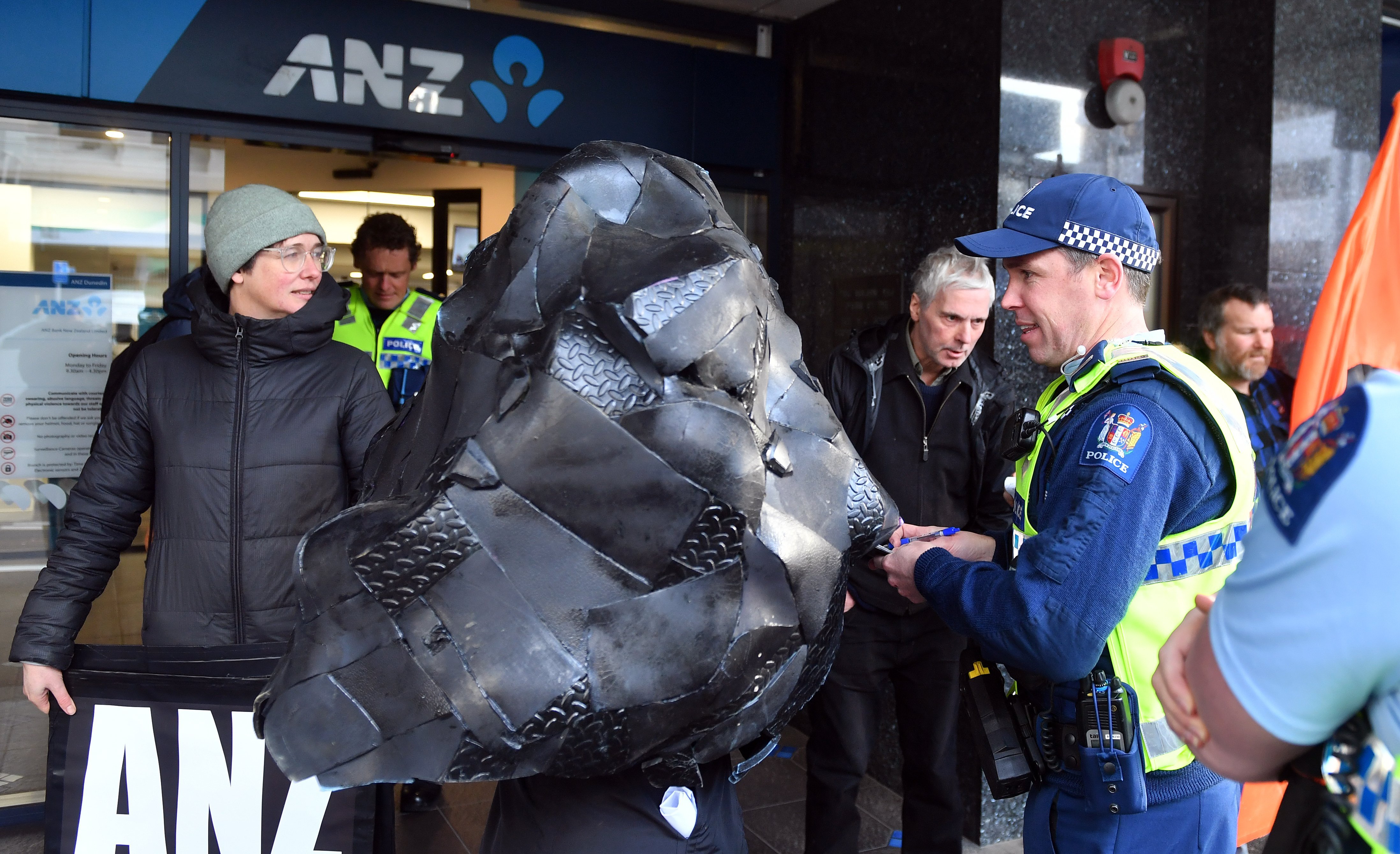
There has been a significant change in the way that the police and the courts treat climate protesters, both here and overseas with a much harder line being taken against them and increasingly severe costs and other penalties. Two Kiwis from the group, ‘Just Stop Oil’ were recently given a lengthy jail term in England and it’s likely local protesters will face ever more severe penalties if there’s a change of government here.

In 2019 Extinction Rebellion members blocked a coal train from reaching the Port of Lyttelton. Nineteen people were arrested but none were charged. A couple of months later ‘dozens of arrests’ were made at a big Extinction Rebellion protest in Wellington but again, no charges were laid.
Later that year Dylan Parker became the first Extinction Rebellion activist to be charged in New Zealand for ‘illegally being in a building’, at the gas industry conference in Christchurch. This charge was dropped the following year.
The following year fifteen people were arrested for blocking access to a Bathurst Industries coal mine in Canterbury but again no charges were laid.
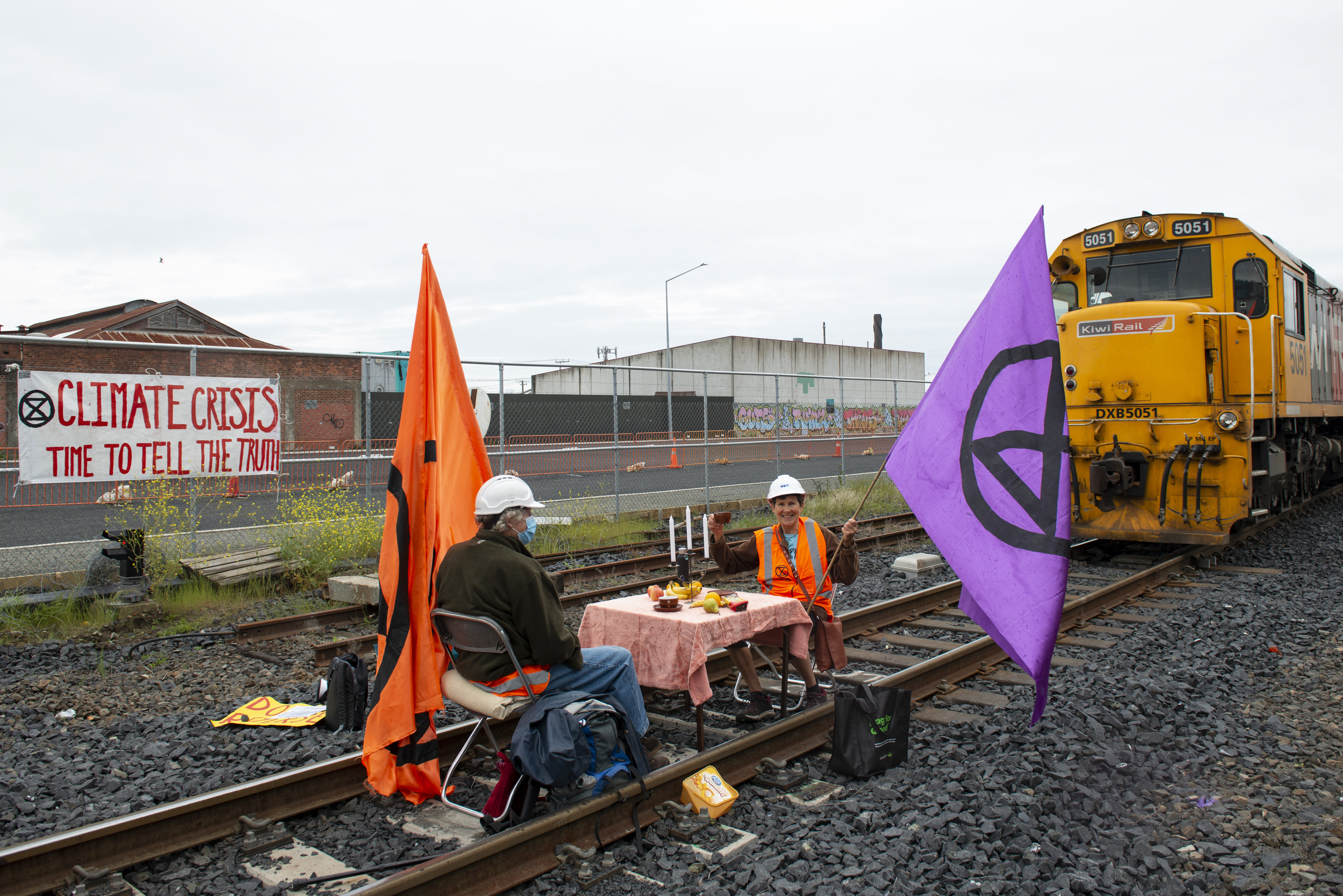
Between December 2020 and April 2021 climate protesters blocked a railway line four times in Dunedin to try to stop Fonterra’s deliveries of coal from Bathurst Industries coal mine at Nightcaps. No one was detained or charged at any of these protests.
I think these examples will suffice to show the police were reluctant to arrest climate protestors and even less likely to charge them until there seemed to be a change of position in 2021 shortly after the Government declared a ‘climate emergency’.
In late 2021 eight climate protesters in Dunedin blocked KiwiRail’s coal delivery to Fonterra again and this time eight of them were arrested and charged with two rare offences under the railway act. They were also hit with a bill for $65,000 from KiwiRail. It should be noted that (1) KiwiRail is 100% owned by the government, and (2) that this case is still before the court. The protesters are contesting the charges, saying they stopped the train to save lives and the matter is still before the courts.
The ‘Restore Passenger Rail’ movement arrived in New Zealand in 2022. Only three national rail routes are left of the almost 100 there were in the fifties. The obvious rationale is to try to reduce the high rate of emissions from transport.
While Restore Passenger Rail protesters had a popular cause, their methods were anything but. In October 2022 small groups of protesters blocked roads with their bodies. At first they were charged with a minor offence (willful trespass, which carries a one year maximum jail term). They returned to the capital earlier this year (2023) and stopped traffic seven times. Many of them had already been arrested at previous protests and a number of repeat protesters were charged with both bail offences and a new charge of ‘endangering transport’ with a maximum sentence of 14 years’ imprisonment. This serious charge was also retrospectively applied to those who sat on the roads in 2022. So far there have been 32 arrests. In September 2023 they were back on the roads and two Dunedin women who had been arrested at previous protests were refused bail and remain in jail at the time of writing.
One of these was long-time climate protester and grandmother, Rosemary Penwarden who sent a satirical email cancelling the annual Petroleum Exploration and Production Association of New Zealand (PEPANZ) conference in Queenstown in 2019. Despite it being a pretty obvious fake and the conference going ahead as usual, Penwarden was still convicted at a jury trial in Dunedin in June of this year for two charges of ‘forgery’ and ‘using a forged document’. She awaits sentence with the latter charge carrying a possible 10 year jail term.
Siana Fitzjohn and Nick Hanafin are also in hot water for boarding the giant mobile oil drilling rig, the COSL Prospector as it travelled near the Marlborough Sounds in March 2020.The following month they were refused a discharge without conviction. The charges, relate to breaches of a controversial amendment to the Crown Minerals Act, which specifically outlaws interference with deep sea oil exploration and carries a maximum penalty of a year in prison or a $50,000 fine. OMV claims their actions cost the company $39,084.35, which the judge could yet order Hanafin and Fitzjohn to repay.
We will not save our environment by persecuting the people trying to protect it.