My history of Paranormal Research and some investigations by the Dunedin Strange Occurrences Society(based on a talk I did for the Oamaru Festival in 2025)

Do you believe in ghosts?

Have you ever seen a ghost or has something inexplicable happened to you which you can’t explain?

Even if you haven’t had an experience yourself it seems that many people do believe in the paranormal with around 59% of men and 61% of women saying they’ve at least one paranormal experience. 

But what are ghosts and do they even exist at all?  Are they the spirits of dead people or are they like fragments of broken code or old photographs or are they something else entirely?

There are two main types of ghosts, apparitions and poltergeists (noisy ghosts). The first usually look like people –either solid or partially transparent while the latter are invisible but like to make a lot of noise and throw things around. These two phenomena can occur together or separately. In many cases poltergeists seem to attach to attach to an individual and sometimes even follow them from house to house but in other cases they seem to be attached to a building. There is no doubt in my mind that they exist but what they are no-one knows.  

Despite all of this ‘belief’ in the existence of the paranormal there is no such thing as an expert in the field because the subject just doesn’t lend itself to scientific study. The only people who are the real experts on what happens when you did are people who are already dead and anyone who tells you they know what happens after we die isn’t telling the truth.

 People have been trying to communicate with the dead ever since we came down from the trees and started sitting around camp fires.

Ever since written records began there’s  been this idea that when the human body ceases to exist, some part of our consciousness continues to survive  in some intangible form or other and if we’re clever enough or if the other side  wants to talk to us badly enough, some way will be found to bridge this huge dimension.

There are many theories about what ghosts might be or even if they exist at all but the idea of ghosts if universal and found in every culture.

A very famous photo of the “Brown Lady’ descending the stairs of Raynham Hall which was taken in 1936. I had one of first and only ‘paranormal experiences’ at the church nearby in 1979 when I was just sixteen. I was completely alone in the church doing some brass rubbing and the whole village was surrounded by mist. I never saw a person the whole time I was there but I kept on hearing someone walking around the church. These continued intermittently almost the whole time I was there and every half hour or so I would go out for a bit to steady my nerves and then the walking noises would start up again.

I’m going to start this talk by describing some events which occurred in 1848 when some young women called the Fox Sisters(Maggie and Kate) who lived in Rochester, New York started to convince people that they could communicate with the dead. The Fox’s were a lower middle class family living in an old house that was reputed to be haunted by the ghost of a peddler who had been murdered and his remains were buried under the house.

The two young women seemed to become the focus of loud knocking noises and no one in the room could tell where they were coming from or what was making them but after developing a simple (and since universal code) of one rap for yes and two for no it turned out they were communicating with the ghost of this dead peddler and the young women started to became famous.
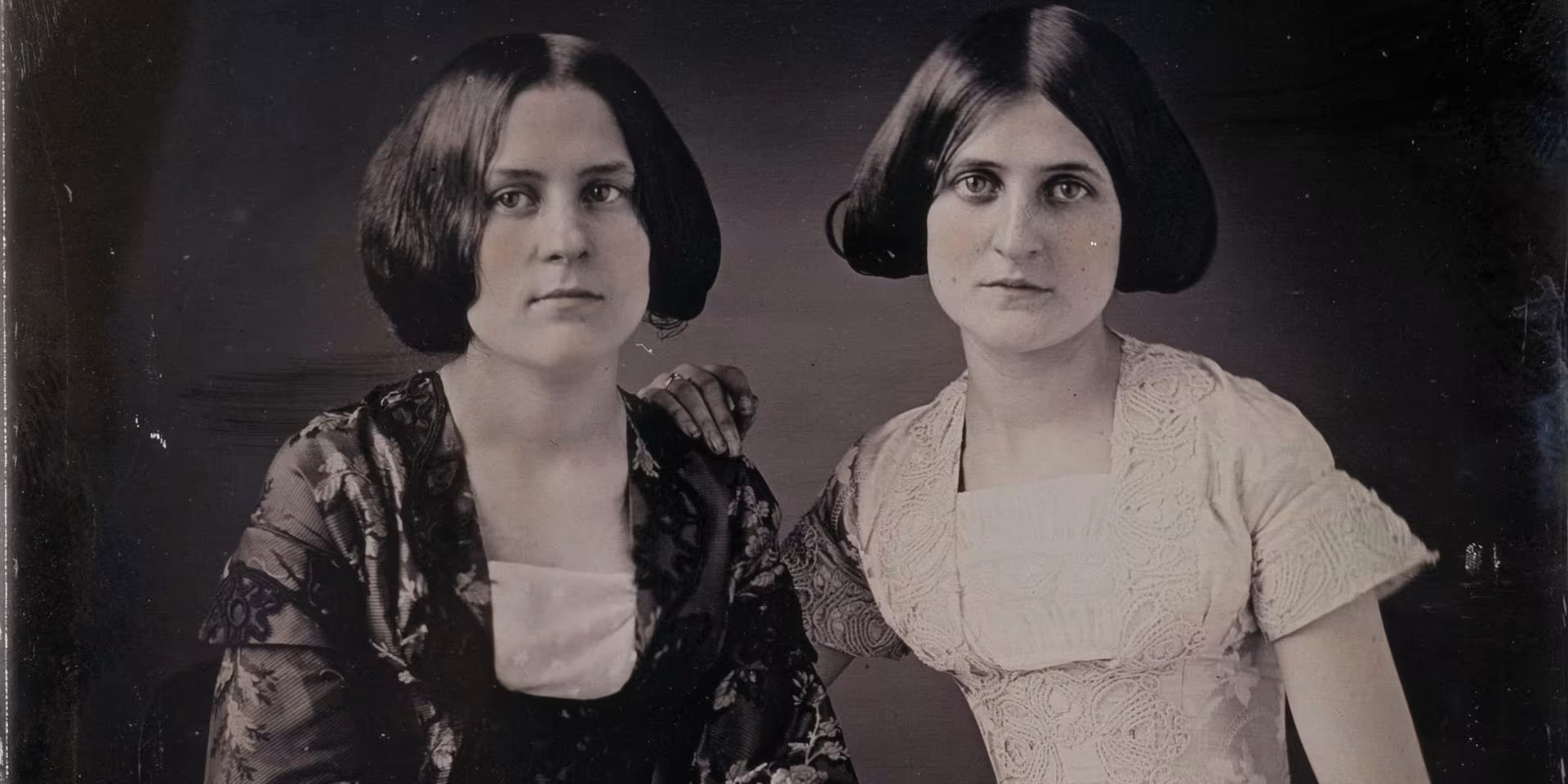
The Fox Sisters

People would come to the house from all over the area and ask ‘the ghost’ questions and the knocking noises would appear out of nowhere and would seem to answer their questions in an intelligent way.

In 1849 the sisters demonstrated the rapping at Corinthian Hall in Rochester. This was the first demonstration of spiritualism ever held before a paying public and this began a long series of public events featuring spiritualist mediums in America.

 The idea of some people being able to talk to ghosts via rapping noises spread all over the world and the people who were the ‘telephone operators’ between this world and the next came to be referred to as ‘mediums’.
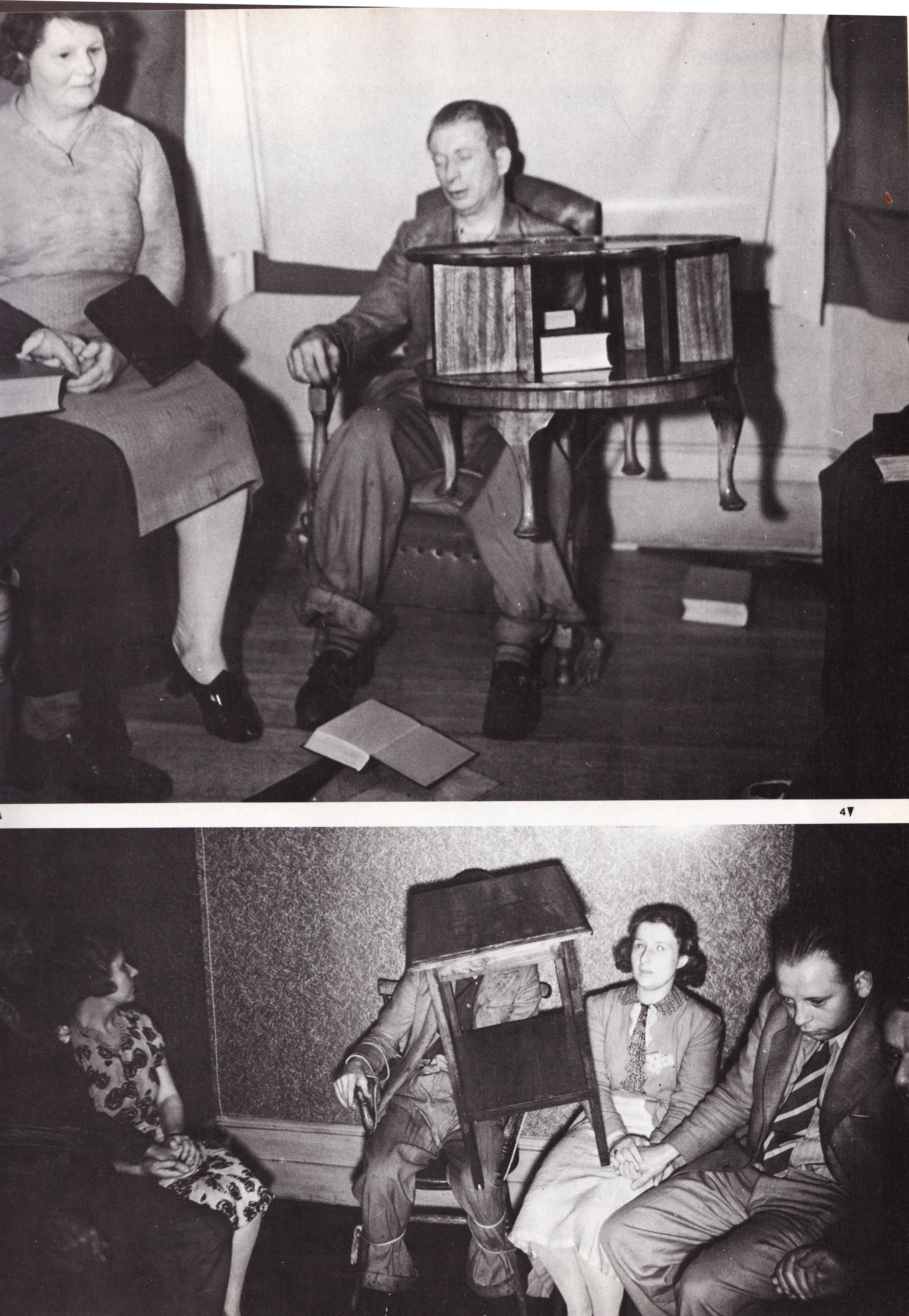
At first many of these so-called ‘mediums’ produced noises like the Fox sisters but gradually – as perhaps the spirit realm became more adept and communicating and/or so did mediums – other kind of phenomena evolved including voice phenomena (where the medium purported to talk in the voice of a deceased person), automatic writing (where the  mediums hand would be guided by a deceased operators) and finally physical manifestations in the form of full body apparitions and other objects (called ‘apports’) suddenly appearing out of nowhere.

By the 1880’s the idea of communicating with the dead had become well established and people would get together at each others houses and hold what became known as ‘seances’ (from the French words ‘session’ or ‘to sit’.)The usual procedure was for a group of people to sit round a table in the dark with a medium and then noises would happen all around the room, objects would seem to float about, people would be touched and sometimes apparitions would appear. This ‘physical mediumship’  became more and more popular and raping noises and whispers were no longer enough to convince most people but the full body apparition of your recently deceased relative standing in front of you was another matter entirely!  Remember this was all taking place in almost complete darkness so it was extremely easy to fake all of these phenomena and many mediums were paid for their services and sometimes very well.

Gradually  so-called ‘spirit cabinets’ became popular pieces of furniture at séances and the medium would be placed inside the cabinet and sometimes even tied up to prevent them from moving objects in the room. But of course these cabinets, combined with a dark room, made it even easier to fool people with fake effects.
But if your loved one had recently died there was often no greater comfort than to hear their ‘voice’ or perhaps even see a blurry image of their face.

Of course many people were extremely skeptical of these phenomena and mediums became increasingly ‘controlled’ so they couldn’t cheat and move around in the darkness and produce the effects and noises themselves.

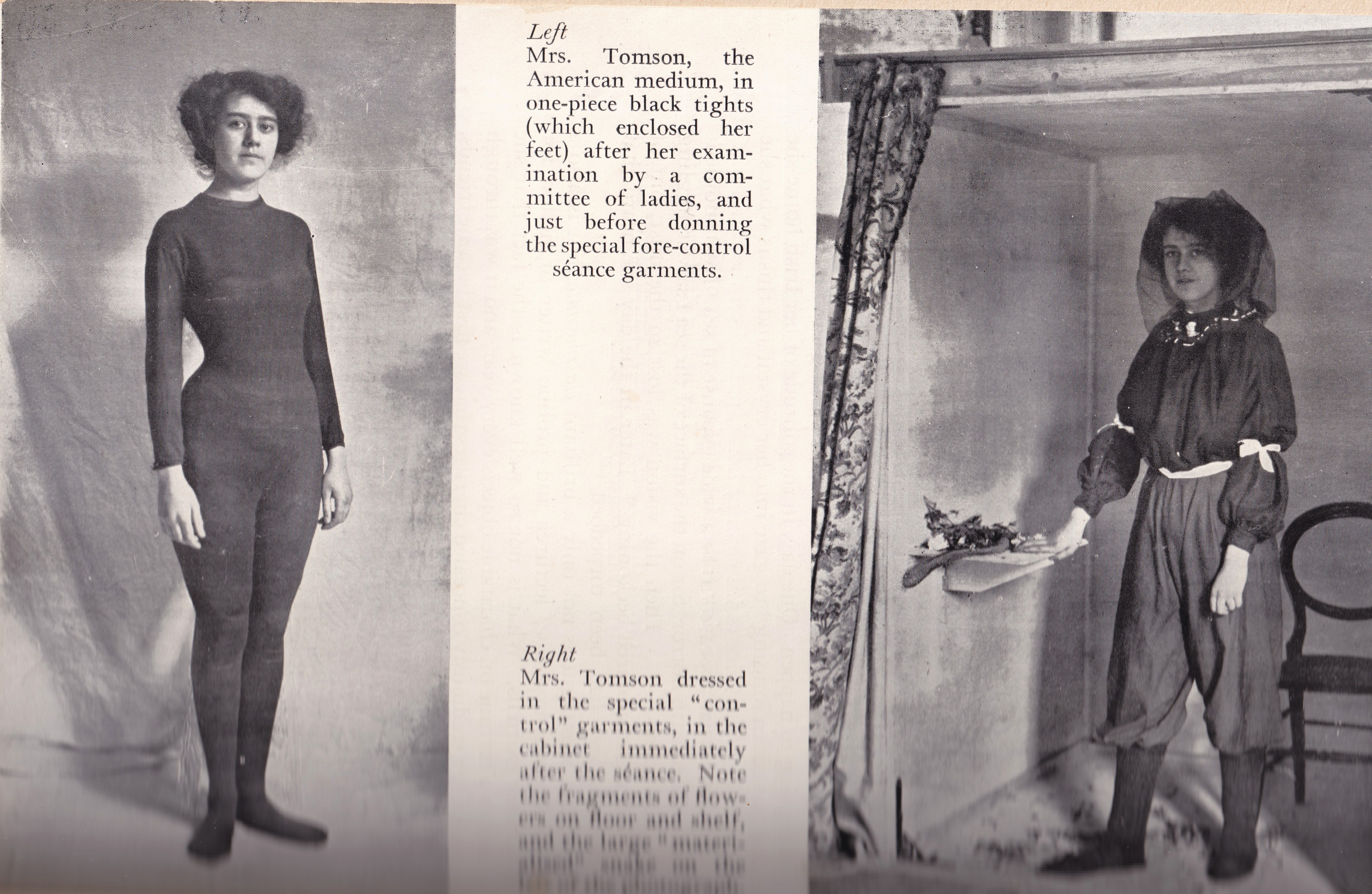
Often they would be rigorously searched beforehand to make sure they had nothing hidden on their person and occasionally some mediums were even made to wear a one piece suit which enclosed the whole body but often  phenomena would still take pace despite these precautions. Naturally it was still possible to use all sorts of trickery, particularly if one or more accomplices were involved (sometimes small children) to move the objects around the room for you or create the other ghostly effects.

As the controls on mediums became more and more rigorous it became harder and harder to secret props around their body or to move around in the darkness unseen and some female mediums even performed completely naked to try and prove they were genuine. Some – if not all of these – went to the extreme lengths to hide objects inside body cavities or even regurgitate them and a number of physical manifestations were found to be produced by manipulating cheesecloth (a very thin fabric) which had hidden internally.
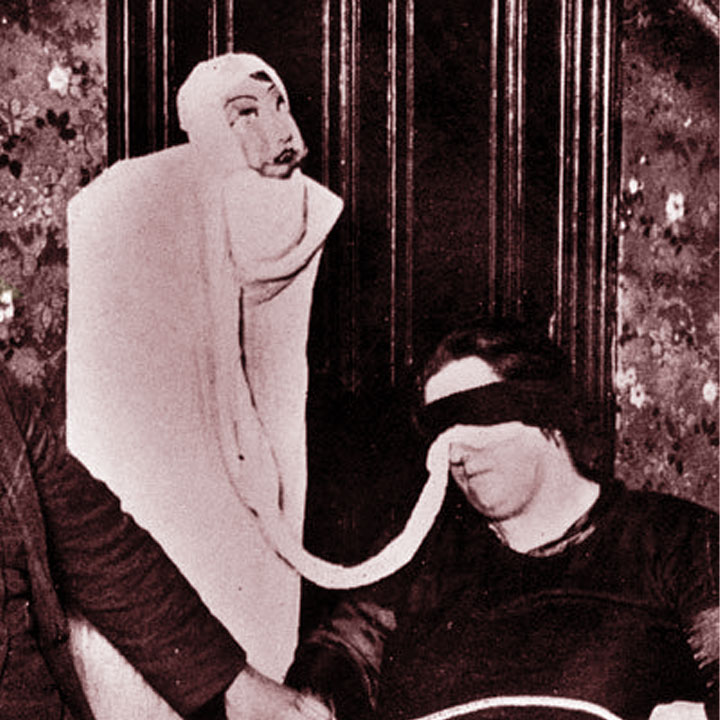
Helen Duncan – producing her spirit guide – Peggy

The phenomena became so common that eventually it demanded investigation from the scientific community to try and explain the effects produced by those mediums who had not been caught faking and were regarded to be the real deal and people like doctors and scientists started to attend séances to try and work out if any of the phenomena were actually genuine.

Not surprisingly, one of the very first groups to be formed to study paranormal phenomenon was called ‘The Ghost Club’ which was launched in London in 1862.

One of the club’s earliest subjects for investigation were the Davenport Brothers – a pair of cabinet mediums who seemed to produce remarkable effects in the dark – even when they were both seemingly retrained by people holding their hands.  Some people  were convinced they were legitimate but other people just saw their manifestations as  cheap magic tricks. Clearly some scientific effort needed to be brought to bear on the subject  as well as some actual magicians, who were often more skeptical than the scientists themselves!

In 1882 a more ‘professional group, the Society for Psychical Research, was formed with the stated purpose of trying to understand psychic or paranormal events using modern scientific means. It described itself as the first society to conduct organized scholarly research into human experiences that challenge contemporary scientific models and to really try and study paranormal events in a scientific manner.

Henry Sedgwick, an economist and a philosopher, was the first president and some very famous people were also  involved including the renowned chemist Sir William Crookes, the physicist Sir Oliver Lodge, the poet Frederick Henry Myers and the psychologist William James.

Areas of study included hypnotism, dissociation, thought transference of mediumship, apparitions, haunted houses and really anything at all  to do with the unexplainable.
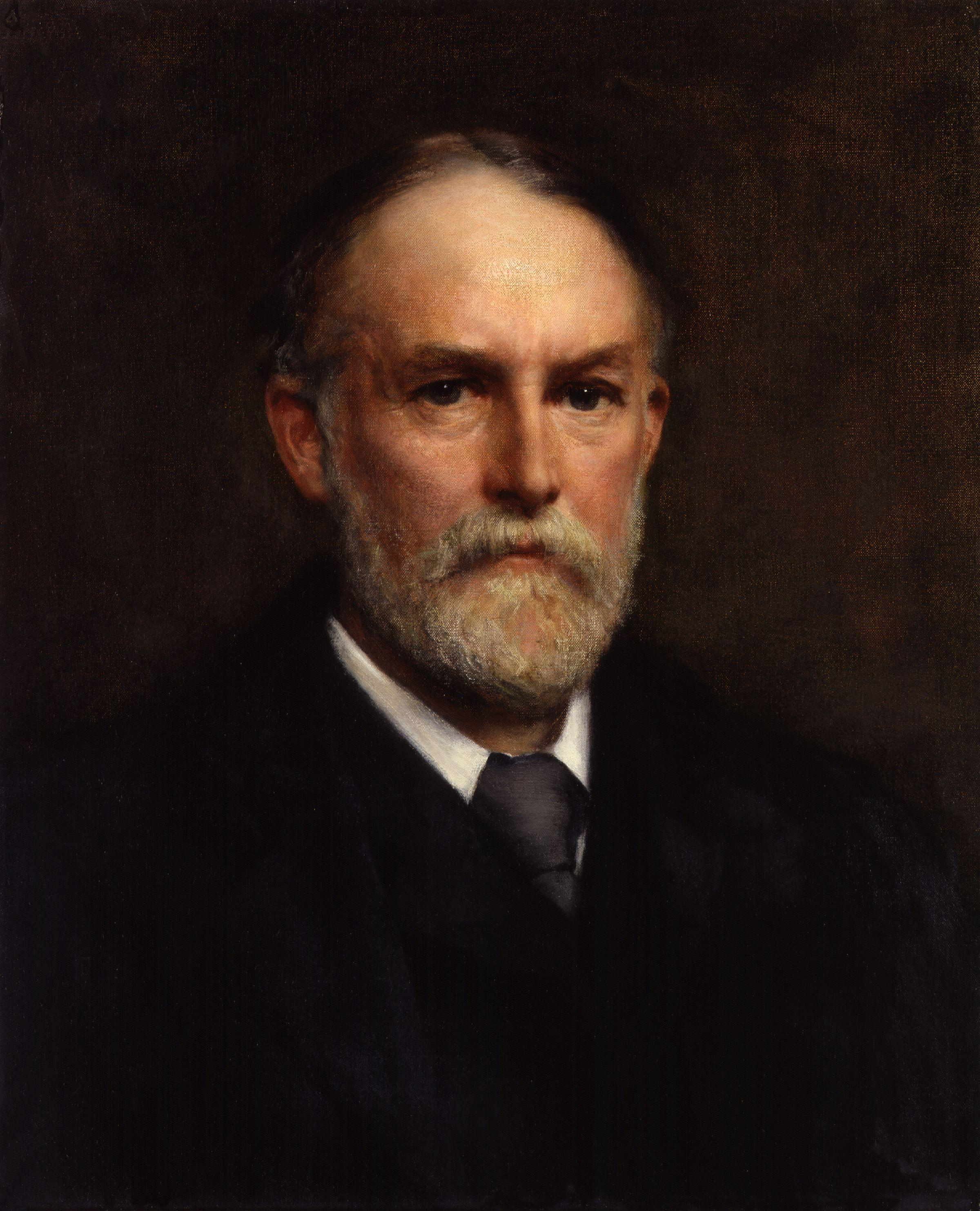
Frederick Myers(above),was an interesting character, an independently wealthy and erudite romantic intellectual who’d been involved in homosexual relationships with both Arthur Sedgwick (Henry’s brother), the poet John Addington Simons and possibly Lord Battersea!

Using his money he began to commission séances with one of most well known mediums of the day, Eusapia  Palladino and in 1895  she was invited to come and stay at his house for a series of investigations into her purported mediumship. The woman seemed to be able to produce ectoplasmic pseudopods from her vagina or naval which could form into hands and even faces and some people were convinced she was the real deal (particularly when photographs were taken) but Myers was more skeptical and didn’t always believe her apports were always real.

In case you don’t know, ectoplasm is a substance or spiritual energy supposedly exteriorized by adept physical mediums. The word was first coined in 1894 by psychical researcher Charles Richet  and although the term is now widespread in popular culture, there is no scientific evidence the substance has ever existed at all or indeed, ever will.

An ectoplasmic hand emerging from a medium’s body

After Myers death, his studies were compiled into a large volume called ‘Human Personality and its Survival of Bodily Death’ and this lengthy tome  covered such things as  research into the unconscious mind, the paranormal, supernormal phenomenon, the existence of a soul and this book became a kind of bible of the British psychical researchers, and inspired  others to enter the field, including the writer, Aldous Huxley.

Despite all of the fakery which had been exposed many people were starting to become convinced that science might somehow help us open up a line of communication with the dead. Researchers were now claiming to take photographs of ghosts and even capture their voices on early recording equipment. It seemed for a while that the veil between life and death was becoming thinner and thinner and a breakthrough was imminent.

Some mediums became very famous, particularly two brothers, Rudy and Willie Schneider, who were well known ‘cabinet mediums’. One or both would be tied up inside a cabinet, a curtain would be pulled across the entrance and then all sorts of phenomena would occur around the room with objects being thrown and people touched. 

Willie Schneider being ‘controlled’

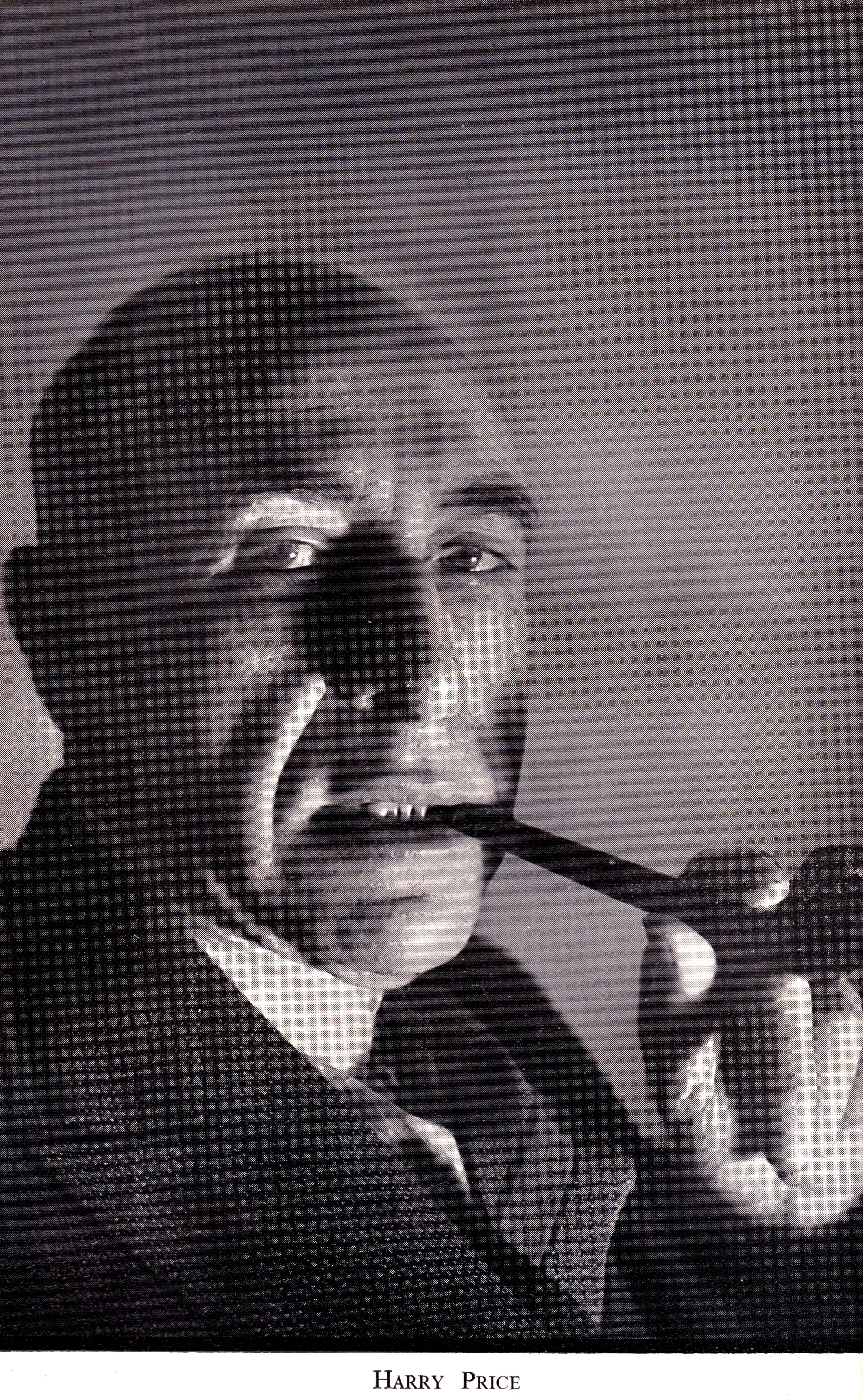
Enter Harry Price (dates) , a very strange and controversial individual who first came to the attention of the press, when he took up an early interest in space telegraphy and claimed he’d set up a receiver and a transmitter between Telegraph Hill, Lewisham, and St Peter’s Church, Brockley, and captured a spark on a photographic plate. However later evidence showed he’d never actually conducted the experiment but merely released a press release purporting to have done so.

This is absolutely typical of Price, a man who had no real scientific training at all, but when his father died in 1906, he inherited a share in a paper firm, which gave him independent means and allowed him to follow his interests.  Price did not believe all medium were faking and endorsed a few he believed to be genuine.
In 1929 he brought the Schneider brothers to England, and conducted experiments at the National Laboratory of Psychical Research, a laboratory established by the Society for Psychical Research, in which one of the mediums was connected to a series of pressure switches that would alert observers if he moved his hands, feet, limbs in any significant way and he was also physically restrained during some of the experiments(see below).
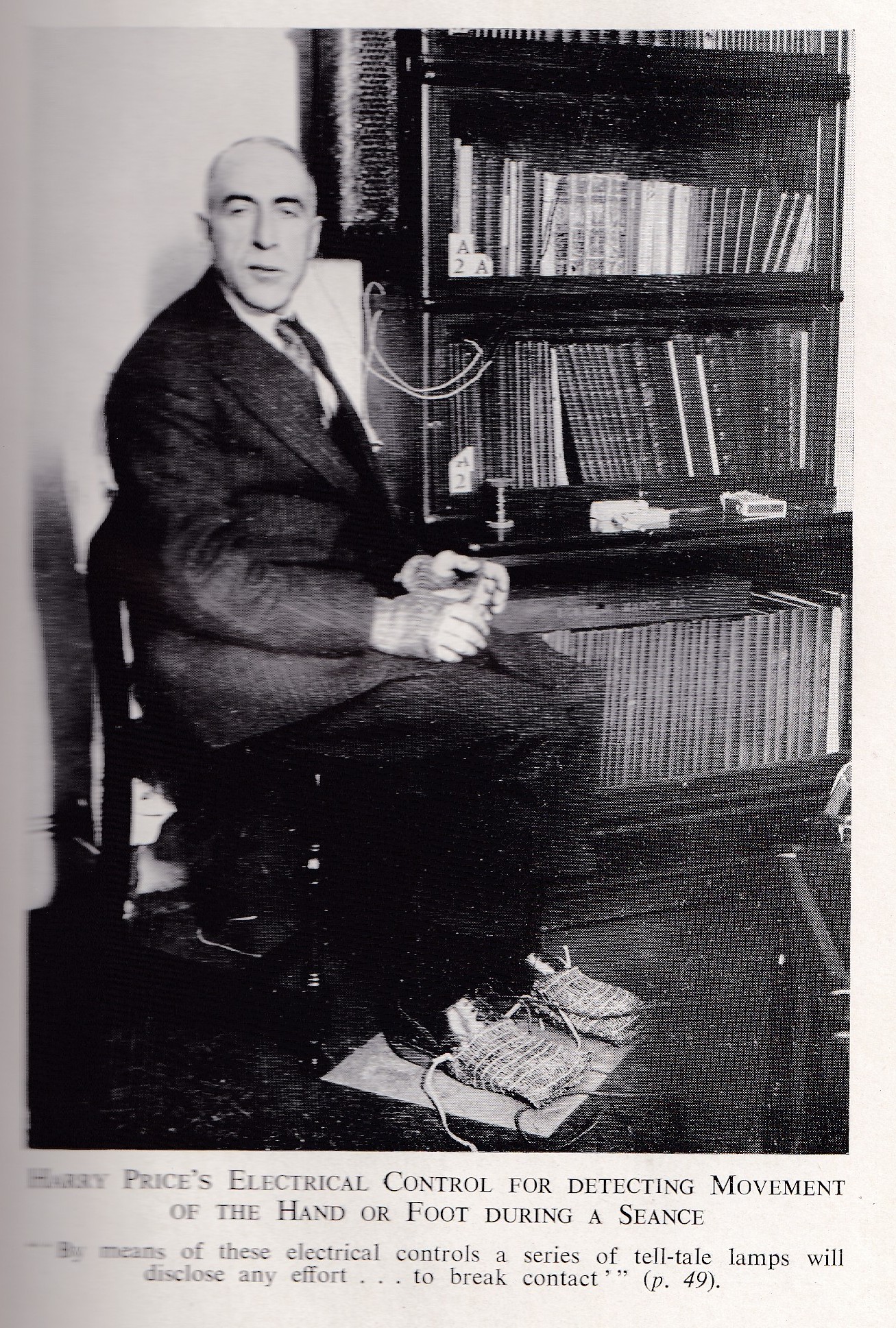
Price recorded that despite these controls various phenomena were still observed including levitating objects, but according to Price, a photo taken on April 28, 1932, showed that one of the brothers had managed to free his arm and move a handkerchief from a table. Remember the room was in complete darkness.

After this expose, Price became the go-to guy as the debunker of fake mediums, the real-deal paranormal scientific investigator of his day and he became very famous and went on to study a huge number of cases around England and Europe. His final and most longstanding investigation was a project he instigated at Borely Rectory in Essex which he rented for a year and staffed with a rotating crew of volunteer paranormal investigators, many of whom reported all sorts of manifestations and movements, leading Price to make the building notorious as ‘the most haunted house in England.’

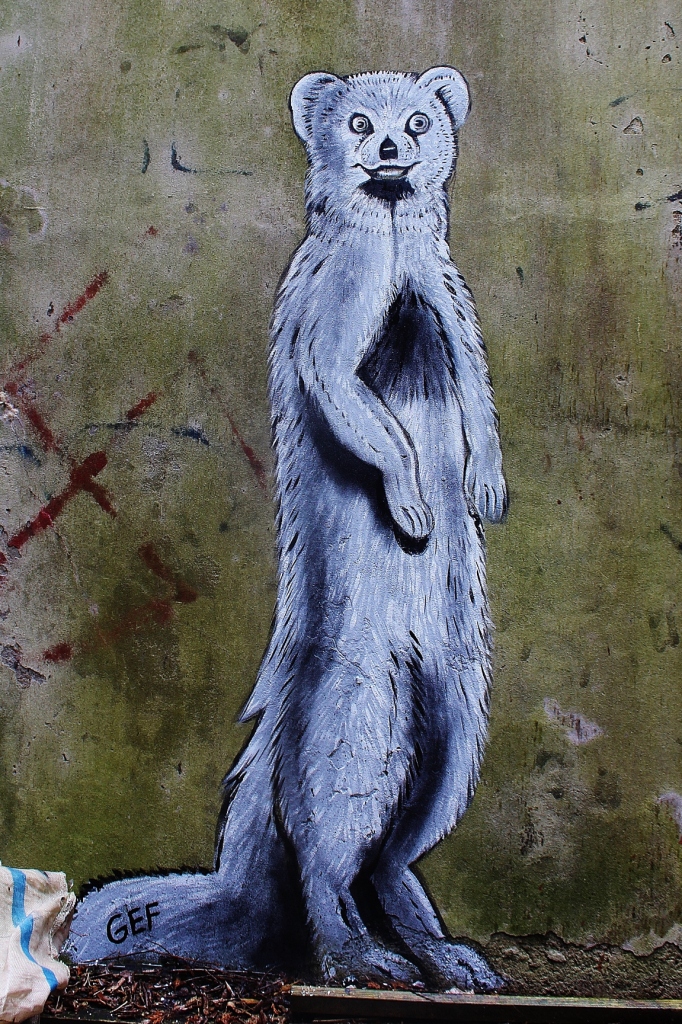
At this point I have to mention my favorite paranormal case, the mind-blowing story of the Talking Mongoose. Price was integral player in these bizarre events, as was another well know paranormal investigator of his day, Nador Fodor and both wrote extensively about the bizarre events which were supposedly occurring on the Isle of Man.

In September 1931, the Irving family(above), consisting of James, Margaret, and a 13-year-old daughter named Voirrey were living in a remote farmhouse on the Island and trying to scratch a living raising sheep. All was normal for a while until the family claimed to hear persistent scratching, rustling, and vocal noises behind their farmhouse’s wooden wall panels and sometimes a small creatures which resembled a ferret could be seen moving extremely quickly around the property.  According to the Irvings, the creature eventually learned to talk and once it had, the animal introduced itself and told them he was a mongoose born in New Delhi in 1852.

According to Voirrey, who saw the creature the most, Gef was about the size of a small rat with yellowish fur and a large bushy tail. Many famous people including Price and Fodor made long trips to visit the remote property but the mongoose never showed itself to them but both purported to hear it.

Sadly, Price was not the scientist he pretended to be and after his death the vast majority of his work was completely debunked by two of his former colleagues,   Richard Lambert and Trevor Hall  in their book – ‘Search for Harry Price’.  They proved that he’d faked much of his evidence, seemingly  in a quest for fame and wealth.

As a young medical student my father entered into a correspondence with Price shortly before his death and started a correspondence with him until he died. When I was boy I found Price’s books in my father’s collection, surrounded by books about science and history and became fascinated by both Price and the paranormal as my father had been.

A letter from Harry Price to my father in 1945

By the 1930’s mediumship and talking to the dead became a big deal, and there were a lot of people making a lot of money playing on peoples bereavement and emotions by faking communication with their recently decreased loved ones and other people trying to either study the supposed phenomena or shut down the fakers.

One of the most famous mediums was Daniel Hume, 1833-1886, a Scottish physical medium, with the reported ability to levitate at will, speak to the dead, and produce intelligent rapping noises in response to questions. At one famous séance several witnesses claimed to see him float out of a third story room of a large house and float in another.

So many fake mediums being exposed the authorities began to get involved –particularly after World War One  – when there was a huge upsurge in mediumship as people tried to talk to their relatives who’d been killed in the war.

 In 1926, a medium called Helen Duncan developed from being a clairvoyant to a physical medium and began offering séances in which she claimed to be able to permit the spirits of recently deceased persons to actually materialize in a physical form via ectoplasm produced from her mouth

In 1928, the photographer Harvey Metcalfe attended a series of séances at Duncan’s home and during one he some flash photos of Duncan and her alleged spirit guide, ‘Peggy’. His photographs reveal that the spirits were crudely produced and Peggy was nothing more than a doll made from a painted papier-mâché mask draped in an old sheet. Remember again, that most people only saw these manifestations in almost complete darkness.

In a séance on 6 January 1933 in Edinburgh, a sceptical sitter suddenly grabbed ‘Peggy’ and the lights were turned on revealing that this time she’d been made with an old stockinet under vest. 

 The under vest went on to be used as evidence at Duncan’s conviction of fraudulent mediumship at the Edinburgh Sheriff Court trial on 11 May 1933 and she was fined ten pounds.  In 1944, Duncan was one of the last people convicted under the Witchcraft Act 1735 which made falsely claiming to procure spirits an actual crime.

On her release in 1945, Duncan promised to stop conducting séances, but she was arrested during another in 1956 and died at her home in Edinburgh a short time later. Her trial almost certainly contributed to the repeal of the Witchcraft Act 1735, which was replaced by the Fraudulent Mediums Act in 1951.

Another very interesting person to enter this strange field was Arthur Conan Doyle, the author of the Sherlock Holmes novels.

You might think that this extremely intelligent man, a former doctor and the creator of the world’s most famous detective, wouldn’t be easily fooled by fake phenomenon and frauds, but unfortunately he was credulous as Holmes was wise.

In 1887 he began a series of investigations into the possibility of psychic phenomena and attended about 20 seances, experiments in telepathy, and sittings with mediums. Writing to spiritualist journal, ‘Light’, that year, he declared himself to be a spiritualist and he went on to have sittings with many famous mediums and declared the majority to be absolutely genuine and that they were really speaking to the dead. 

In 1920, Doyle traveled to Australia and New Zealand on spiritualist missionary work and over the next several years, until his death, he toured Britain, Europe, United States as a ‘spiritualist missionary’. 

Now we come to the case of the Cottingly Fairys – like the case of the Talking Mongoose, it amazing that anyone took it seriously but they did.

Francis with some fairies dancing in front of her standing next to a small waterfall on a stream near her house (1917)

In 1917 two cousins Elsie Wright(16) and Francis Griffiths(9), were living in Cottingly, near Bradford in England. One day the young women asked to borrow Elsie’s father’s camera and used it to take some photos down at a nearby brook which purported to show them interacting with fairies.

The photos soon came to the attention of Doyle, who used them to illustrate an article on fairies he’d been commissioned to write for the Christmas 1920 issue of The Strand magazine.
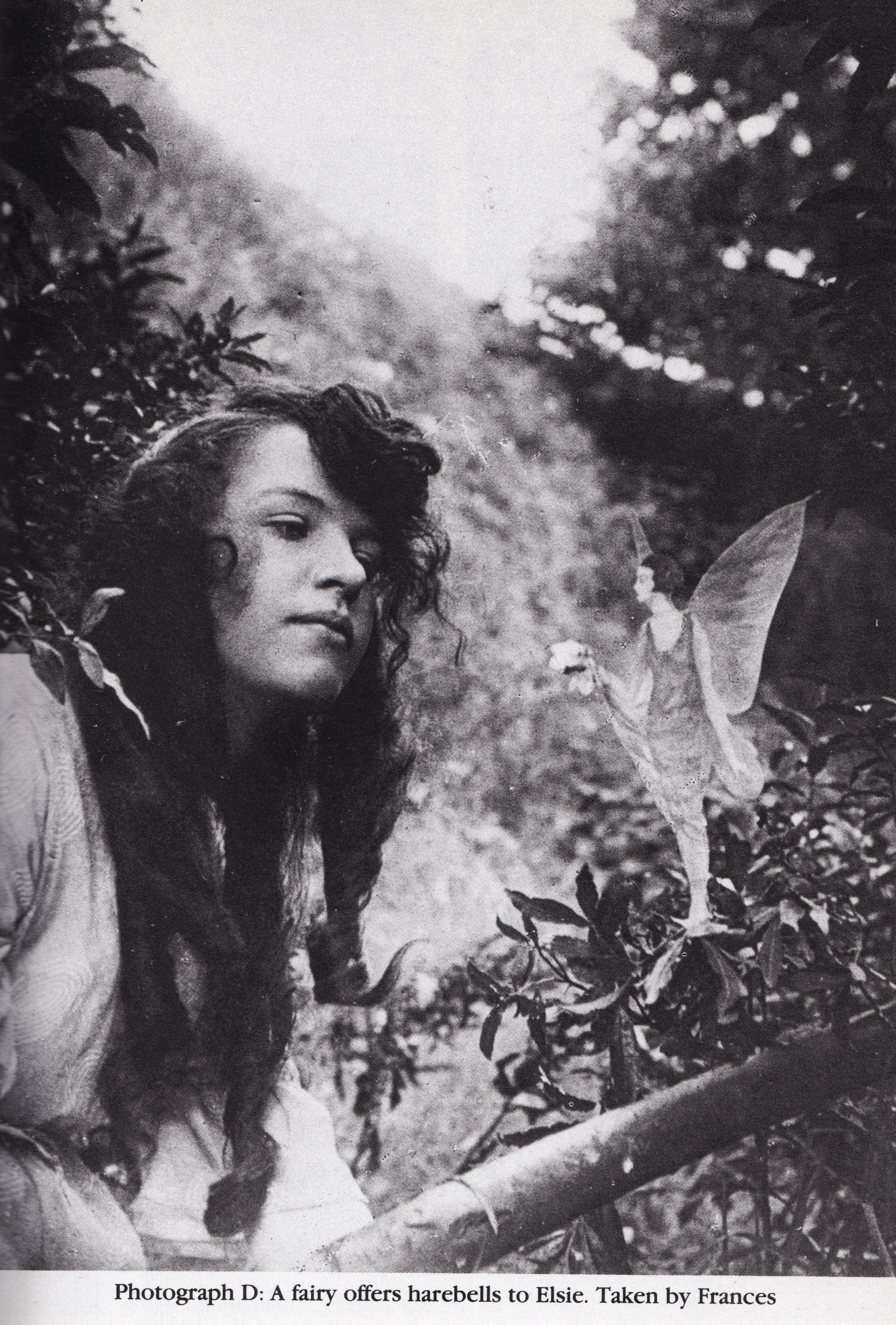
You’ve got to remember, the photography was pretty early at this stage, and a lot of people were producing photographs which seemed to show ghosts, although I think we know now how easy it is to manipulate a photograph and the same was the case back then

In 1976 Elsie and Frances were interviewed for a TV programme and  denied  fabricating the photos but in 1983, the cousins admitted in an article published in the magazine ‘The Unexplained’,  most of the photographs had been faked, although both maintained that they really had seen fairies. Elsie admitted she had copied illustrations of three dancing fairies from a book and supporting them with cardboard and hatpins.

One has to wonder if Doyle’s credulity regarding fairies came from his fathers own fascination with the ‘fairy realm. His father was an artist who suffered from depression and alcoholism and spent much of his time painting fairies. In 1881 Doyle’s family had to send him to Blairerno House, a “home for Intemperate Gentlemen” but after several escapades,  he was sectioned in 1885 after managing to “procure drink”, which caused him to become aggressively excited, confused and incoherent for several days afterwards. He was admitted to Sunnyside, Montrose Royal Lunatic Asylum but while there, his depression grew worse, and he began experiencing epileptic seizures and problems with short-term memory loss due to the effects of long-term drinking but despite this he continued to produce volumes of drawings and watercolours in sketchbooks with fantasy themes such as elves, faerie folk, and scenes of death and heavenly redemption (see painting below).

His famous son became so fascinated with fairies he actually wrote a book called ‘The Coming of the Fairies(1922)’ showcasing the Cottingly photos, as well as including some material from around the world, including New Zealand.

Here is an excerpt from the book.

‘The wide distribution of the fairies may be judged by the following extremely interesting narrative of Mrs Hardy, the wife of a settler in the Maori districts of New Zealand.

“After reading about what others have seen, I am encouraged to give you an experience of mine which happened about five years ago. One evening when it was getting dusk, I went into the yard to hang some tea towels on the clothesline. As I stepped off the veranda, I heard the sound of soft galloping coming from the direction of the orchard. I thought I must be mistaken in that the sound came from the road where the Maoris often galloped their horses. I crossed the yard to get to the clothesline and as I stood underneath it with my arms uplifted to peg a tea towel on the line I was aware of the galloping noise very close behind me and suddenly a little figure riding a tiny pony ran right under my uplifted arms. I stood round to see that I was surrounded by eight or ten tiny figures on tiny ponies like dwarf Shetlands. The little figure who came so close to me stood out quite clearly in the light that came from the window but he had his back to it and I could not see his face. The faces of the others were quite brown, also the ponies were brown. They were like tiny dwarfs or children of about two years old.

 I was very startled and I cried out, goodness – What is this? I think I must have frightened them for at the sound of my voice they all rode off through the rose trellis across the drive and down the shrubbery.

I heard the soft galloping dying away into a distance and I listened till the sound was gone and then went into the house. My daughter who has had several psychic experiences of her own said to me, mother how white and startled you look, what have you seen and who are you speaking to just now in the yard?

 I said, – I have seen the fairies ride.”

—————————————————————————————-

This brings to a close my short trip through the early days of paranormal research and now I want to discuss some happenings closer to home.

MY OWN RECENT ‘PARANORMAL RESEARCH’AND EXPERIENCES

Inverlochy Art School (Wellington)

One day in 2009 I was teaching a children’s class at an old art school in Wellington which had a long reputation for being haunted but nothing ever happened to me and I didn’t believe it was until one day I was teaching a group of children during an after-school holiday programme  how to make clay heads and one of the children didn’t turn up for class.

It was the last class of term and I knew I wouldn’t see the child again so while I was teaching the other children I absentmindedly turned the child’s rudimentary sculpture into quite a scary looking demon. After the children had gone I went out of the room for a moment to the kitchen next door and when I returned shortly afterwards somebody or something had taken my tea cup and pushed it into the demon’s ‘mouth’ before putting the empty cup back down on the table.  You can clearly see the circular mark the cup made in the clay around the mouth. (see photo below). As far as I knew the school was completely empty.
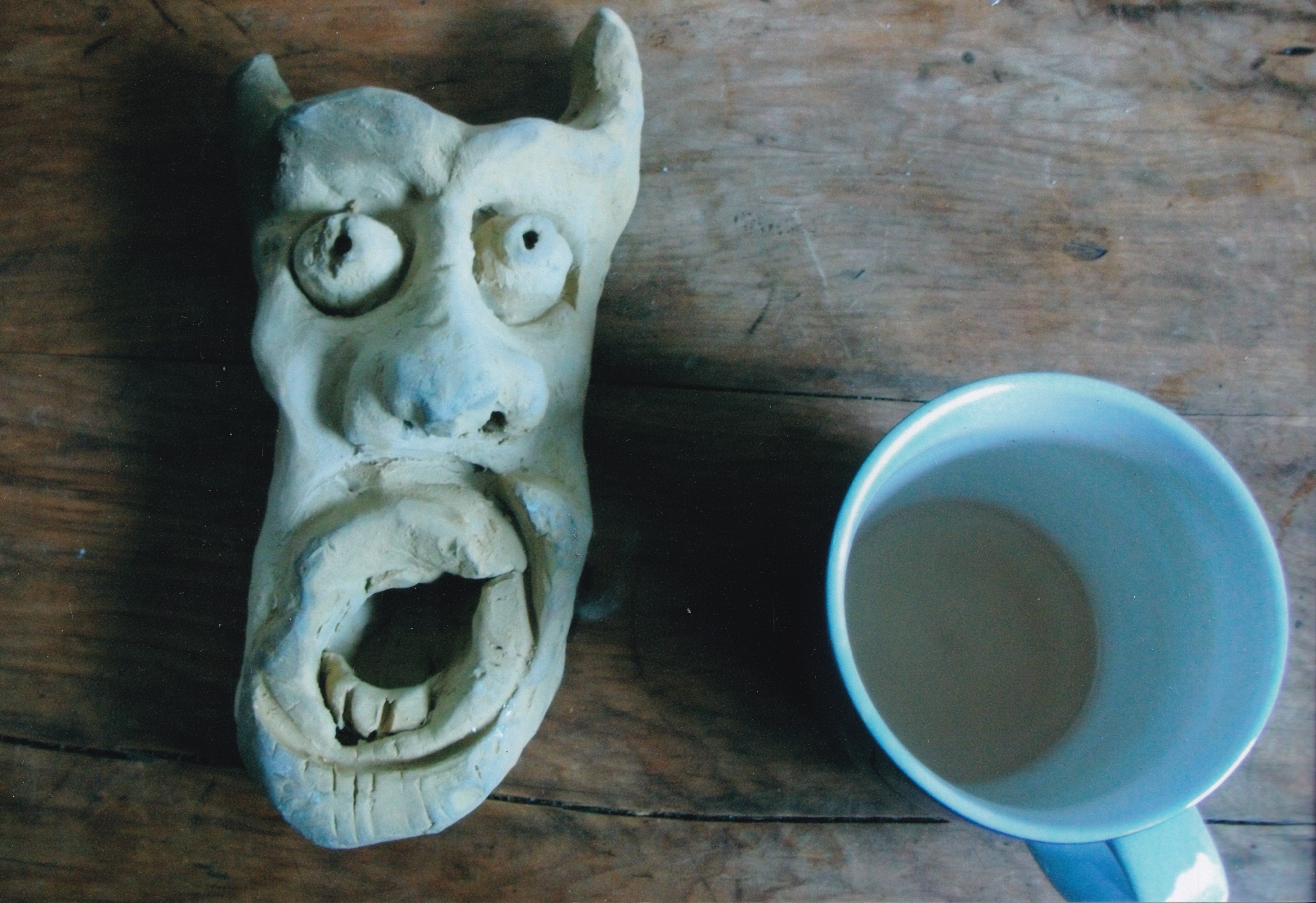
 I found out later that another tutor had one of her prints damaged in a very similar way the night before when a tin can was placed on the wet print before being moved to another position on the table.

The art school seemed to be a lot more ‘active’ in the 1990’s and early 2000’s and I have met the witnesses who are interviewed in this documentary below who both corroborated their accounts.

————————————————————————————————

DUNEDIN STRANGE OCCURRENCES SOCIETY

In 2020 Oliver Miller and myself set up the Dunedin Strange Occurrences Society – a paranormal study group allied with the NZ Strange Occurrences Society and Dunedin Paranormal. Some of the places we have spent the night(s) at include- 

The Tunnel Hotel(Port Chalmers)

Opened in 1846 this was the oldest pub in the South Island, older than the founding of the province of Otago itself by two years thanks to a magistrate on the first surveyor ship and a licence to sell alcohol thought more pressing by the sealers and whalers than democracy. Many people agree that that the building is very haunted –particularly the top floor on the right where one of the former publicans used to live. We spent a few nights there after a  resident in the building told us his wardrobe had fallen over at 2am in the morning and that he often heard strange noises. We spent a few nights there and it definitely had a ‘vibe’. I would like to have spent longer but the building changed hands and the current owner has completely gutted the interior and won’t allow us access.
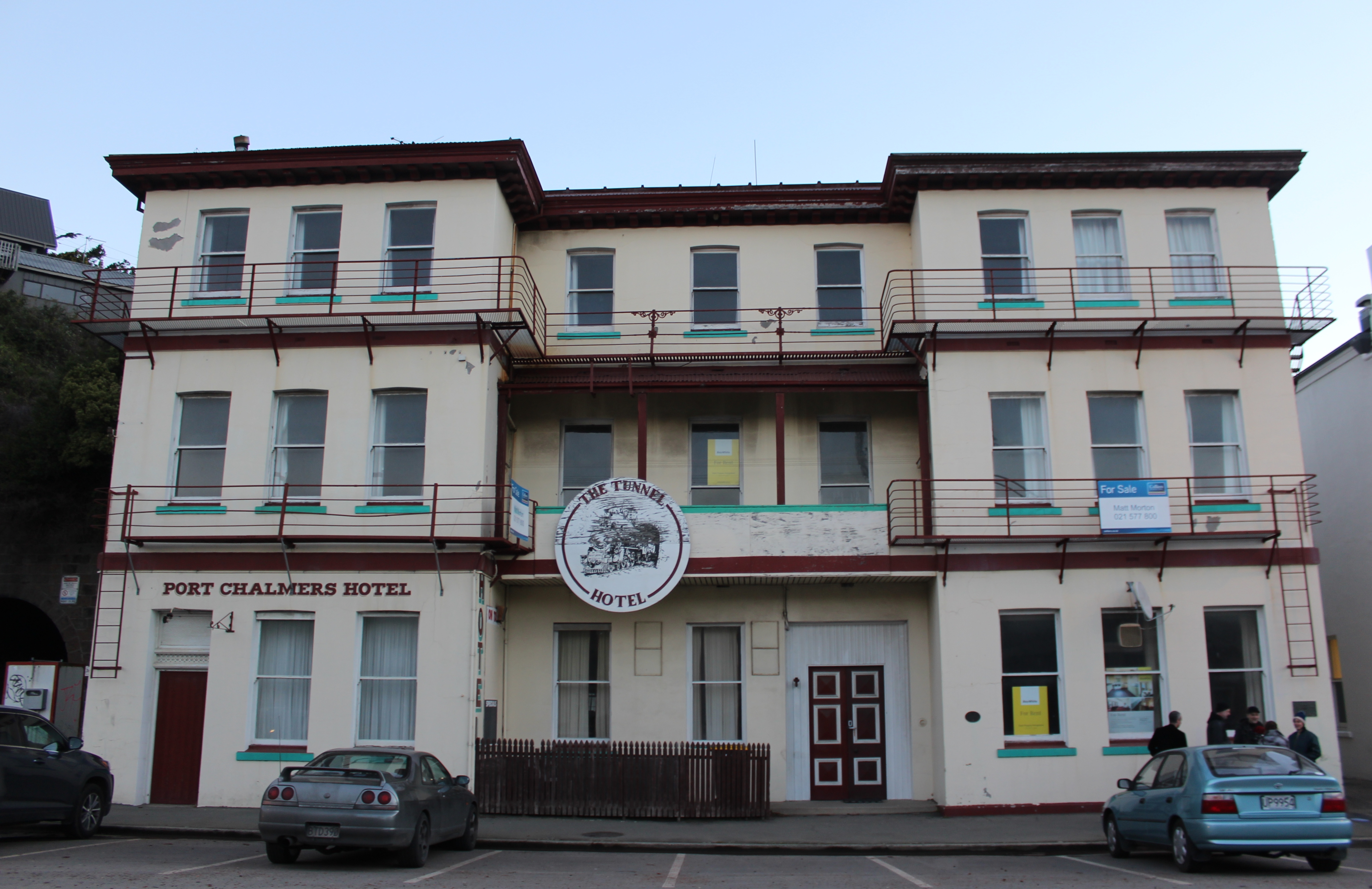
The Tunnel Hotel

Quote from a former resident – “I lived there for 13 years – definitely haunted! Those little stairs from the bathroom – had a bad vibe. I saw a ghost many times down the end of top floor – where the other bathrooms where – terrifying! Used to sprint to get down the stairs!

My son who was about two years old at the time used to tell me about the lady with the dark hair in his bedroom.”

The wardrobe which fell over at two o’clock in the morning.

Chicks Hotel (Port Chalmers)

The hotel was built in 1876 by former Port Chalmers mayor Henry “Harry” Dench, on the site of his Jerusalem Coffee and Chop House and Billiard Saloon, which he opened in 1864.

At least four of the Dench family children died in infancy in the hotel and  now lie buried in the old Port Chalmers cemetery. Sadly, such a death toll among youngsters was not uncommon in the 19th Century in Aotearoa. (NB. some sources attribute these deaths to Chick’s family but I have it on good authority it was the children from the Dench family).
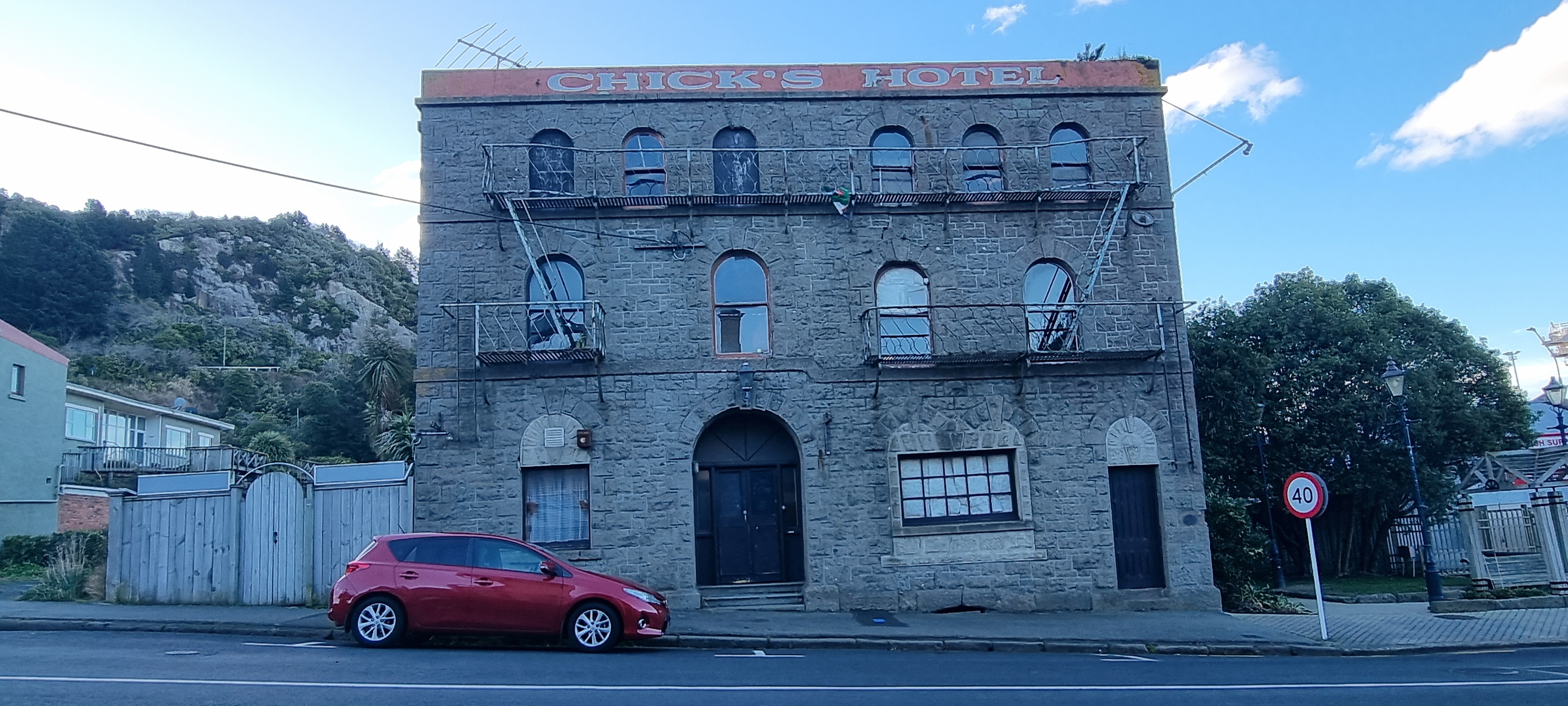
Chicks Hotel -photo by Mark Wallbank

The hotel was built on the site of the original Port Chalmers jail which probably explains the small rooms with fire places in the basement.

Local carrier George Chick bought the hotel in 1879 after he arrived in Port Chalmers from England on ‘The Challenger’ in 1870, working his passage as second steward.

Chick drowned in the shipwreck of the ‘The Wairarapa’ in 1894 aged 47 after he went to pick up his brother-in-law, who also drowned in the wreck.

Hugh McArthur, Captain Robert Scott’s carpenter on this second voyage, reputedly died in the hotel on his way Antarctica with ‘The Discovery’,  when his bed caught fire in 1914 (possibly from a rolled up piece of cloth in his pocket soaked in solvents self –igniting or being lit from a dropped cigarette). 

In 1976, George Beatson climbed the fire escape out front and entered room five via the window where he shot to death his wife, Joan(age 33)  and her lover, Peter Chapman(33), before killing himself later that day.

I personally didn’t get any vibes from Chicks but we weren’t there long and it would be interesting to go back and spend some more time there but like The Tunnel Hotel the building is now empty and in a poor state of repair.
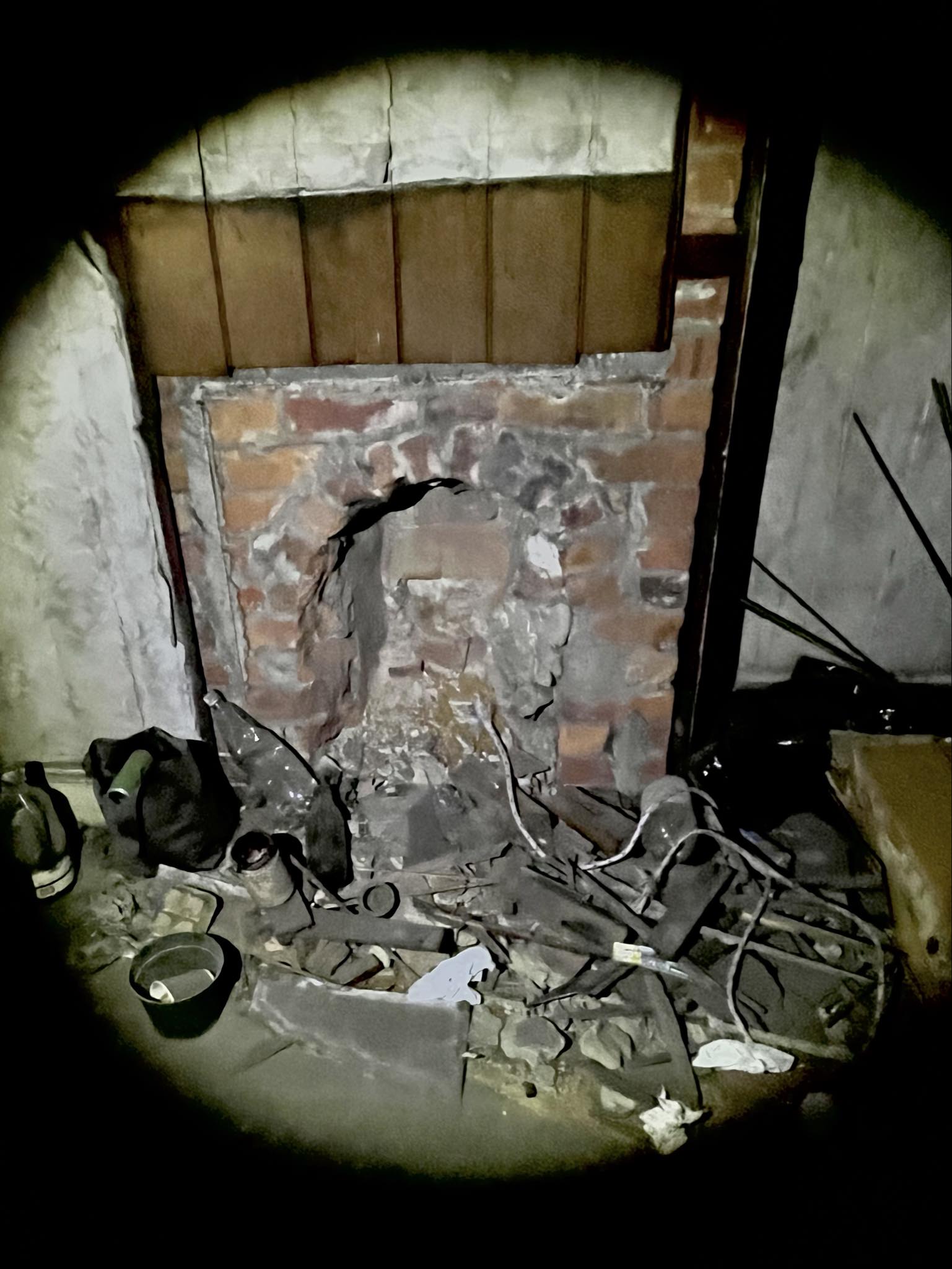
One of the strange little fire places in the basement

———————————————————————————————-

Dunback Inn (Dunback)

This old pub was built in 1864. We have spent a couple of night there thanks to the hospitality of the owners – Liz and Rob. Both report seeing or ‘feeling’ figures in the building and some guests have complained about being disturbed in one of the bedrooms. One night a movement sensor went off at 2am but I don’t think this was paranormal.

Dunback inn (Photo by Mark Wallbank)

Hawksbury – formerly Cherryfarm Hospital (north of Dunedin)

A local resident is convinced part of the lower hospital grounds are an active hot-spot for strange occurrences  and provided this photo(below) of a light anomaly floating above the ground. There used to be an old water-powered mill on the site which was built by early settler, Johnnie Jones sometime around 1850. According to our informant the anomaly materialized in front on him and floated about the centre of where the A frame building is the old photograph.. Strange lights are often associated with water movement, as well as underground fault systems so there might be a natural explanation rather than a paranormal one. We haven’t been there at night yet but its on the ‘to-do’ list.

The Rope Walk.

In 1876 a local company started making rope and eventually constructed a long 300 metre ‘rope walk’, a long building where strands of fibre the length of the finished rope were laid out and twisted together to create the final product. This ‘rope walk’ building ceased to be used to produce rope in 2012, but remains standing in South Dunedin. A worker was supposedly killed when he was caught in the machinery at the start of the rope walk and is purported to sometimes appear in the area.

To finish off here is an interesting story which happened to a friend of mine.

Together with her partner and her sister they rented an old house in a tiny village called Coln St Aldwyns for a few days in 1994 to spend the Christmas break in so they could get out of London. That night they were wrapping up their presents when my friend saw the roll of tape she’d been using float across the room. Like many poltergeist manifestations she said the object looked more like it was being carried by something invisible rather than be thrown with force. This is the only time in her life before or since she’s seen something like that. The next morning she got up early leaving the other two in bed to take a photo of the house and the frost outside. It wasn’t until later that she noticed there seems to be a figure standing in front of the curtains on the first story window on the left. When the figure is enlarged it looks like a man wearing a white shirt and jeans. You can tell its not a reflection because she took some other photos of the house later and the figure isn’t there and she also took one with the same curtains open and her dog in the window.

The ‘ghost’ is in the first floor window on the left.

It is poltergeists I am particularly interested in and I propose to do another article focusing just on them in the near future. If you know of an active haunted building in the Dunedin (NZ) area which we might be able to get access to please don’t hesitate to get touch.

The ghost in the window (enlarged)

Posted in Paranomral, Uncategorized | Tagged , , , , , , , , , , , , , , , , | Leave a comment

Common Arguments Against Climate Action

Here are some of the most common reasons and arguments people use to try and push back on any posts about climate change on social media –

  1. Climate change isn’t real.

Commenter – ‘Those global problems don’t really exist…..global warming is a massive industry supported by very little actual science, just scientists that need continued funding therefore keep driving the frenzy.’

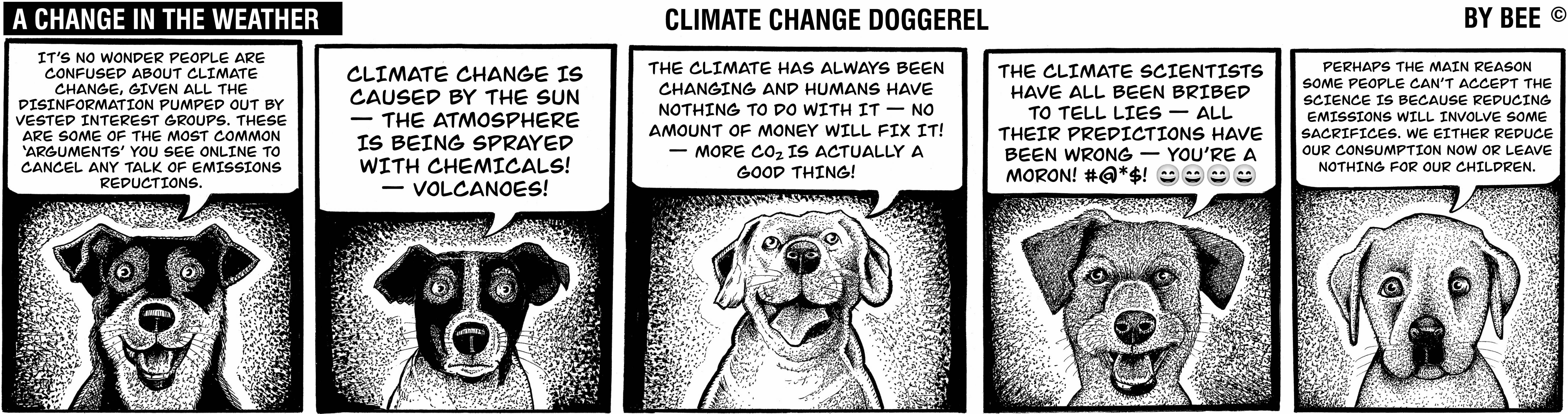
I covered this a lot in my previous blogpost. You can’t argue with someone who gets all their news from the Daily Skeptic or CLINTEL (Climate Intelligence). A recent survey found that around 15% of Americans still don’t believe in climate change and I would suspect the number of people who think it might be real, but that humans have no part to play in the cause of it, must be quite a bit higher.

There’s also no arguing with people who’ve been to ‘You Tube University’ and who know better than the climate scientists. Perversely, many of these people often try to use ‘scientific arguments’ to prove their so-called points.

You just can’t just pick and choose with science. It’s all or nothing. Either you throw away your phone or your computer and all the rest or you start to learn about the rules around science again.

2. Protest doesn’t work!

Commenter – “The only thing people like you achieve is fucking people off. You won’t change anything and you’re sure as shit not going to change the level of emissions or CO2 levels anywhere.

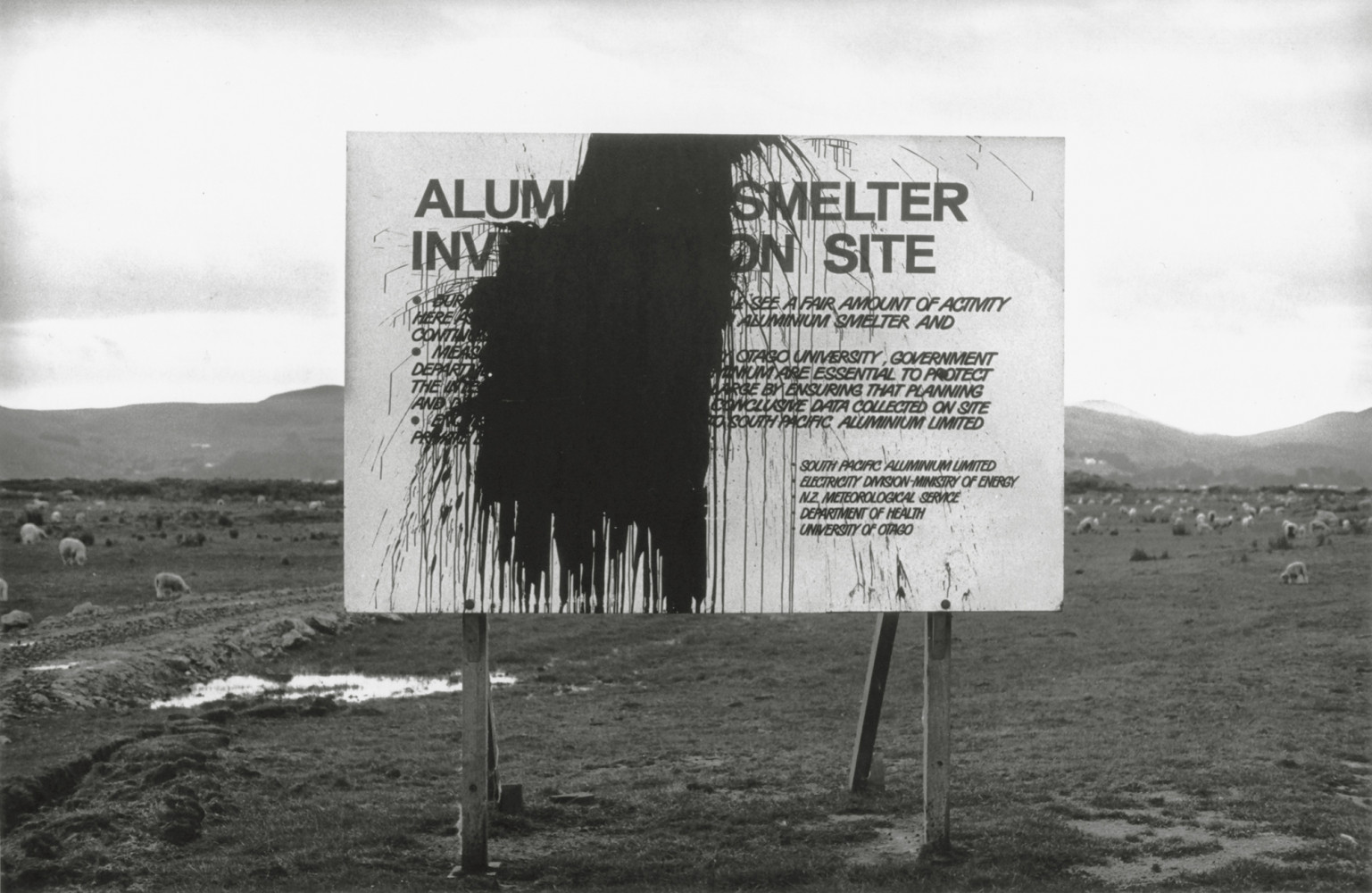
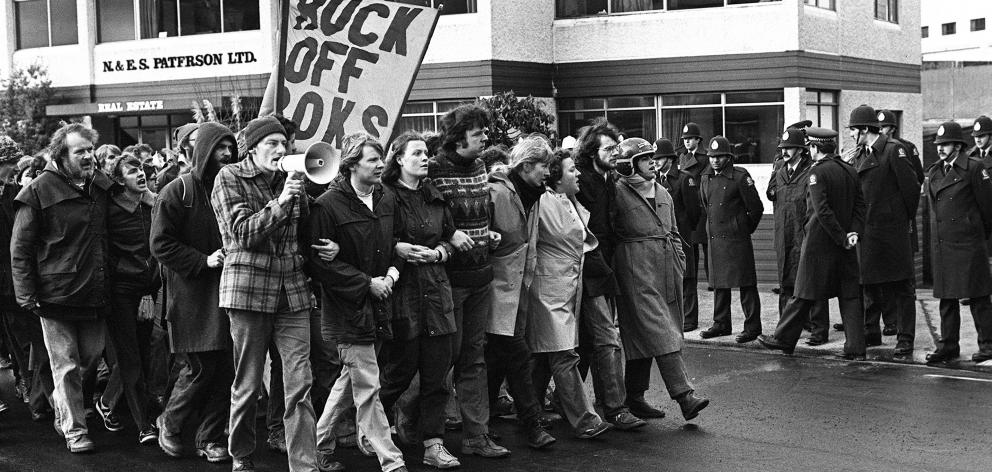
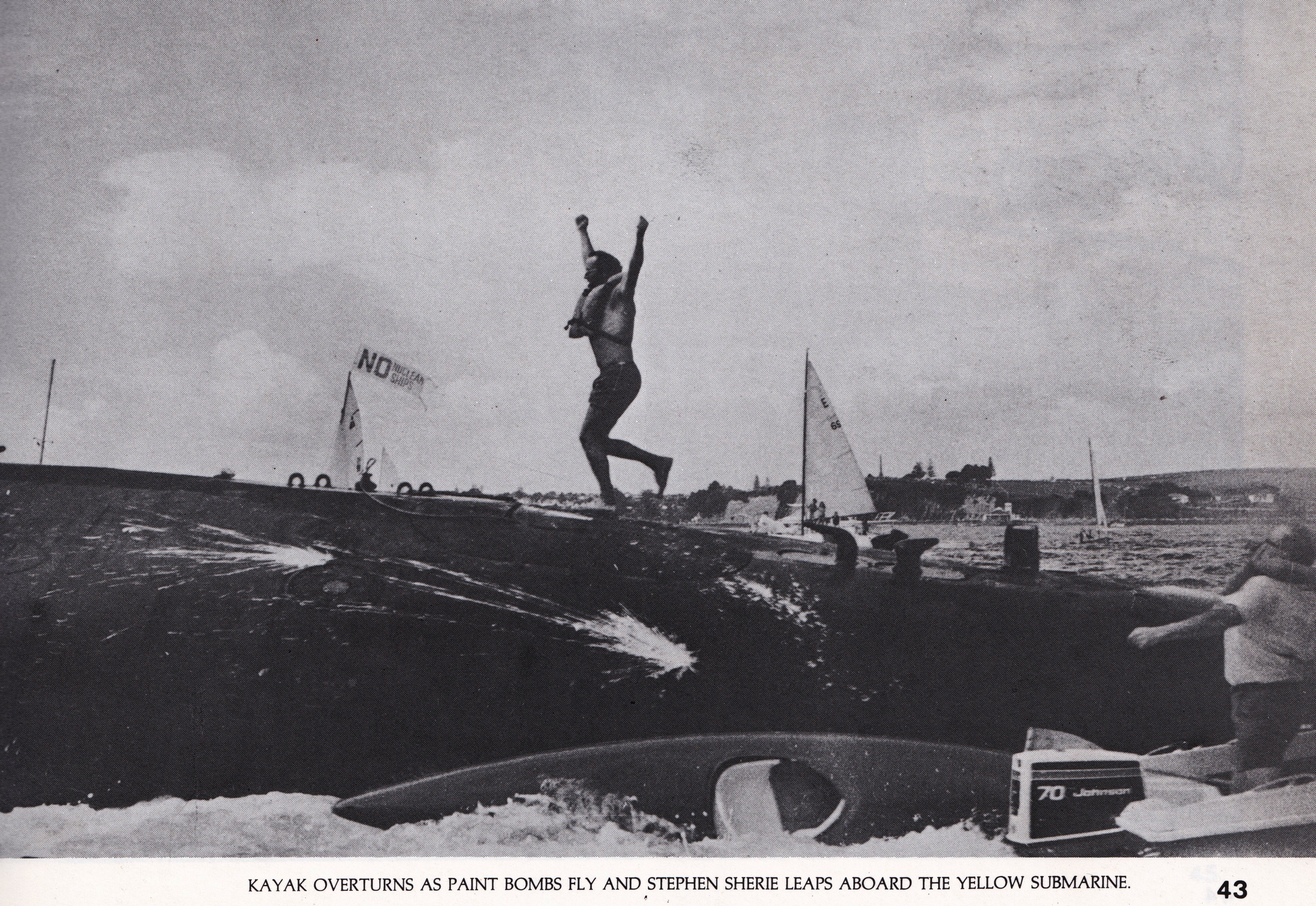
 My response to this argument is always that a combination of protest and lobbying is a tried and true tactic and that protests annoy some people by their very nature – or else they’re not protests.  Without protest women wouldn’t have got the vote when they did, we might still have nuclear armed ships coming here and apartheid in South Africa.  Thanks to Dame Whina Cooper, and her hikoi, there is the Waitangi Tribunal and thanks to people like myself there isn’t a giant moth-balled aluminum smelter sitting out at Aramoana.

3. We need the money! Stop screwing with our jobs!

Commenter – “You tried to stop busses with passengers on board going into town to spend money!! It is not a good look for our community and unfair on cruise passengers, who by the way found all of you a bit of a joke.”

I’m not anti-business. I’m just pro-long-term sustainable business and there is a difference.

 In 2023 Cyclone Gabrielle and the North Island floods cost the country around $15 billion, completely wiping out all of the money from the tourism industry that year. These kind of events are happening every day now around the world.

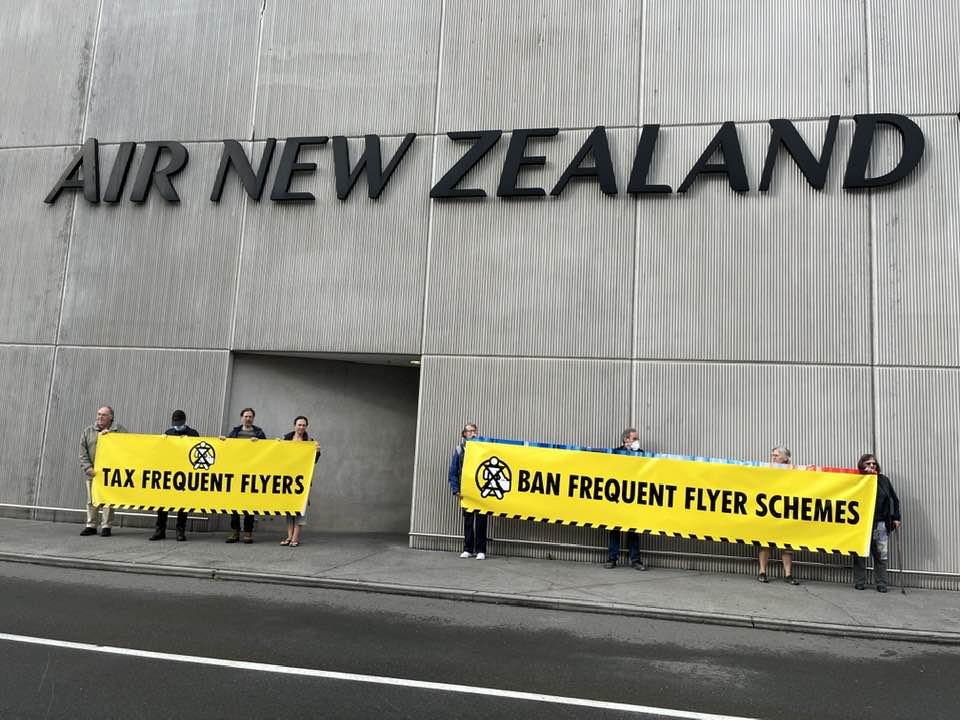
We don’t want to stop all shipping or aviation! We simply want both  national and local government to include international shipping and aviation in their emissions budgets and emissions reductions plans, that subsidies for the cruise industry are ended and that cruise ships be banned from visiting sensitive natural environments.

 Climate change is a real and imminent threat to everyone’s job and if we don’t start making changes right now we are doomed to runaway climate change and the breakdown of society and people fight it out for the remaining resources.

4. If you don’t like it move somewhere else!

Commenter – If you don’t like it you should move!”

What can you say to this? Really?

We are just trying to protect the air, the water, the land, the plants and the animals and our  children’s future by asking for some quite reasonable regulations and emissions reductions. Our government declared a ‘climate emergency’ in 2022.  All of the climate scientists agree that we have to radically lower emissions. We have listened to them and we are trying our best to get some action and I don’t see why we need to apologise or be insulted or threatened for doing so. We don’t need to be a bunch of warring tribes – we are all humans – no matter where we live – and we all have much in common.

Also, despite any rumor’s to the contrary I was born in Dunedin so where would you like me to go? Is Milton far enough away?

5. We’re hypocrites because we drove a car or wore a plastic helmet

Commenter – “They’re all wearing bi products of oil. Ow and how did they get to Port? Hopefully not by bike or bus!” (sic)

Of course we car pool and all the rest of it, but, would it really make a difference if we all crawled there on our hands and knees dragging our gear? I doubt it! 

People seem to think that because we’re sometimes forced to use some petrol or wear something made of plastic during an action the whole thing becomes null and void and we’re hypocrites.

This is a bit like saying that because you’re a member of society you can’t lobby for any changes in society (because you’re part of it).

We get this specious argument all the time.

We’re not asking everyone to turn over-night into some kind of Carbon-neutral Jesus’s. We don’t want to ‘burn down the system’ as someone accused me of the other day. We just want change to move a lot faster! We’re not a bunch of extremists. We’re just your everyday garden pressure and lobby group.

6.We need to get a job!

Commenter – “I think you should all go get a real job lol”

Whether people have jobs or not doesn’t disqualify them from caring about what happens to our environment. Some of the people at this protest were lawyers, scientists, builders, mothers, care workers, and school students but their employment status is really irrelevant.

If it’s really important for you to know – Yes – I have a job and I pay tax.

7.We just like causing trouble!

Commenter – “They are bludgers and leaches and hypocritical attention seeker!”

Some people seem to think its ‘easy’ being a protestor and we love getting freezing cold, bored, lonely, trolled, abused, beaten up and arrested for trying to save what’s left of our eco-system. People tell me I shouldn’t be surprised or complain when people assault us for merely standing somewhere holding a sign. Obviously the vast majority of us don’t enjoy any of these things but feel duty bound by our consciences to try and do something/anything so we can look our children and our grandchildren in the face and say that we tried to make a difference.

8. We should all go and protest somewhere else such as Russia or China!

 Commenter – “Get a fucking life! Go and protest somewhere you’ll actually make a difference!”

 We should all travel overseas and protest? Really? How feasible is that? The reality is that we live here and this is where we have the best chance of making any change. It may seem like our emissions are small beer but this country is a significant emitter – the 21st highest contributor in the world and around fifth highest within the OECD and they are going up all of the time.

9.We’re a bad influence on the young people protesting with us!

 Commenter-Your teaching young people to enlighten people by yelling at them…you don’t see any better methods than this honestly?” (sic)

My response to this comment was that I’m not teaching them anything. They are thinking and acting for themselves. If I was a young person I would be absolutely furious about the Government’s lack of action to mitigate the looming existential threat of runaway climate change. I will help them all I can!

10. Science will save us!

Commenter – “We have come from Steam Engines to Hydrogen powered vehicles. Your protests are futile. The drive for efficiency will prevail over all.”

This is a scary argument on a number of levels and with a lot of magical thinking involved. It’s often used by people who distrust science on the one hand, but like to use their own, or someone elses, interpretations of scientific results to prop up their arguments. I talk to a lot of scientists and right now most of them are pooping their pants. Efficiency!? At destroying our environment? Yes! We are very good at that!

11. We are untidy and disorganized

Commenter – “I have to mention how unprofessional yesterday’s protesters were…

Looked untidy disorganized and lacked real meaning.”

I usually wear a shirt and my best shoes and have a shave before I go to a protest so I can thwart this criticism but I can’t speak for some of the others who may sometime lack my sartorial grace. But many of us wear comfortable clothing because it’s not easy doing a long protest – particularly at a mine site or somewhere like that. But what we wear is not the point. Listen to what we are saying!

If many of our detractors knew the sacrifices some of us are  making to try and reduce our own ecological footprints and the ongoing and selfless work we are doing they  might be less vocal in their attacks. We are not expecting everyone to become bike-riding vegans. We’re just trying to save our ecosystem.

—————————————————————————————————————————–

Posted in Cruise Ships | Tagged , , , , , , , , , , | 3 Comments

The Cruise News #1 – “Your a sheep and an idiot’ (sic)

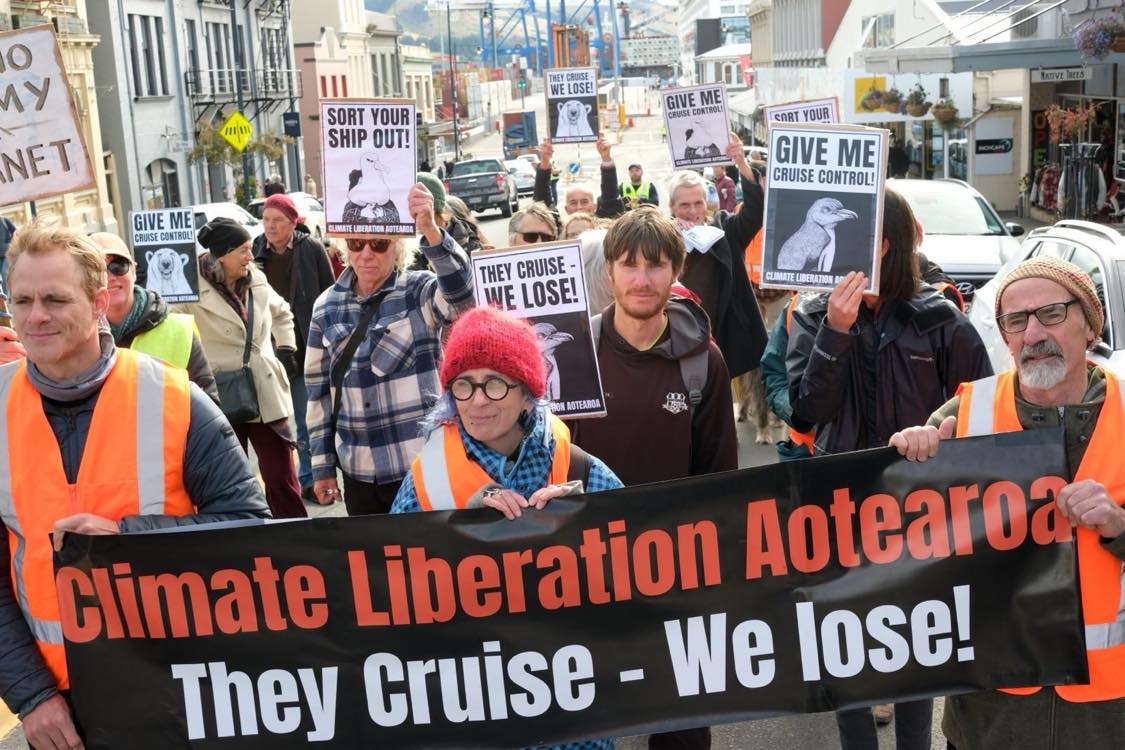
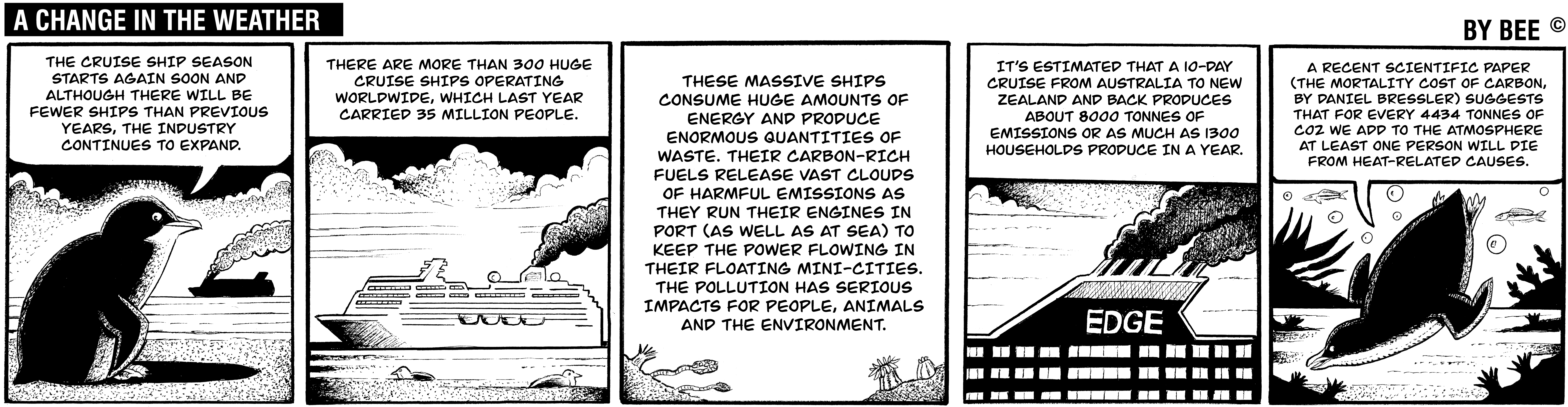
I live close to a local port town which is often visited by cruise ships coming from Australia and other places. In the most recent season (October to April) there were over 120 visits. Some of these ships are absolutely massive with around 4000 passengers and 2000 crew.

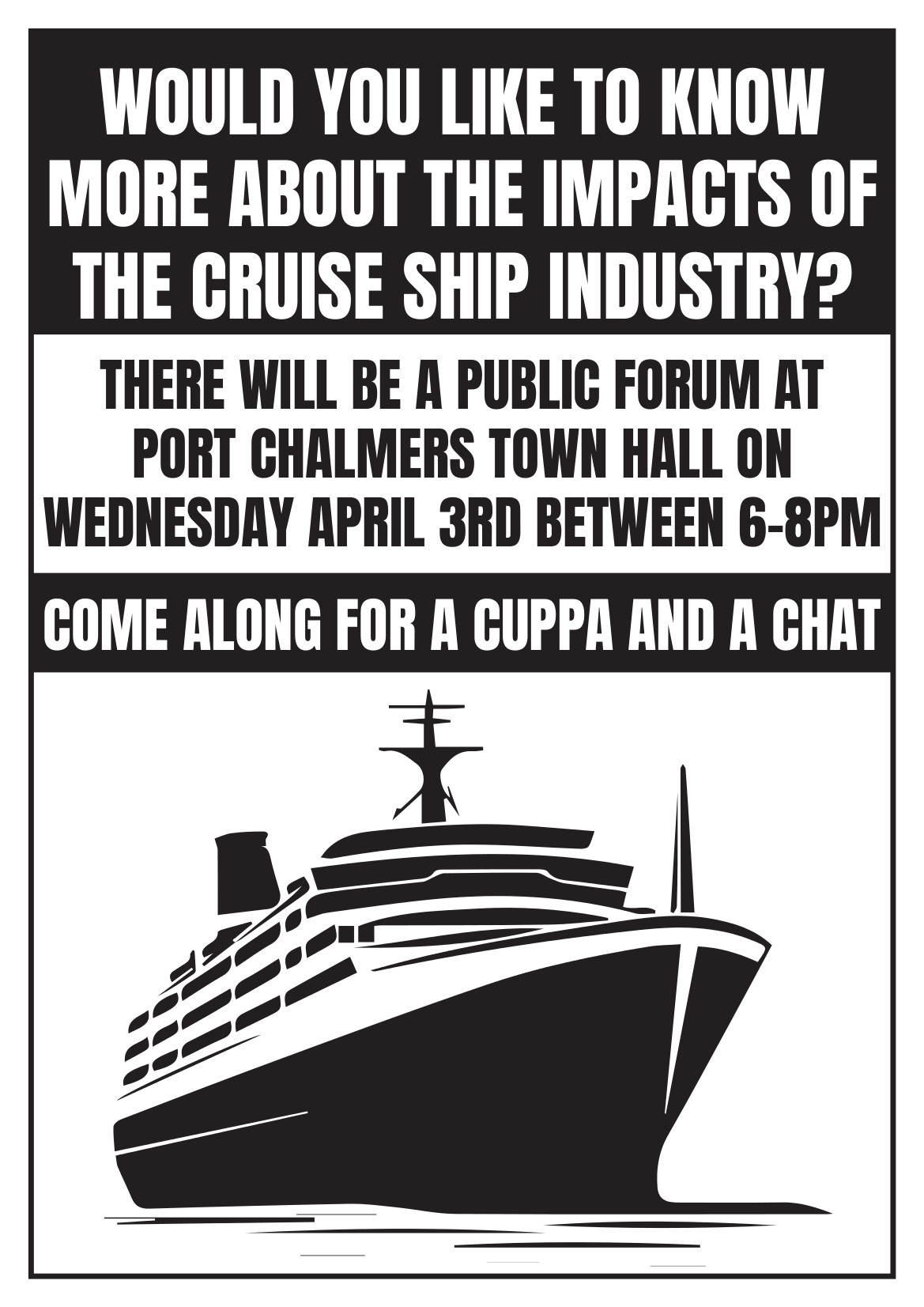
Like many other people I’m very concerned about the gigantic carbon footprint of the industry as well as its impacts on local water supplies, air pollution, public health and transport. With all of this in mind, I helped to organize a public meeting to discuss the issue just after Easter. Around 40 local people attended and there was a robust discussion. However some people get very upset if you even mention cruise ships and if you dare to post anything on the local Facebook page (even a poster advertising a meeting) some people start jumping up and down and throwing insults. Quite a number of them believe they know a lot more about climate science than any of the so-called experts.

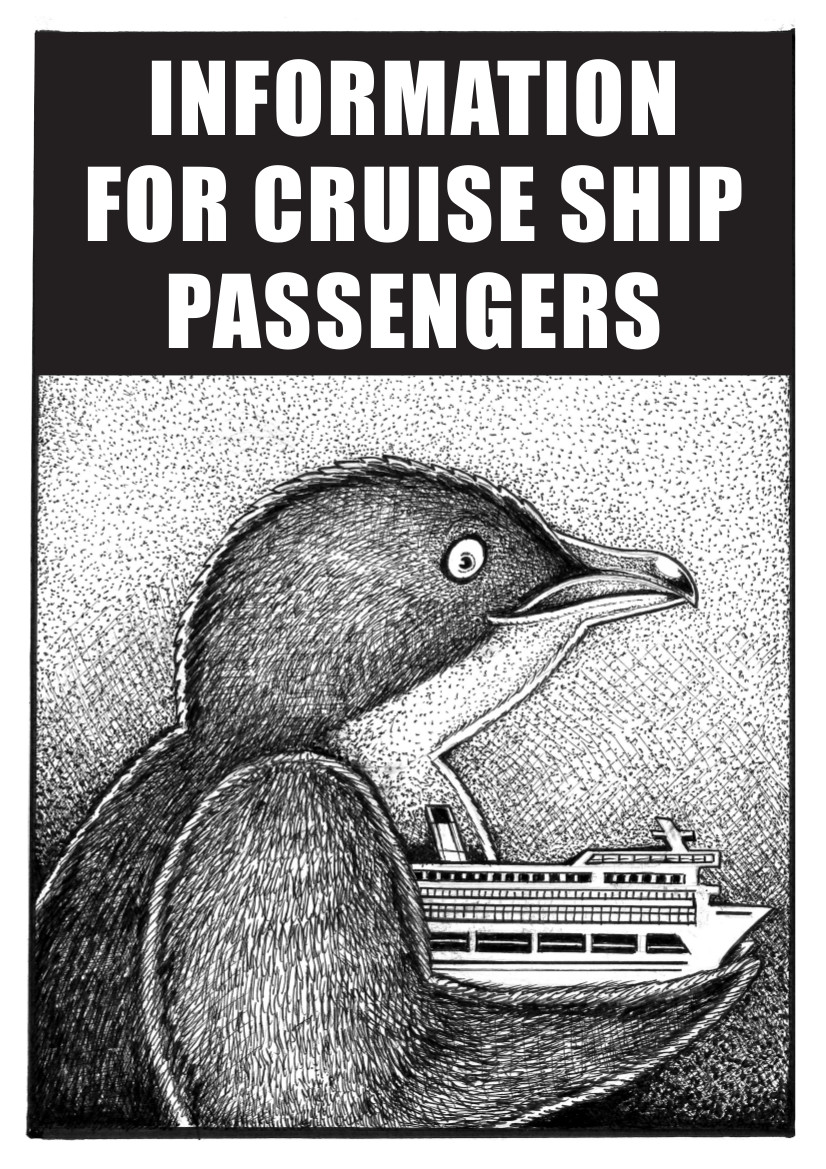
Here are a few comments, and my replies, to and from a local resident who hit back at the my post advertising the talk (see poster below) with a link from ‘The Daily Skeptic’ saying that arctic sea ice is expanding. I guess it goes to show that a little knowledge can be a dangerous thing. NB. I have left all of the spelling and punctuation unchanged.

——————————————————————————————————————–


Resident – Posted a link saying artic sea ice is expanding.

Me – The Daily Skeptic is not a scientific journal and Chris Morrison is not a scientist. I could martial evidence from all sorts of non- scientific websites to prove the world is flat but it’s not.

Resident – can you please show me the paper that shows co2 it the climate driver as I can’t find it

Me -Thank you for your interest. There are probably over 100, 000 of them. Which one would you like?

Resident – the one that takes the hypothesis that more co2 in the atmosphere will lift temperature and proves it with tests

Me – Thank you for your comment. I will try and answer it as best I can- Before the Industrial Revolution began in the 19th century there was a ‘natural’ carbon cycle with animals taking  in oxygen and producing CO2  during the process of respiration . At the same time photosynthesizing plants were taking in CO2 and releasing oxygen. Much of the carbon the plant takes in during its lifetime is fixed in its body of the plant when it dies. In very basic terms this is the natural carbon cycle which of course continues the same way today. Humans changed the game when they started digging up lots of long dead plants ( some of which had turned into oil and  coal etc) and burning these carbon rich fuels in huge amounts and thereby adding  lots of extra carbon to the cycle. At the same time we were busy chopping down lots of trees and deforesting huge areas. There is now way to much  CO2 for existing plants and plant plankton to ‘mop up’ and all the  excess carbon in the atmosphere is absorbing and reflecting heat – much of which goes into the ocean where it affects global temperatures and weather patterns.

Resident – your a sheep and an idiot to believe there bull shit show me the proof

Resident – and again if carbon dioxide is the problem plant more trees cause there real good at turning it into oxygen and funny how there’s trees thriving in places they haven’t for a long time and the recent ice samples that have come to light from millions of years ago when there was more CO2 in the atmosphere carbon dioxide isn’t the problem people like you who buy the bullshit the msm Is feeding people are the problem.

Resident – Wheres your scientific evidence that oil is from plants ? And how did that get thousands of feet under ground? fossil fuel is one of the biggest lies told to humanity and wasn’t global warming originally because of the hole in the ozone layer! oh that’s right that got debunked so they changed that to CO2 and that’s not possible ever. How can a plant turn into oil? That would have to be some pretty magical stuff going on under ground. Again show us the test’s that they have done to prove this is happening not just the hypothesis that CO2 is doing what you say. The only thing that is going on with this whole climate change bullshit is inflation is going up and where paying more taxes and there’s people making billions of dollars out of it. Wake up to there bullshit and stop being part of the problem! electric cars charged by coal power plants? And said cars are now proven to be worse for the environment then any petrol car! just the mining alone is worse let alone the moving of said ore all over the world to turn it into batteries and then when the battery fails there’s no way to dispose of it that is environmentally friendly the whole thing is one big scam and will be the death of millions of people especially if we stop farming have a look at what’s going on in Europe and how the farmers are protesting! The WEF the WHO and the UN should be classified as terrorists for what they are trying to in-force on humanity. And the people who are telling us where the problem driving around in our cars are flying all around the world in there private jets and buying up ocean front property’s hmmm aren’t they telling us the sea levels are going to rise does that make any sense to you?

This is the poster advertising the talk I posted. Like previous posts it garnered over 100 comments but I had to take it down when it devolved into an insult fest. Why is it so hard to have a normal conversation on Facebook? I have added some information about the impacts of the cruise industry below.


Cruise ships book up to five years ahead.

Port Otago CEO, Kevin Winders, says they are not a huge part of Port business, which makes more money from containers and log ships but he admits the cruise ships pay the highest dividend. It should be noted that the Port is owned by the Otago Regional Council – our environmental stewards.

In the most reason season over 100 cruise ships came to Dunedin – either Port or the city.

Thirty-five people are employed six months a year to dock/undock plus customs

 Kevin Winders estimates that the cruise industry  adds some $70million to the city’s economy every year. In the 12 months to June 2019, cruise ship spending throughout the country was $570 million from 322,000 passengers. There is no information regarding spending by the crew.

A 2017 study found that while cruise ship tourists made up around 13% of visits in the preceding year they only contributed to around 3% of the spending.

A new study is taking place at the moment led by Prof James Higham (Co-editor of the Journal of Sustainable Tourism) which is being paid for by DOC on behalf of the Milford Opportunities Group.

2)MARINE CARBON EMISSIONS

A DCC  spokesman noted the Dunedin community carbon footprint in 2021-22 identified marine freight as generating 10% of Dunedin’s gross emissions and 31% of transport emissions.

Marine emissions are primarily generated by the movement of vessels to/from Port Otago. Port Otago is export-dominated, with imports mainly being bulk fuels. Most of the freight exported through the port originates from Clutha and Southland. The most significant volume of exports originating from within the city’s boundaries is logs. For most vessels, Port Otago is their first or last port of call in Aotearoa New Zealand.  

Cruise vessels aren’t currently included in Ōtepoti Dunedin’s emissions footprint due to ‘data limitations’ (according to Port Otago) but the number of cruise vessels calling at Port Chalmers suggests they are a significant source of emissions for the city. 

We need to ask that these emissions are calculated and included in the city’s Carbon Zero 2030 plan.

3. AIR POLLUTION

https://www.maritimenz.govt.nz/commercial/environmental-requirements/prevention-of-air-pollution-from-ships

In 2020 Port Otago started to measure air quality at its Port Chalmers base after complaints from the public and to new regulations from the International Maritime Organisation (IMO) regarding the  Prevention of Air Pollution from Ships.

The ongoing monitoring is being done by Plume Labs at a site up on the hill. There is a website where you can read live reports of Real-time levels and forecasts of Particulate Matter (PM2.5, PM10), Ozone (O3) and Nitrogen Dioxide (NO2) in Dunedin.

https://air.plumelabs.com/air-quality-in-port-chalmers-aw-249931

Fair (which it is today)means that the air is moderately polluted. This is greater than the maximum limit established for one year by WHO. A long-term exposure constitutes a health risk. Poor means the air has reached a high level of pollution and is unhealthy for sensitive groups and to  limit your time outside.

New Zealand signed up to Annex VI of the International Maritime Organization (IMO) Convention for the Prevention of Pollution from Ships (MARPOL) on 26 May 2022. MARPOL has six annexes categorised by pollution type. Annex VI of MARPOL seeks to address the impact of air pollution from shipping activities on human health and environments in and around port communities, and the impacts of emissions from shipping activities on climate change and ozone layer.  Some of these regulations (the ones around Port Air Quality) came into force in NZ law starting from August 2022 but I am still trying to find out exactly what they are. So far nothing seems to be happening regarding legislation around the effects of shipping industry and climate change – just talk.

Prior to this there were no regulations about air quality at NZ ports.

Cruise ships recently stopped using fuels containing sulphur oxide and this is a step in the right direction. Their scrubbers have also improved but all the nasty stuff these scrubbers catch still has to go be stored on land.

4.WATER RESTRICTIONS

Recently there were water restrictions in the West harbour and local reservoirs are hitting rock bottom.

While the ships do have desalination plants on board for producing drinking water they still pump on thousands of gallons of water at local ports for showers and cleaning etc.

The average cruise ship can use around 8,000 gallons of fresh water PER HOUR (about 200,000 gallons (700,000 litres) per day ). Larger ships can use over half a million gallons per day.

For quick math: average passenger uses about 150 gallons per day, so the ship in the photo here (Celebrity Edge, 3,000 passengers) uses about 450,000 gallons of fresh water PER DAY, just for the passengers.

The two largest water treatment plants, Mount Grand and Southern, supply most Dunedin customers. The Port Chalmers water treatment plant supplements the water supply during the cruise ship season (October to April). Waikouaiti, Outram and West Taieri also have small treatment plants. (DCC website).

During normal operations, Port Otago accounts for about 2% of water usage in the Port Chalmers area, but this can increase significantly – to between 20% and 30% – when they provide water to cruise ships.

It’s true that not every cruise ship who visits Dunedin takes on water  and in light of our recently implemented restrictions Port Otago have confirmed they will only supply vessels with water if the need is urgent while our water restrictions remain in place.

Some figures

Last cruise season (2022/23) cruise ships in Lyttelton port took on ~6750 tonnes of freshwater in total. 1/3 of cruise ships took on water (79/3) at an average of 250 tonnes each.

This equates to what all Lyttelton (incl Rāpaki, Cass and Corsair) households would use over 11 days*).

In Port Chalmers water use was supposedly much higher and it has been suggested it was over 70,000 cubic metres (or the same amount in metric tonnes) during the last calendar year. This is a lot more than in Lytellton!

Yes – the DCC gets paid for this but it’s the local residents who are subsidizing it.

Port Otago is a commercial customer and the DCC meter and bill them for their water usage, including the water they supply to cruise ships, as per our Water Bylaw.

5. TRANSPORT

We all know there is pressure on the local bus network when there are cruise ships in town and many passengers go on excursions using Ritchies Buses (as well as with other companies) and this is a significant source of emissions in itself, particularly when the buses keep their engines on all the time to run the air conditioning.

There is also the issues of Dunedin Railways (which is owned by the DCC) bringing trains out to the ships so passengers can go on excursions such as the Taeri Gorge Rail Trip. Local rate payers have subsidised the maintenance of this railway line for no benefit to themselves when there is a perfectly good rail line going from Port to Dunedin. Why can’t Dunedin railways trial a morning and evening service five days a week for the benefit of local people instead of just catering for well-heeled visitors.

—————————————————————————————–

6. What we want locally

1) An independent study to calculate the carbon footprint of the industry – both locally and nationally. This is not just the ship movements themselves but all of the other emissions created by the industry such as building the ships themselves as well as  flying passengers to and from and ships and driving them round at each port.

2) An independent study of the amount of water taken on by cruise ships while in port (Note- A cruise ship will bring fresh water onboard when they visit ports. However, this water is not for drinking. This water is used for laundry, as ballast, or to cool the engines. Water used for drinking is usually taken from seawater undergoing a desalination process.) Is this level of water uptake sustainable?

(3) We would like to see these emissions added to Dunedin’s Zero Carbon Budget 2030 along with other local marine emissions. Port CEO Keven Winders has already said he wants to keep these emissions out of the city’s carbon zero plan.

4) We would like an appropriate carbon tax added to all ticket prices to help buy local (not overseas) carbon credits to  help off-set these emissions.

5) We would like to discuss halving the number of large cruise ships visiting the port in the  2024-25 season  to help take some pressure off the local environment and infrastructure while studies are being done and negotiations are taking place to address these issues

7) We don’t want them going to Milford Sound as an oil spill there would be a huge ecological disaster in this very sensitive area. It is already suffering from the effects of climate change – in June 2022 unusually warm water killed millions of sponges , as well as killing thousands of corals. Cruise ships are a major contributor to climate change.

GENERAL POLLUTANTS FROM CRUISE SHIPS

Pollutants and waste from cruise ships include air emissions, ballast water, wastewater, hazardous waste, and solid waste. An average cruise ship generates a minimum of 1 kg of solid waste plus two bottles and cans per passenger per day and an average of 50 tons of sewage (black water) per day. A figure of 3.5 kg/passenger/day, with the estimated amount of generated waste (typical one-week voyage) including 25,000 gallons of oily bilge water; 210,000 gallons of sewage (or black water); 1 million gallons of non-sewage wastewater from showers, sinks, laundries, baths, and galleys (or grey water) and eight tons of solid waste (i.e. plastic, paper, wood, cardboard, food, cans, glass).

The average cruise ship of 3,000 passengers and crew generates about 50 tons of solid waste in a single week. These vessels, or the ones with double capacity (i.e. the Royal Caribbean Oasis-class vessels that exceed capacities of 6.000 passengers), cruise with a capacity utilization that exceeds 90%, thus producing significant wastes and residues to be delivered at the cruise ports they visit.

Posted in Climate Action, Cruise Ships | Tagged , , , , , , | Leave a comment

LOCKING UP ALL THE CLIMATE PROTESTERS WILL NOT STOP RUNAWAY CLIMATE CHANGE

There has been a significant change in the way that the police and the courts treat climate protesters, both here and overseas with a much harder line being taken against them and increasingly severe costs and other penalties. Two Kiwis from the group, ‘Just Stop Oil’ were recently given a lengthy jail term in England and it’s likely local protesters will face ever more severe penalties if there’s a change of government here.

Restore Passenger Rail Protest in Wellington – photographer unknown.


In 2019 Extinction Rebellion members blocked a coal train from reaching the Port of Lyttelton. Nineteen people were arrested but none were charged. A couple of months later ‘dozens of arrests’ were made at a big Extinction Rebellion protest in Wellington but again, no charges were laid.

Later that year Dylan Parker became the first Extinction Rebellion activist to be charged in New Zealand for ‘illegally being in a building’, at the gas industry conference in Christchurch. This charge was dropped the following year.

The following year fifteen people were arrested for blocking access to a Bathurst Industries coal mine in Canterbury but again no charges were laid.

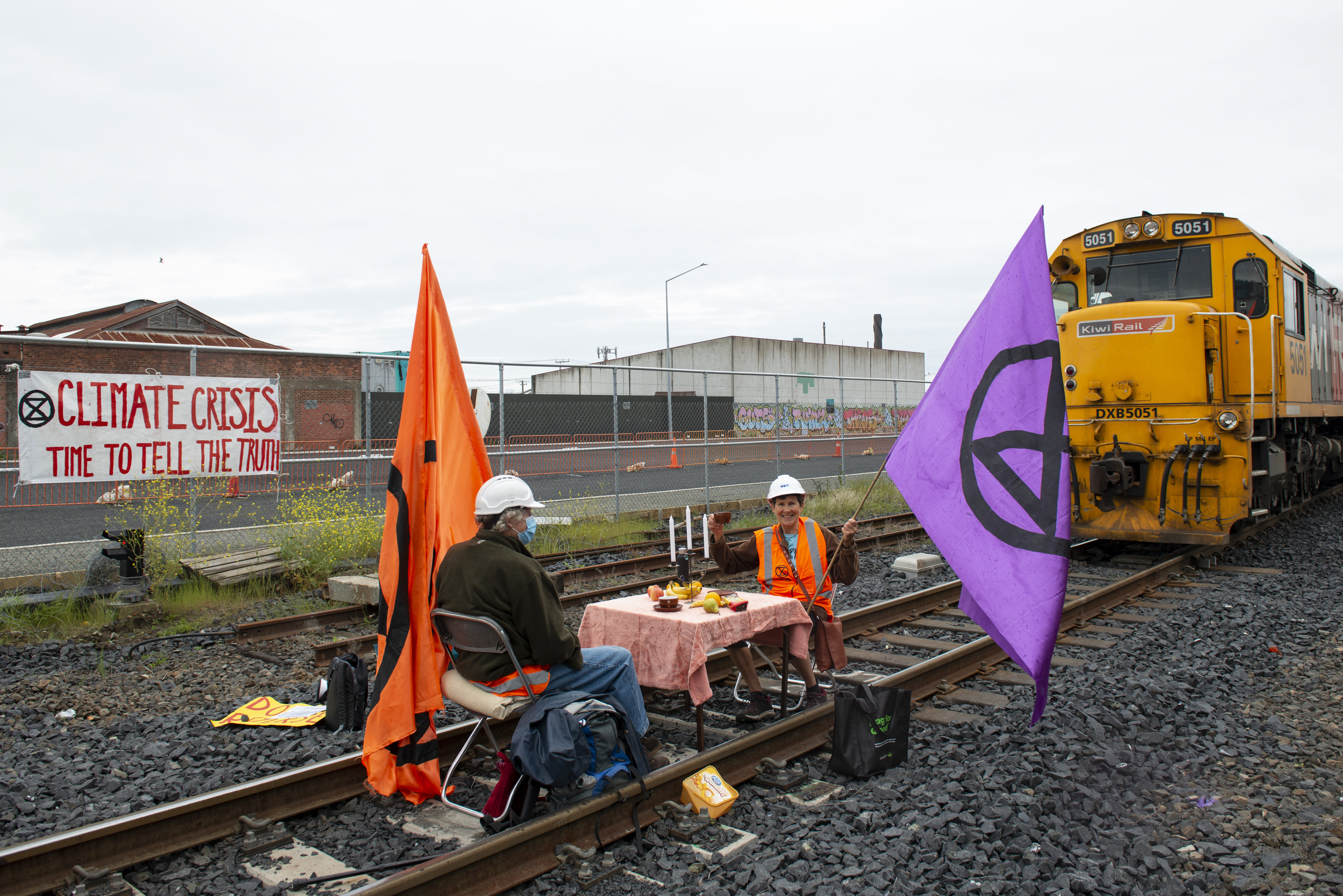
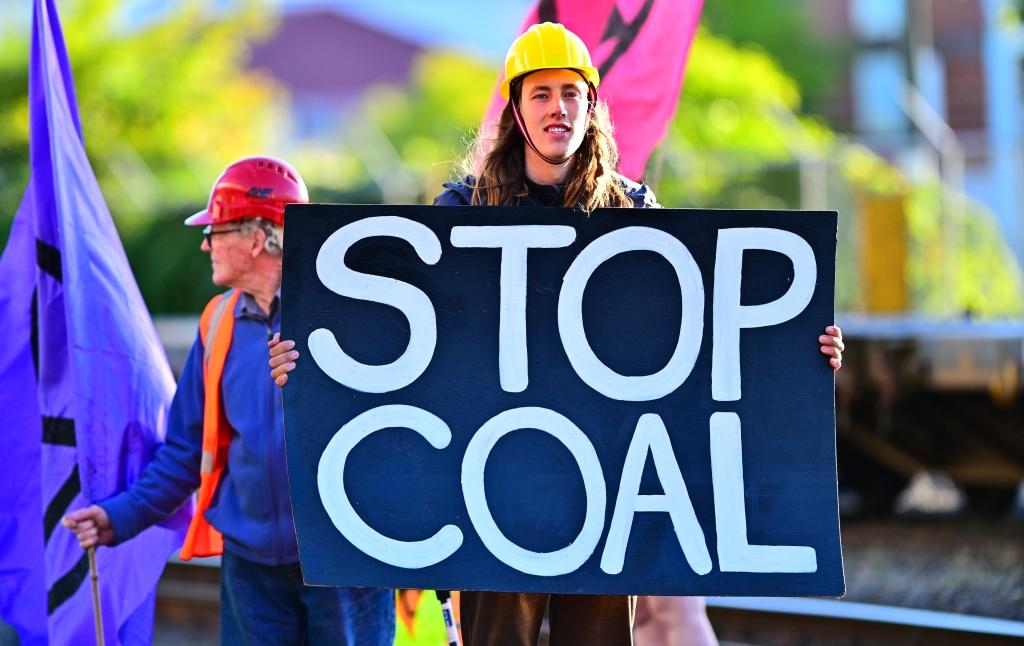
Between December 2020 and April 2021 climate protesters blocked a railway line four times in Dunedin to try to stop Fonterra’s deliveries of coal from Bathurst Industries coal mine at Nightcaps. No one was detained or charged at any of these protests.

I think these examples will suffice to show the police were reluctant to arrest climate protestors and even less likely to charge them until there seemed to be a change of position in 2021 shortly after the Government declared a ‘climate emergency’.

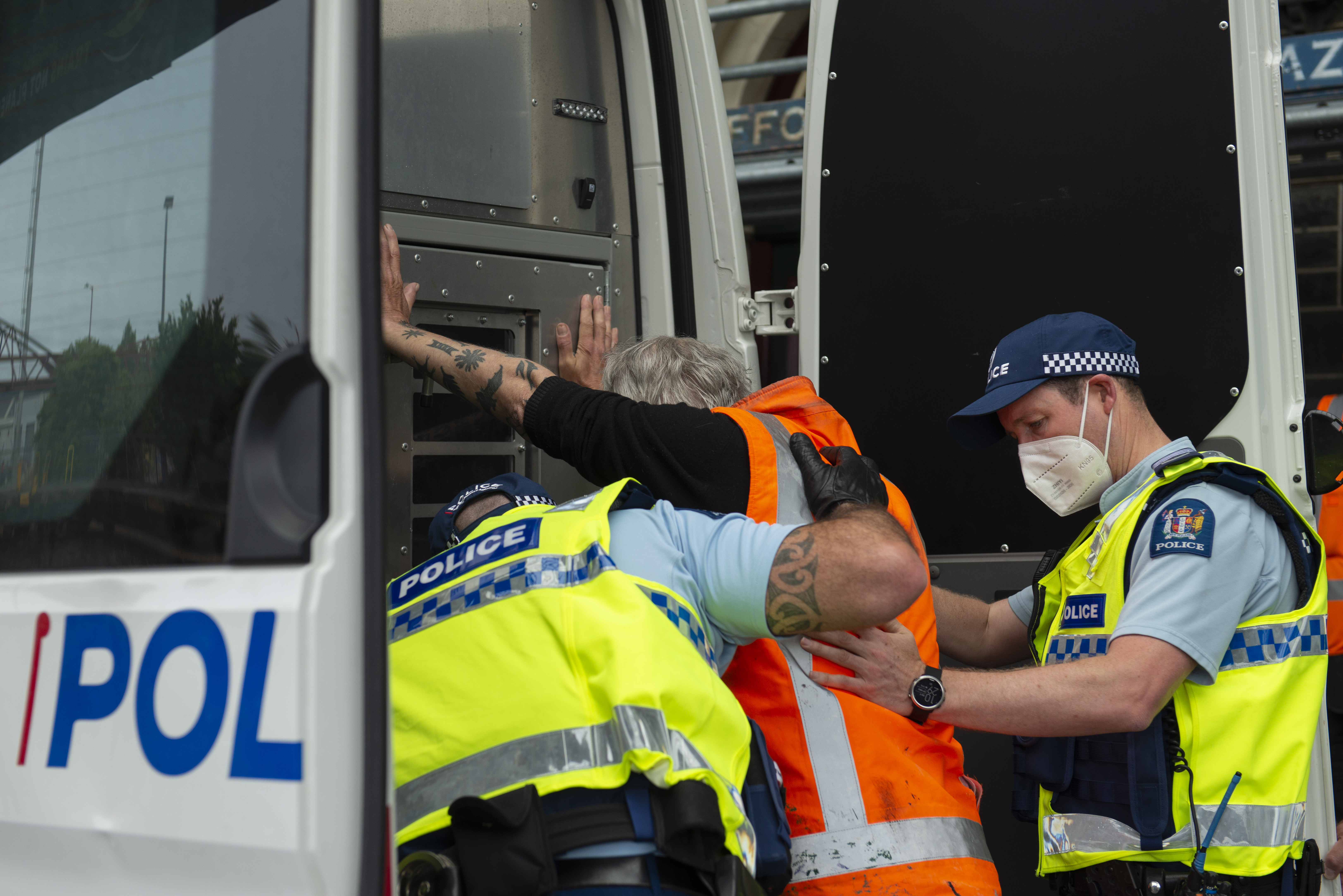
In late 2021 eight climate protesters in Dunedin blocked KiwiRail’s coal delivery to Fonterra again and this time eight of them were arrested and charged with two rare offences under the railway act. They were also hit with a bill for $65,000 from KiwiRail. It should be noted that (1) KiwiRail is 100% owned by the government, and (2) that this case is still before the court. The protesters are contesting the charges, saying they stopped the train to save lives and the matter is still before the courts.

The ‘Restore Passenger Rail’ movement arrived in New Zealand in 2022.   Only three national rail routes are left of the almost 100 there were in the fifties. The obvious rationale is to try to reduce the high rate of emissions from transport.

Extinction Rebellion protesters stop a train load of coal heading for Fonterra’s Clandeboye Milk Factory on December 4th, 2021 (Photo by Blake Armstrong)


While Restore Passenger Rail protesters had a popular cause, their methods were anything but. In October 2022 small groups of protesters blocked roads with their bodies. At first they were charged with a minor offence (willful trespass, which carries a one year maximum jail term). They returned to the capital earlier this year (2023) and stopped traffic seven times. Many of them had already been arrested at previous protests and a number of repeat protesters were charged with both bail offences and a new charge of ‘endangering transport’ with a maximum  sentence of 14 years’ imprisonment. This serious charge was also retrospectively applied to those who sat on the roads in 2022. So far there have been 32 arrests. In September 2023 they were back on the roads and two Dunedin women who had been arrested at previous protests were refused bail and remain in jail at the time of writing.

One of these was long-time climate protester and grandmother, Rosemary Penwarden who sent a satirical email cancelling the annual Petroleum Exploration and Production Association of New Zealand (PEPANZ) conference in Queenstown in 2019. Despite it being a pretty obvious fake and the conference going ahead as usual, Penwarden was still convicted at a jury trial in Dunedin in June of this year for two charges of ‘forgery’ and ‘using a forged document’. She awaits sentence with the  latter charge carrying a possible 10 year jail term.

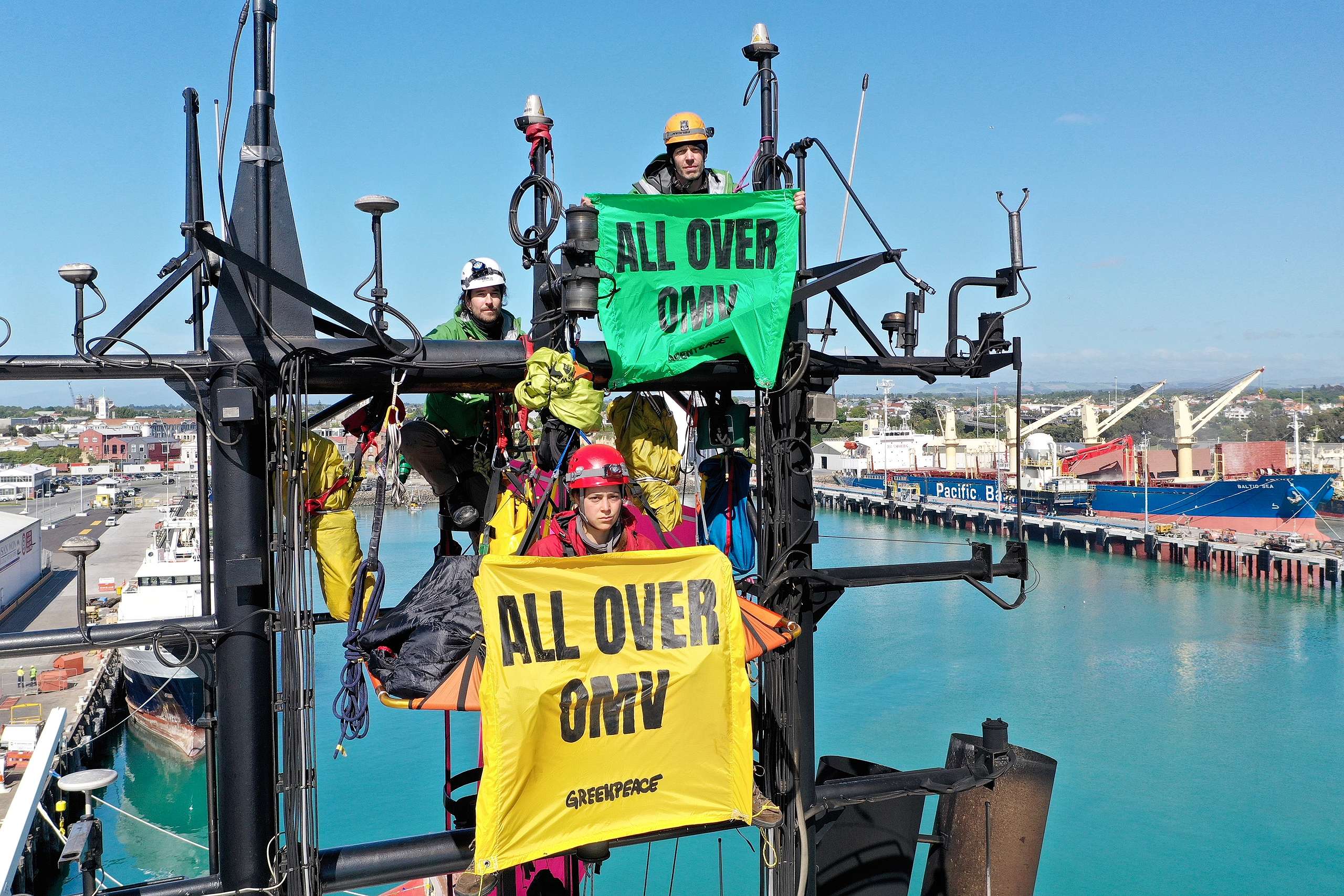
Siana Fitzjohn and Nick Hanafin are also in hot water for boarding the giant mobile oil drilling rig, the COSL Prospector as it travelled near the Marlborough Sounds in March 2020.The following month they were refused a discharge without conviction. The charges, relate to breaches of a controversial amendment to the Crown Minerals Act, which specifically outlaws interference with deep sea oil exploration and carries a maximum penalty of a year in prison or a $50,000 fine. OMV claims their actions cost the company $39,084.35, which the judge could yet order Hanafin and Fitzjohn to repay.

We will not save our environment by persecuting the people trying to protect it.

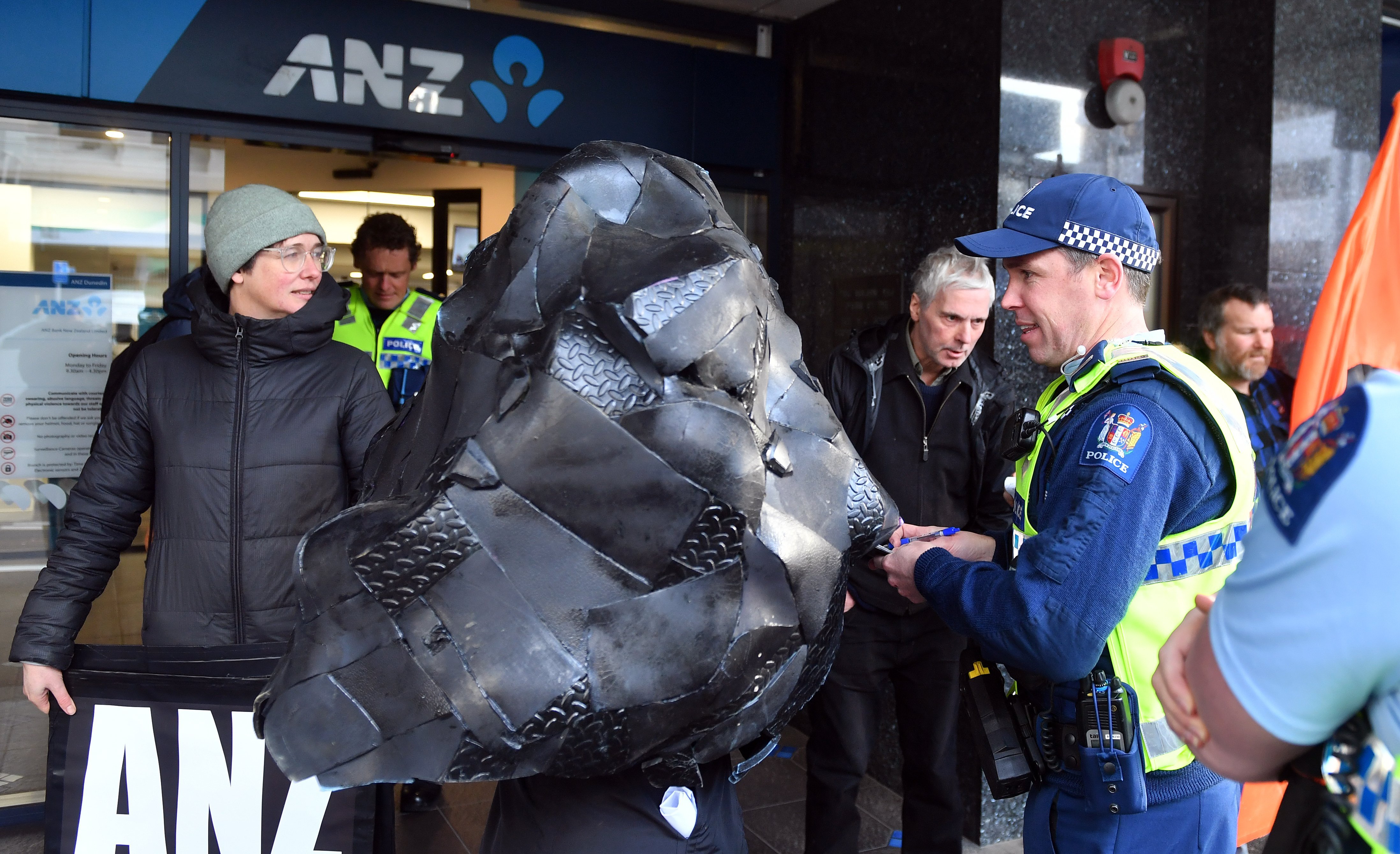
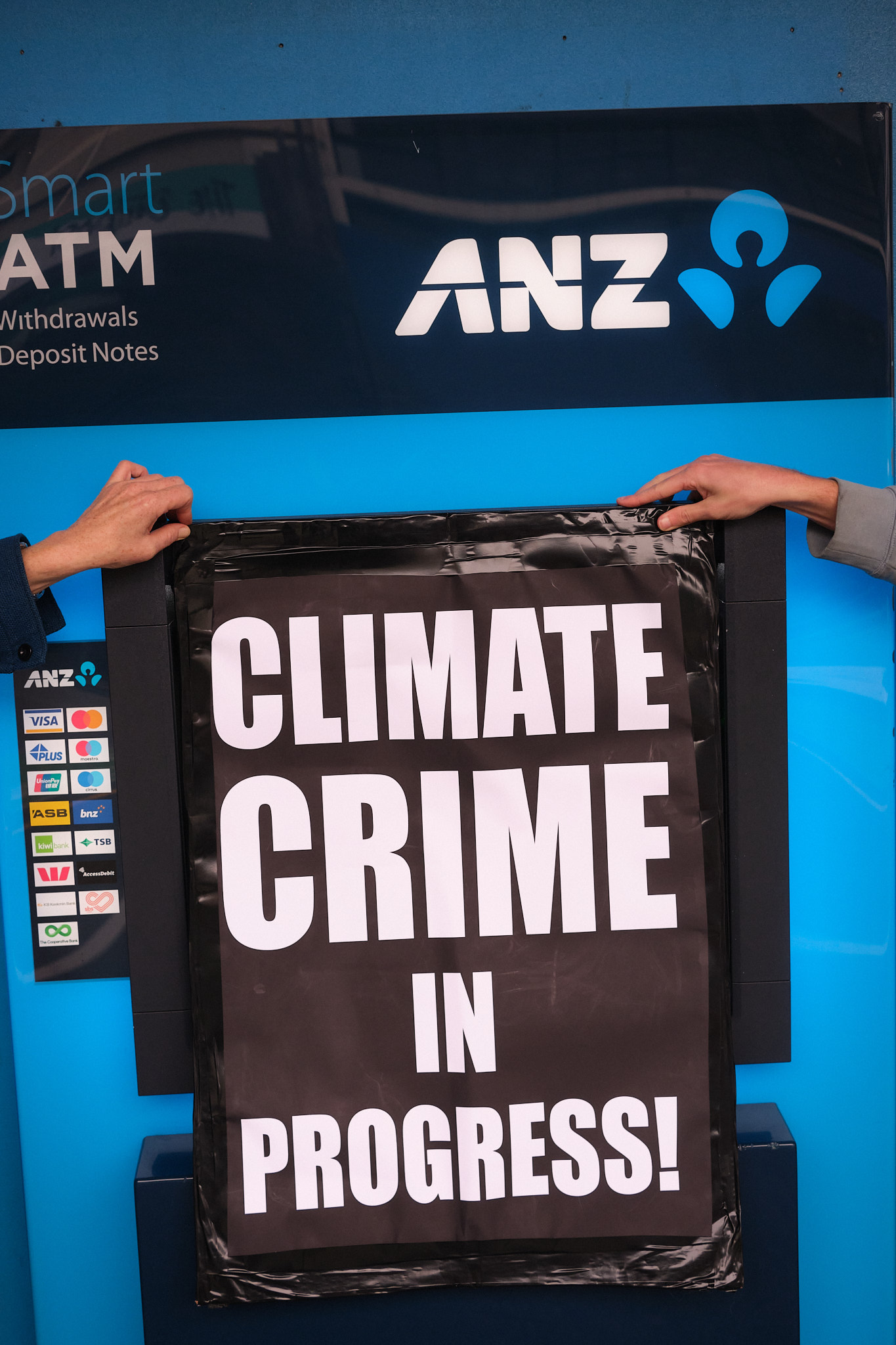
Police take the details of a lump of coal at a protest outside an ANZ bank in Dunedin in July 2023. Photo by Stephen Jacquiery


Posted in Climate Action | Tagged , , , , , , , , , , , , , , , , | Leave a comment

Rosemary Penwarden-Leading By Example

Rosemary Penwarden is a long time climate activist and a tireless advocate for our environment and future generations.

In recent months this brave mother and grandmother has been in the news all over the world for two protest actions highlighting the need for immediate action to arrest runaway climate change but so far the only thing to be arrested is Rosemary herself!

The first recent noteworthy event was a jury trial in June(2023) at the High Court in Dunedin where she was found guilty of two charges for sending a fake email ‘cancelling’ the annual Petroleum Exploration and Production Association of New Zealand (PEPANZ) conference in Queenstown in 2019. Despite the email being a pretty obvious joke with sentences like –

“Our only recourse at this point is to completely reassess our approach to the basis of our industry, petroleum… But there is a silver lining to all of this: we will not be there to listen to that incessant chanting (i.e. – from protesters) “

The conference went ahead as usual but Rosemary was still convicted of two charges. One of ‘forgery’ and the other of ‘using a forged document’ with the latter carrying a maximum penalty of 10 years’ jail. She has applied for a discharge without conviction and will be sentenced in September 2023.

The second event was for allegedly endangering transport on State Highway 1 in Kilbirnie in Wellington in late August(2023)when she(together with three other protesters from the group – Restore Passenger Rail) blocked the road with signs and their bodies. This is not her first offense for blocking traffic in the capital at previous RPR actions and she was the only one out of multiple fellow protesters to be declined bail and is currently remanded in custody until September 11th. The charge of ‘endangering traffic’ is a serious one which carries a maximum sentence of 14 years’ imprisonment.

So who is this trouble-making grandma and why does she seem so keen to go to jail?

————————————————————————————————————————

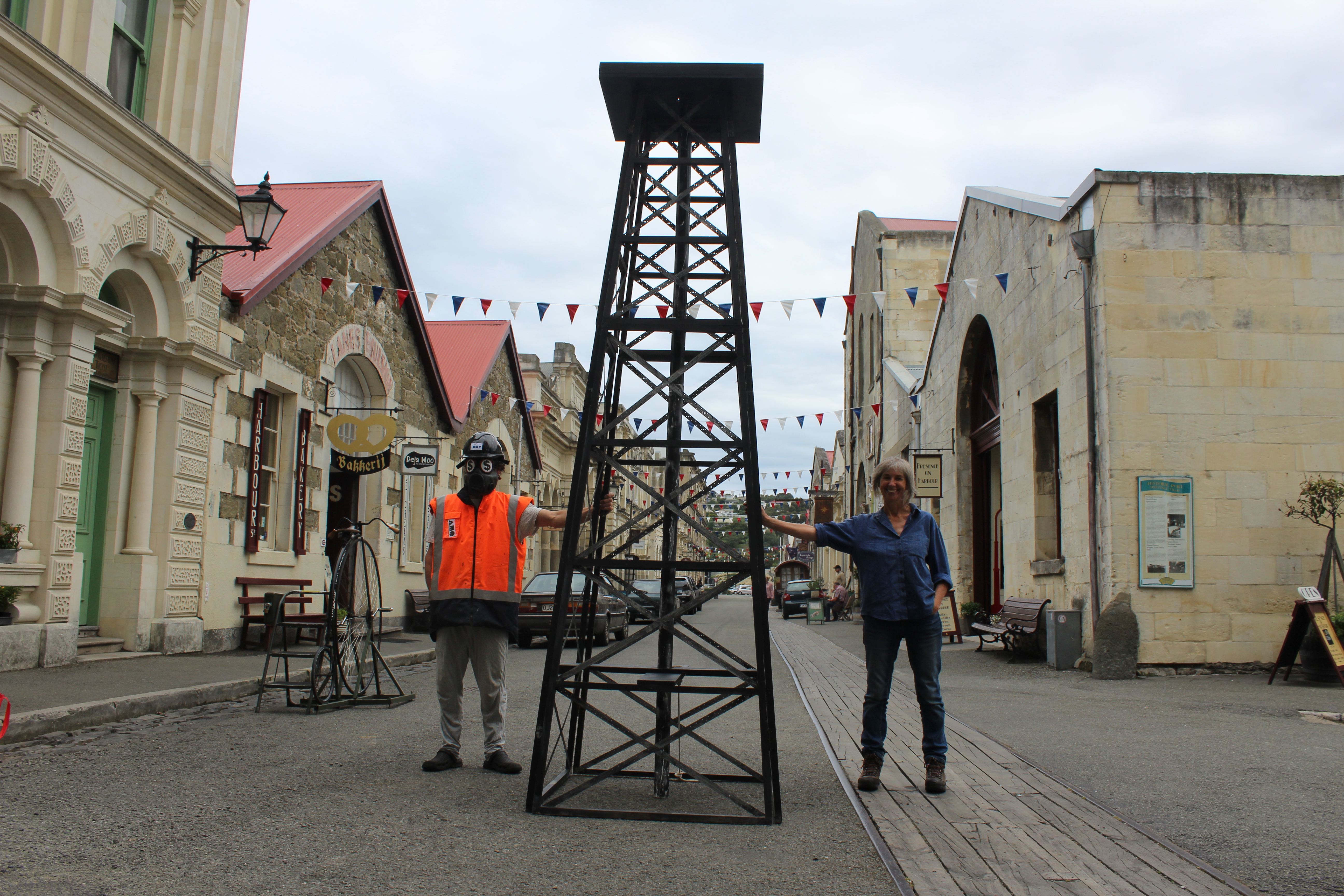
Rosemary and an anonymous supporter pose beside ‘Diana Rig’ before a public talk in Oamaru in 2019 when OMV were drilling for oil and gas off the local coast.(Photo by BM)

Rosemary was born in Whanganui in 1959 as part of a pretty typical Kiwi family.

Her dad was a dairy farmer and her mum a nurse before marrying and caring for their seven children. Rosemary, child number five, was the self described ‘runt of the litter’. She credits her father for passing on to her his love of nature (he was probably one of the first dairy farmers to put his small piece of lowland forest into QEII Covenant) and her mother for her unconditional love. Her Primary School Teacher, Mr Taylor, is cited as another strong influence, who, unusually for both the profession and period, taught the young Rosemary to question both authority and its legitimacy. 

Like many seventies youngsters she left school at the tender age of sixteen and went straight into a job working for the local hospital as a lab technician. Three years of work and study between Whanganui Hospital and the Central Institute of Technology led to a Diploma in Medical Laboratory Technology (Paramedical), then she moved to Upper Hutt to work as science technician and scientific officer in the research virology lab at Wallaceville Animal Research Centre.

It wasn’t long before Rosemary was infected by a bug herself, the ‘travel bug’, and embarked on an extended overseas sojourn travelling via North America, Canada, Mexico and Central America to the UK and Europe.  On her return to New Zealand in 1983 she began a Bachelor of Arts degree at Auckland University majoring in Spanish. It was around this time Rosemary developed a lasting interest in Buddhism, yoga and Eastern philosophy. She followed this interest to the far north in 1985 to caretake a property and log cabin near Kaitaia owned by a yoga group “Star of Asia”.  A year later, back in Auckland, Rosemary’s first child, Arani was born (a Hindu name meaning ‘one who illuminates others’). It was an inspired choice of name; Arani grew up to become a primary school teacher.

In 1988 Rosemary and Arani moved to Waitati (a tiny coastal community north of Dunedin) which instantly “felt like home, surrounded by nature and like-minded people.

In 1990 her second child, Jesse was born and when he was three Rosemary returned to full time study to finish her Diploma in Medical Laboratory Science at the Haemotology lab at Dunedin Hospital where she worked for the next thirteen years. She became a local representative on the National Executive of the Medical Laboratory Workers Union, fighting for humane working hours and better working conditions for her colleagues. These activities fostered an expanding passion for equality and social justice.

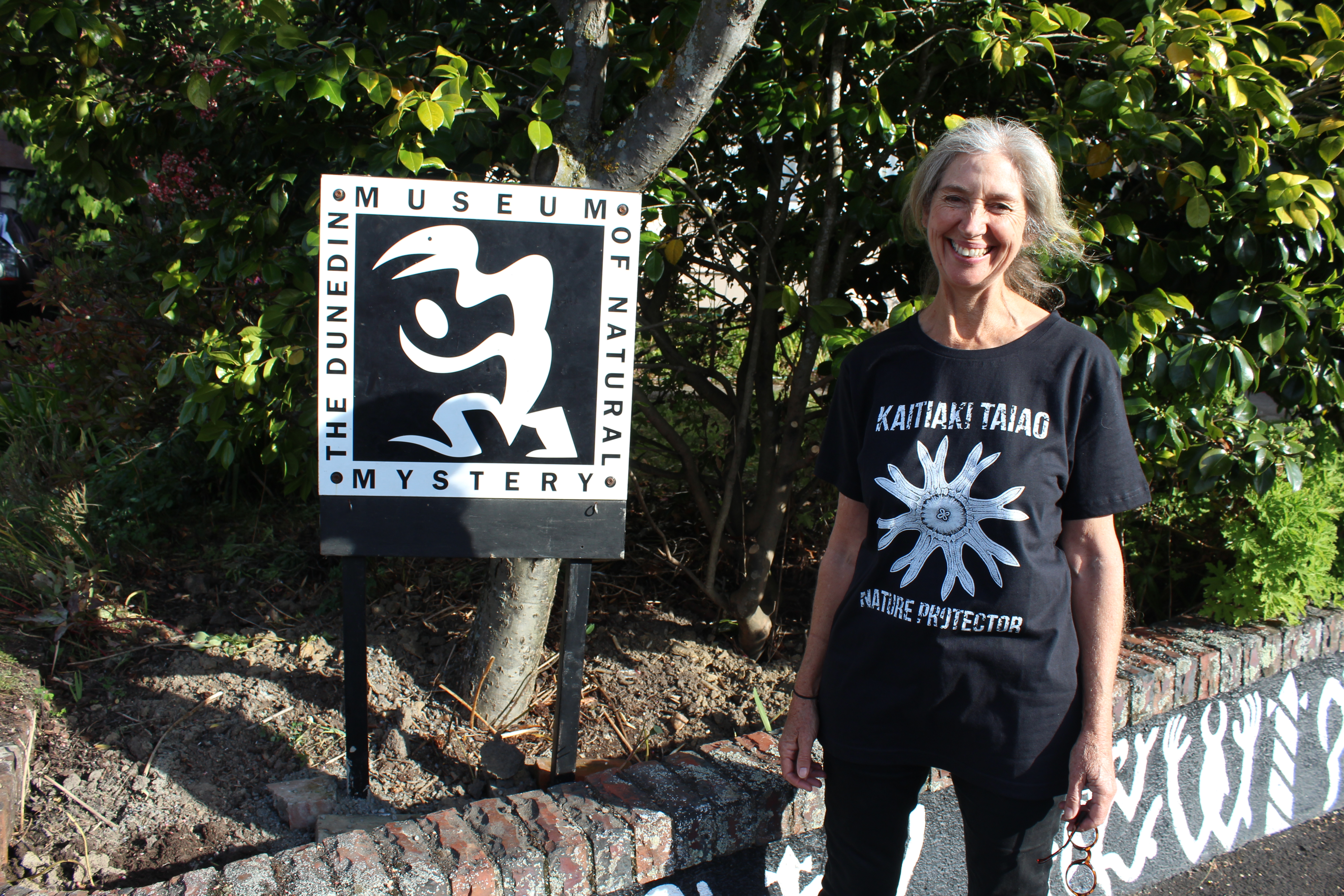
Rosemary outside The Dunedin Museum of Natural Mystery in 2022.(Photo by BM)

When the Dunedin Hospital laboratory was privatised in 2006 she was offered a job as Delegate Support Officer for Contract Negotiation Services, a company that offers union support to laboratory workers, resident doctors, radiographers and other health professional groups.

The year, 2011, was pivotal for Rosemary for two reasons.

“The most amazing moment of my life was watching my daughter give birth to my grandson. He will be 39 in 2050 when the government has committed to being net zero carbon. All of a sudden climate change became real and personal for me. A lot of what I do now, I do for Arlo and his sister, Adaline. 

The second was the visit to Dunedin of a NASA scientist, James Hanson. He had just published a groundbreaking paper entitled “Global Surface Temperature Change” describing recent advances in global temperature analysis which clearly pointed to a dangerously uprising trend in world wide temperatures. Increased evidence of more warming in the more industrialised northern latitudes provided strong evidence this warming was anthropogenic (human caused) in origin.

Shortly afterwards Green Party co-leader, Jeanette Fitzsimmons, also visited the city and gave a talk about Solid Energy’s plans to create a massive lignite mine in the Mataura Valley. Solid Energy’s plans included a lignite-to-briquette plant, a lignite-to-urea plant and a lignite-to-diesel plant, in all adding up to 20% to New Zealand’s greenhouse gas emissions and destroying the Mataura Valley and its close knit farming community. Fortunately a fall in the price of coal and resistance at both local and national levels scuppered the project.

Rosemary began to have serious concerns about the implications of unchecked development and climate change for her young grandchild’s future. Would there still be a habitable planet for him when he grew up to have children of his own or would the planet have become a toxic wasteland? It was at this point she decided to devote the rest of her life (no matter what the personal cost) in the pursuit of environmental and social justice.

“I can’t think of anything more useful for a grandmother to do than to highlight the need for us all to get a little bit uncomfortable to try to save a viable future for our children,” she said.

One of the first things she did was to join CANA (Coal Action Network), a group formed by people who already had considerable experience working for the ‘Save the Happy Valley Coalition’. This was a sadly unsuccessful campaign to thwart the creation of an open cast coal mine on the West Coast of New Zealand.

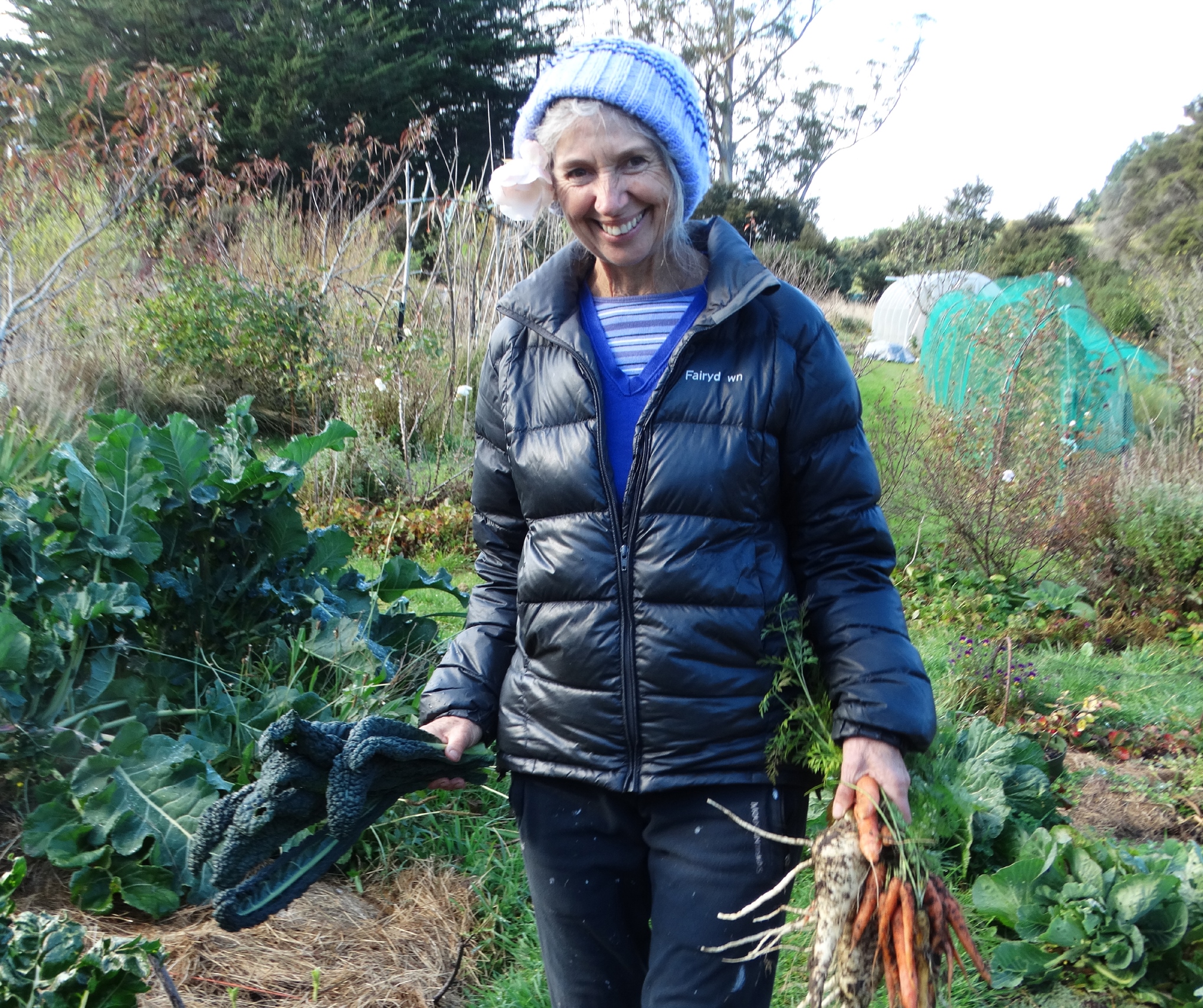
Rosemary in her garden – May 2021 (unknown photographer)

CANA’s position is that the mining and burning of coal is the primary threat to Earth’s climate system.

One of Rosemary’s first actions was to write a booklet opposing the Mataura Valley Lignite Mine, “Just Lignite”, which was paid for by the Anglican Church. After over thirty thousand copies were distributed and the campaign had a successful result Rosemary felt some confidence that she had some positive skills to offer the movement. In fact today she still regards the public outreach she achieved with this publication as one of her biggest ‘environmental’ successes.

Since then Rosemary has been an active participant in a number of other groups, particularly ‘Oil Free Otago‘, ‘Extinction Rebellion‘ and more recently, ‘Restore Passenger Rail.’.

In 2019 she was one of a group of protesters who demonstrated outside the 2019 Petroleum New Zealand Conference in Queenstown (as already mentioned) and in November of that year she was among 30 protesters who boarded OMV’s support vessel Skandi Atlantic. OMV are a huge multi-national company whose giant mobile rig, the COSL Prospector, had just completed its drilling programme for oil and gas off the South Otago coast at the time.  Luckily they didn’t find any!

Rosemary is always thinking about ways to reduce her negative impact on the planet and in 2016 took the radical step of converting her old 1993 Honda City to a fully electric vehicle.

It was an expensive and time consuming project but she wanted to prove it could be done and that we can use materials we already have available to reduce our ecological footprint. She did quite a bit of the work herself alongside a team of more experienced locals at the Valley Community Workspace (VCW) in North East Valley, Dunedin, which she helped to set up with a small team of like-minded locals. Today VCW is buzzing with activity with electric bike sales, building household and industrial sized battery packs, solar installations and the retrofitting of  vehicles from bikes, cars, utes and even buses. Rosemary has remained President of VCW since its inception. Walking in there reminds her of the smell of her father’s implement shed on the farm.

“I love the place. In different circumstances I might have turned into a petrol head myself! I loved working on the car and coming home all greasy! I got a lot out of doing all that work and I’m proud to be part of a project where people are learning new skills and new jobs are being created using existing resources. ”

Rosemary isn’t saying everyone should try and convert their car to electric. She would rather see more public transport and people walking or riding a bike for short journeys.

 Like quite a few other environmentalists she has stopped flying altogether. 

“You might want to avoid me at parties if you’re planning to talk about, say, your next trip to Bali. Conversation-stopper or not, I will tell you that I believe the climate scientists; I’m terrified for my grandchildren’s future and that’s why I’ve stopped flying.”

In recent years Rosemary and her partner Derek Onley, ornithologist and widely published illustrator, spent nine months in a caravan while their small 50 m2 house was being built on a four hectare lifestyle block near Dunedin. Now complete, the building was made with local and mostly untreated timber and is insulated with shredded milk bottles. Twenty-seven solar panels on the hillside above the house connected to a battery system put together by Rosemary herself (configured in the same way she learned to configure her car batteries) provide all of the power the property needs, including charging “Freda”, the electric Honda City. All of the houses’ grey water is captured on site and there is also a composting toilet. Thousands of trees have been planted on the property to try and help to off-set the family’s negligible carbon footprint including two apple orchards, a hazelnut orchard and a large vegetable garden.

You might think carrying all that environmental angst would make Rosemary quite a sad person but the opposite is true.

She has turned the climate crisis into an opportunity to push herself to her limits in the remaining years of her life. She’s an extremely vital person who’s usually smiling and offering you a cup of peppermint tea with one hand and some kai from her garden in the other. 

“Despite all of the doom and gloom of the scientific projections I do feel some sense of optimism for the future and that’s mainly because of all the amazing young people I work with in the climate movement.”

“It’s a weird thing, but to know the worst about the future and yet to face it without flinching, without turning away, can give you enormous strength.”

“I’m a naturally positive person and the climate crisis has taught me that positive doesn’t mean avoiding the bad stuff. Sometimes forcefully (but peacefully) saying no to the things that are threatening our future, together with others who care as much as you, can be the most positive thing you can do.”

“I love what Bill McKibben, author and co-founder of the climate organisation 350.org, says about this:

“Very few people on earth ever get to say: “I am doing, right now, the most important thing I could possibly be doing.”

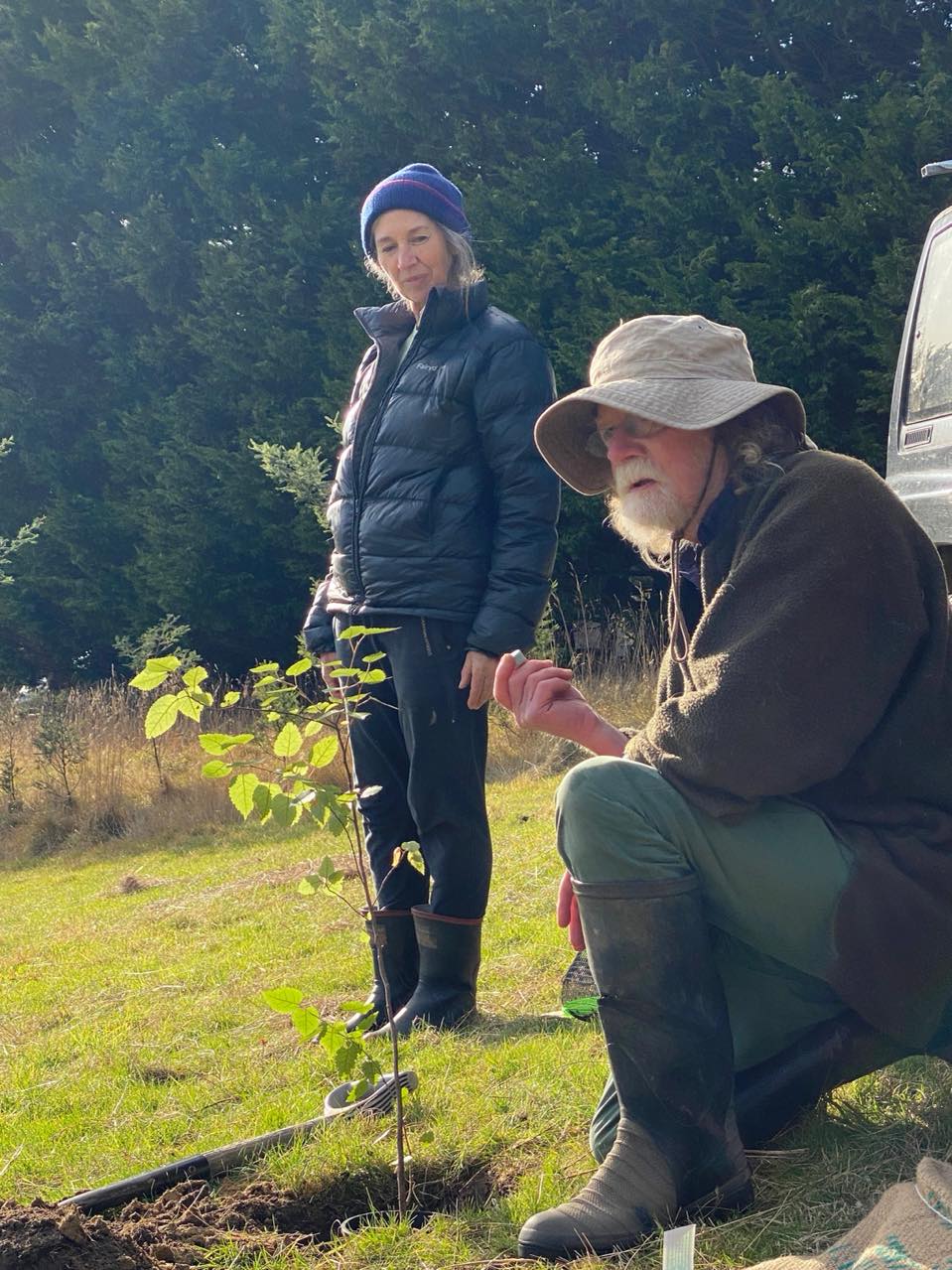
Rosemary with her partner, Derrick, at a tree planting bee on their property in 2022 (Photo by Loren Squires)
Posted in Uncategorized | Tagged , , , , , , , , , , | Leave a comment

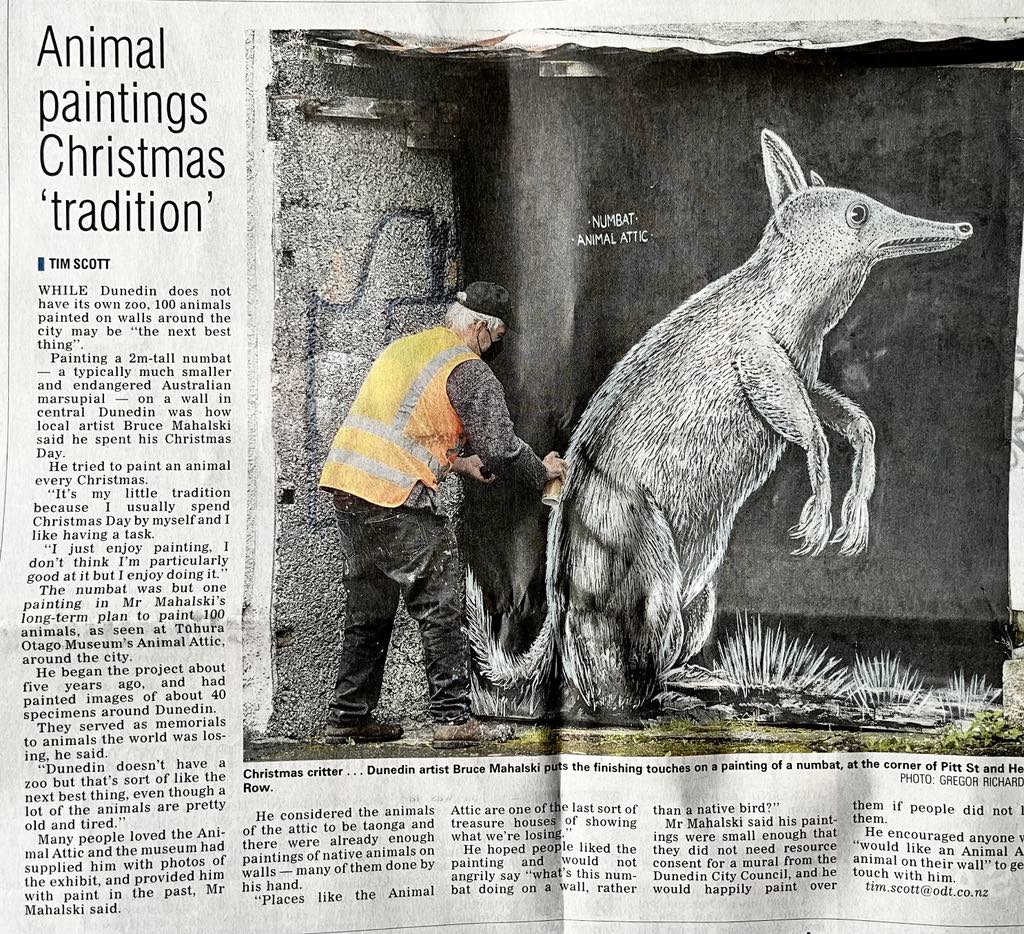
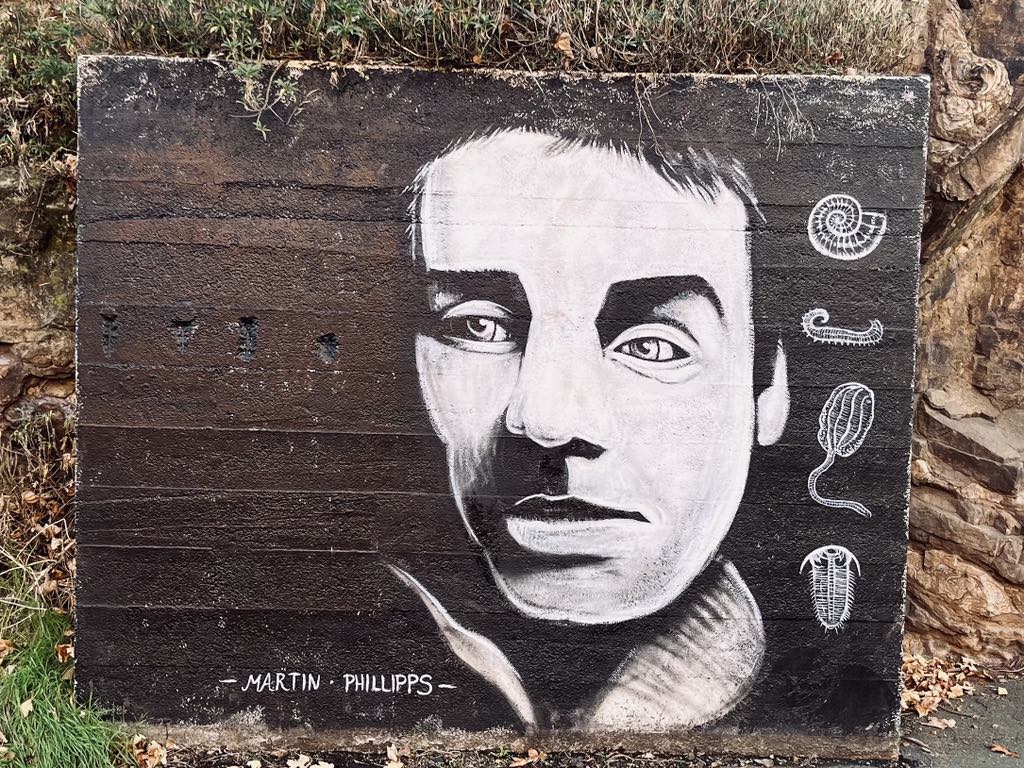
Dunedin Murals

Since I moved back to Dunedin in 2017 I’ve painted over forty wall paintings around the city. Most are quite small but there are one or two bigger ones. I thought I might try to put a photo of each of them up here on my blog in the order I did them. I’m only including ones I’ve done under my own name (and not my alter-ego) and which are outside and not on interior walls. Here’s a link to the recent paintings and interior walls. I’m also not including the ones I’ve painted outside Dunedin since I moved back.

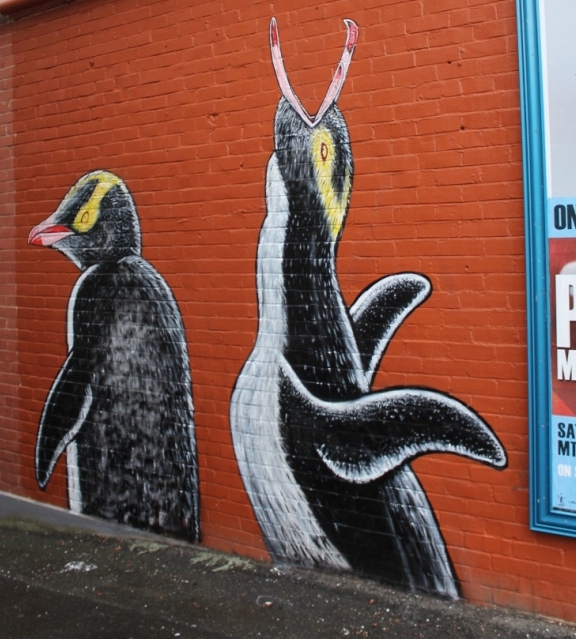
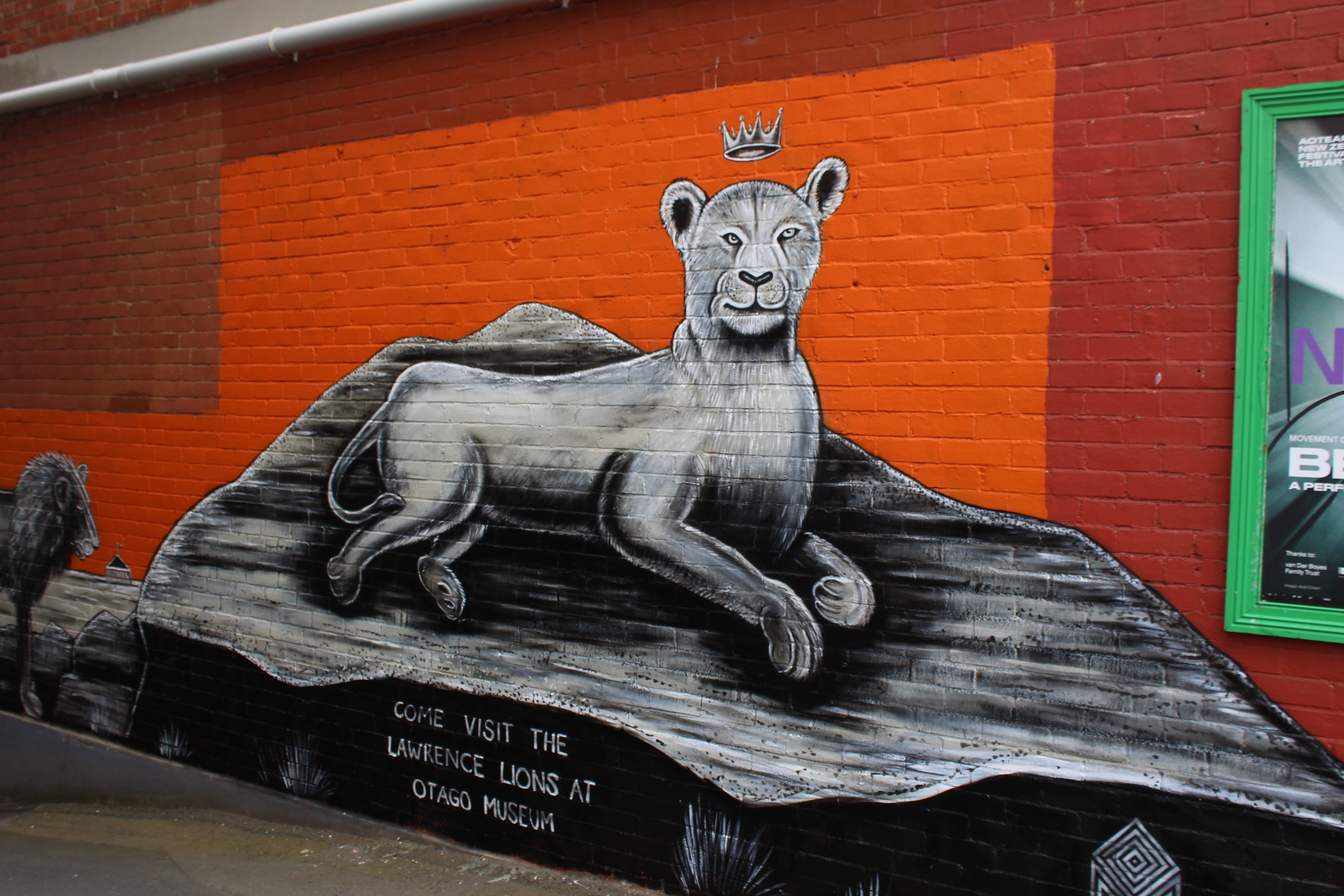
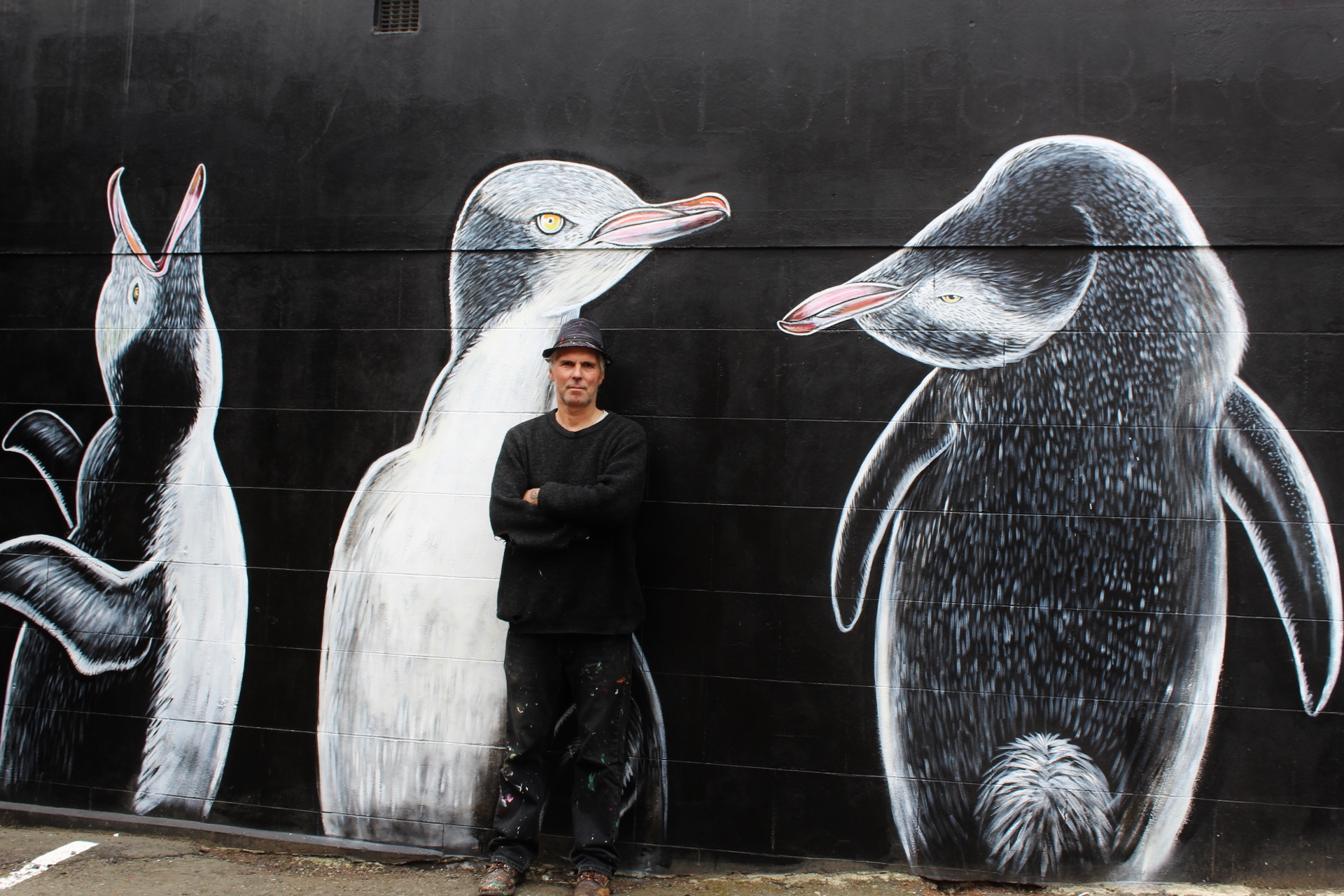
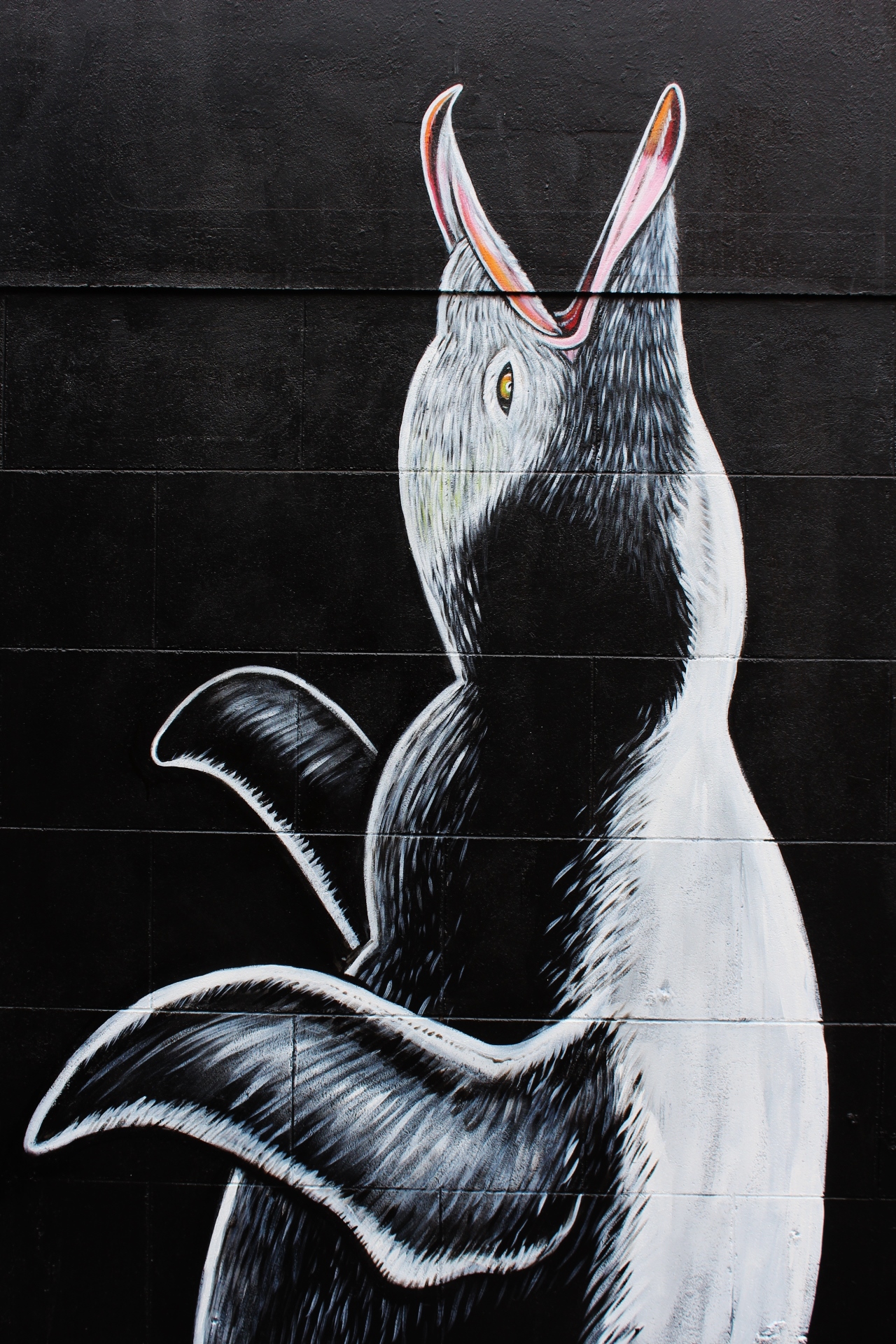
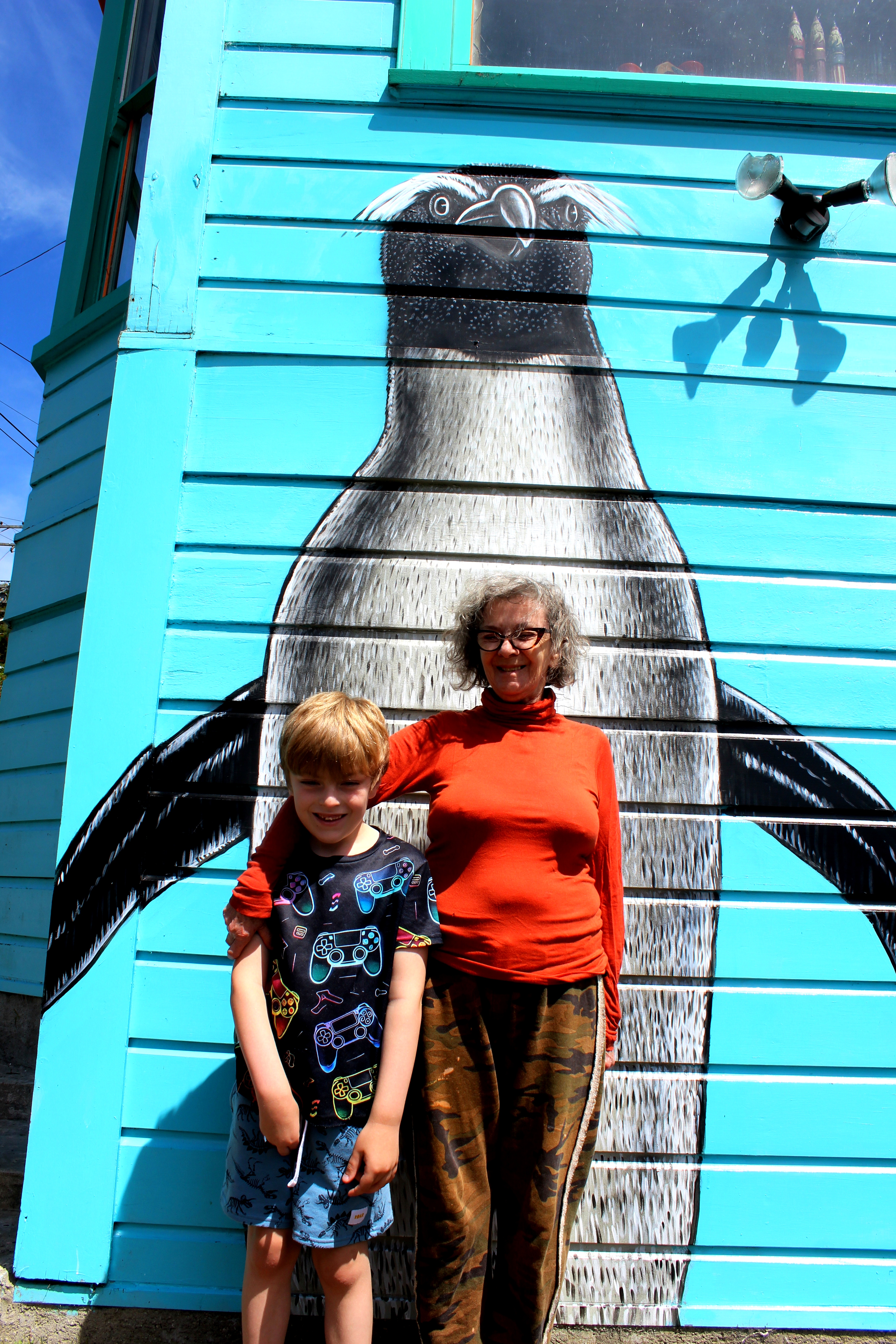
  1. Yellow-eyed penguins on George Street. This was the first mural I painted a few weeks after I’d moved back. It was organized by Phantom Bill Stickers. My partner says it’s terrible and that the beak on the right hand penguin is all wrong. I agree – it is a bit weird. This was covered in a big tag in August 2021 and I painted the Lawrence Lions over it (see #26 below).

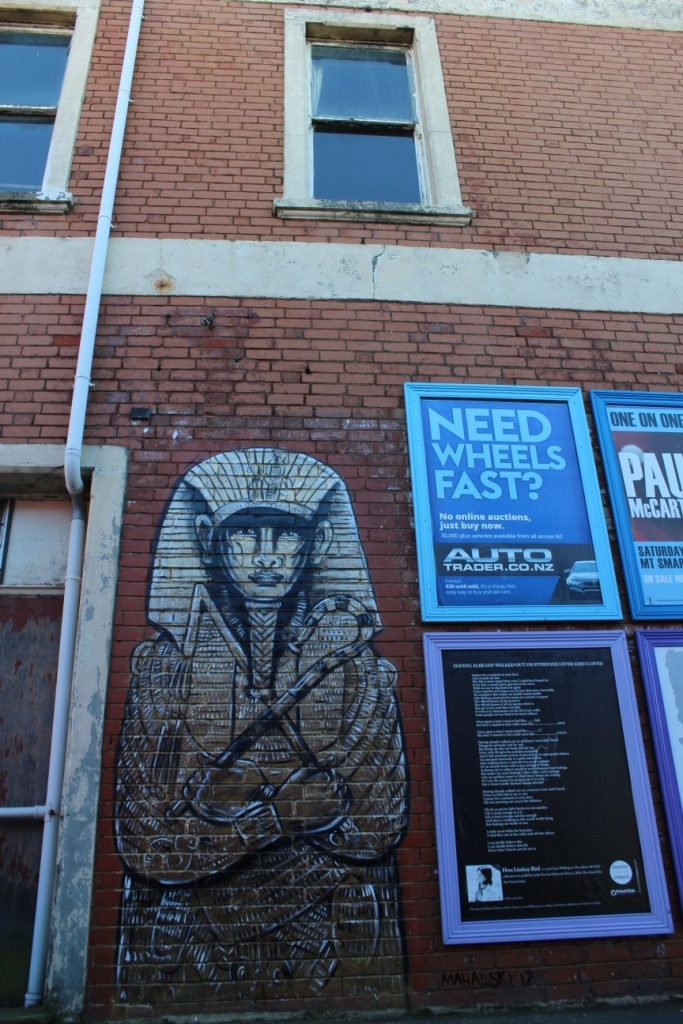
2. Tutankhamun inspired Egyptian sarcophagus on a wall on the corner of King Edward Street and Sullivan Avenue in South Dunedin. It was painted in the middle of winter in 2027 using gold spray paint and black acrylic. Also for Phantom Bill Stickers. It’s actually lasted really well and still looks good.

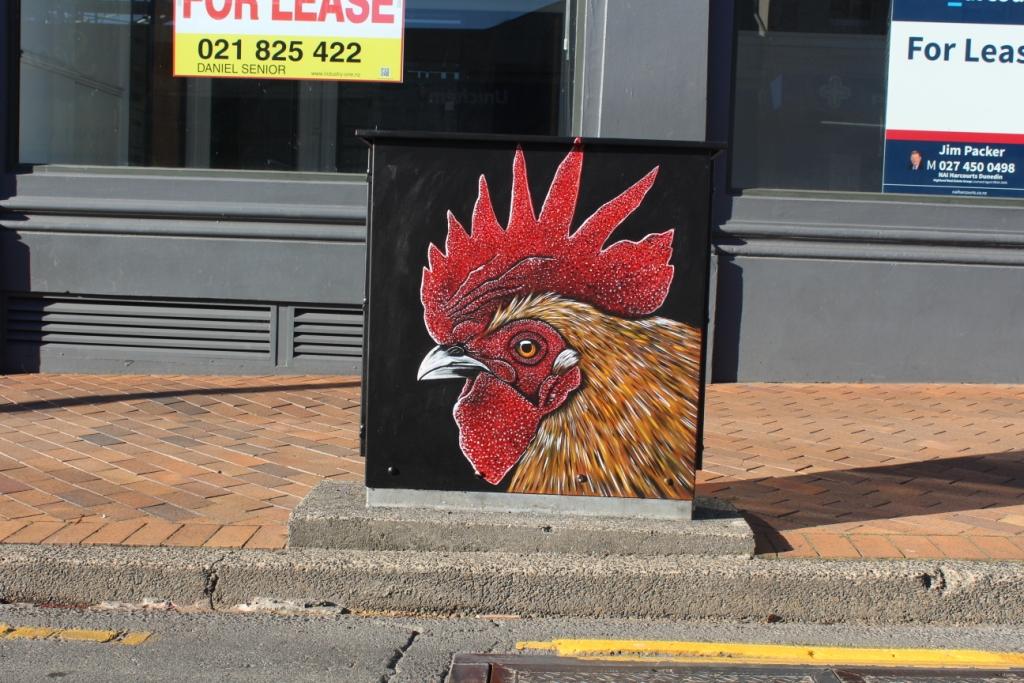
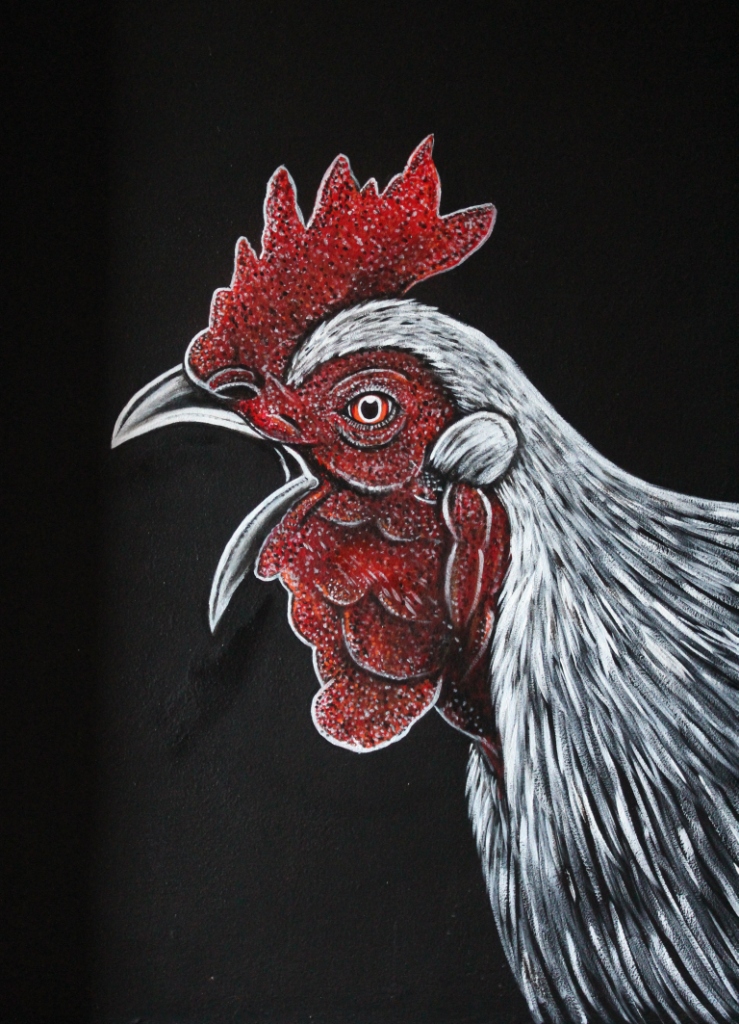
3) This chicken is on the corner of Fredrick and George Street. It was commissioned by the DCC and Chorus and was painted in February of 2018. It was tagged last week but I managed to clean it off OK.

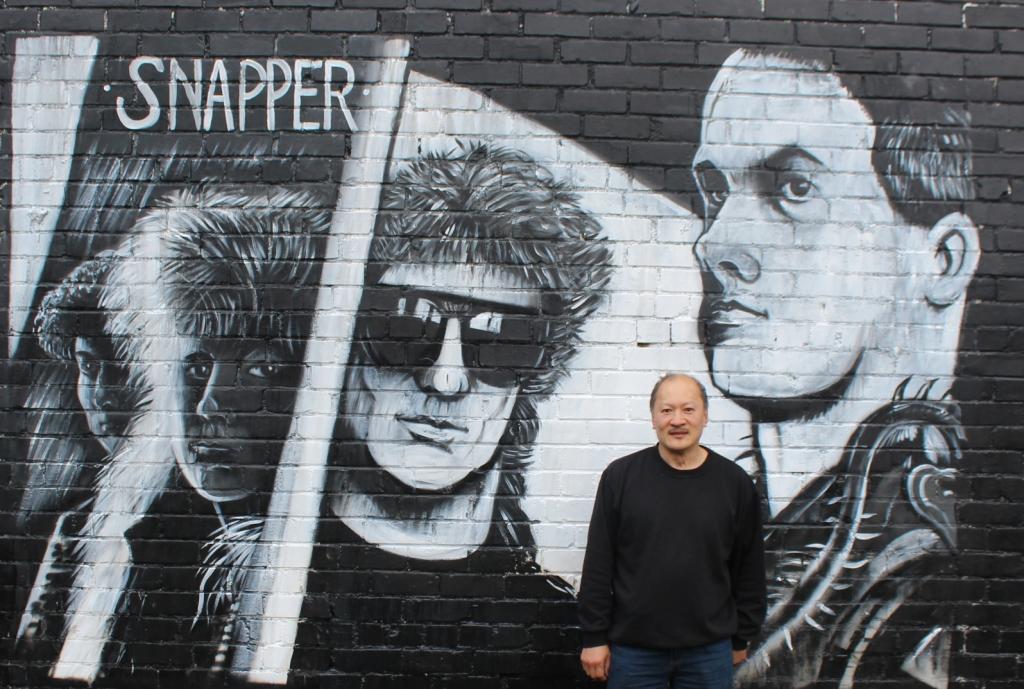
4) Snapper Mural – on the side of the Crown Hotel in Rattray Street. This mural of the famous Dunedin band was commissioned by Jones Chin (pictured) in May of 2018. I used a photo he lent me as the reference. Peter Gutteridge (with the glasses) and drummer Alan Haig (right) were easy but Christine Voice and Dominic Stone were harder because they’re almost hidden in the photo. Peter and I used to be good buddies back in the day.

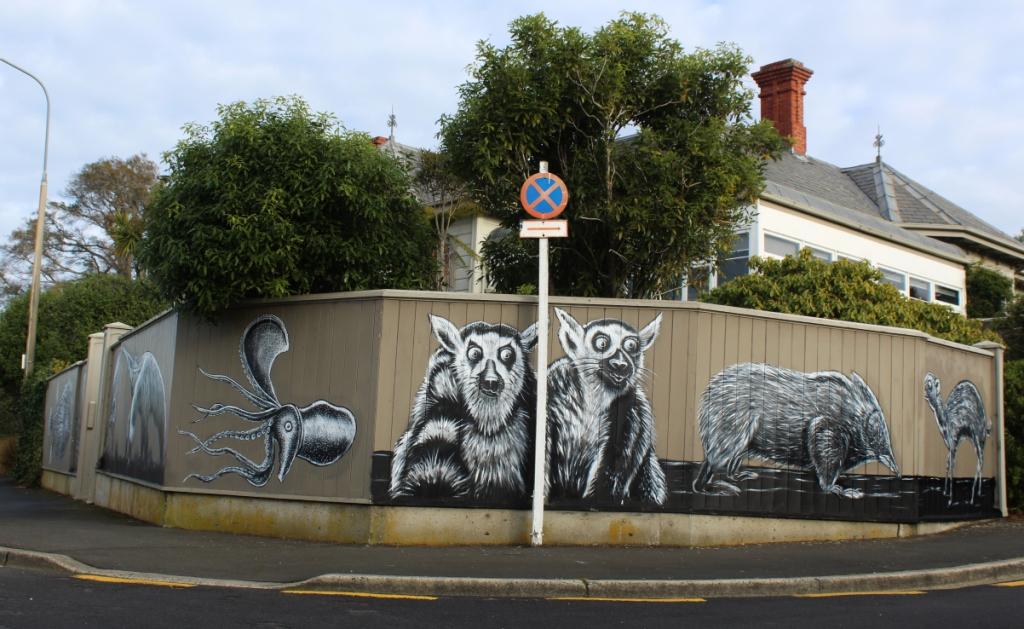
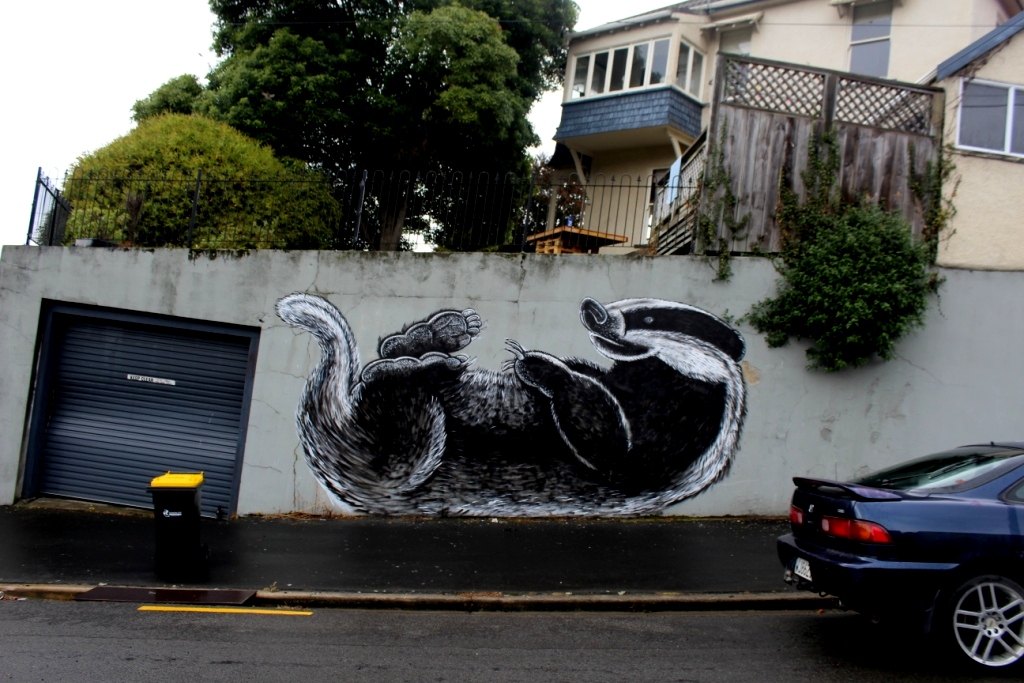
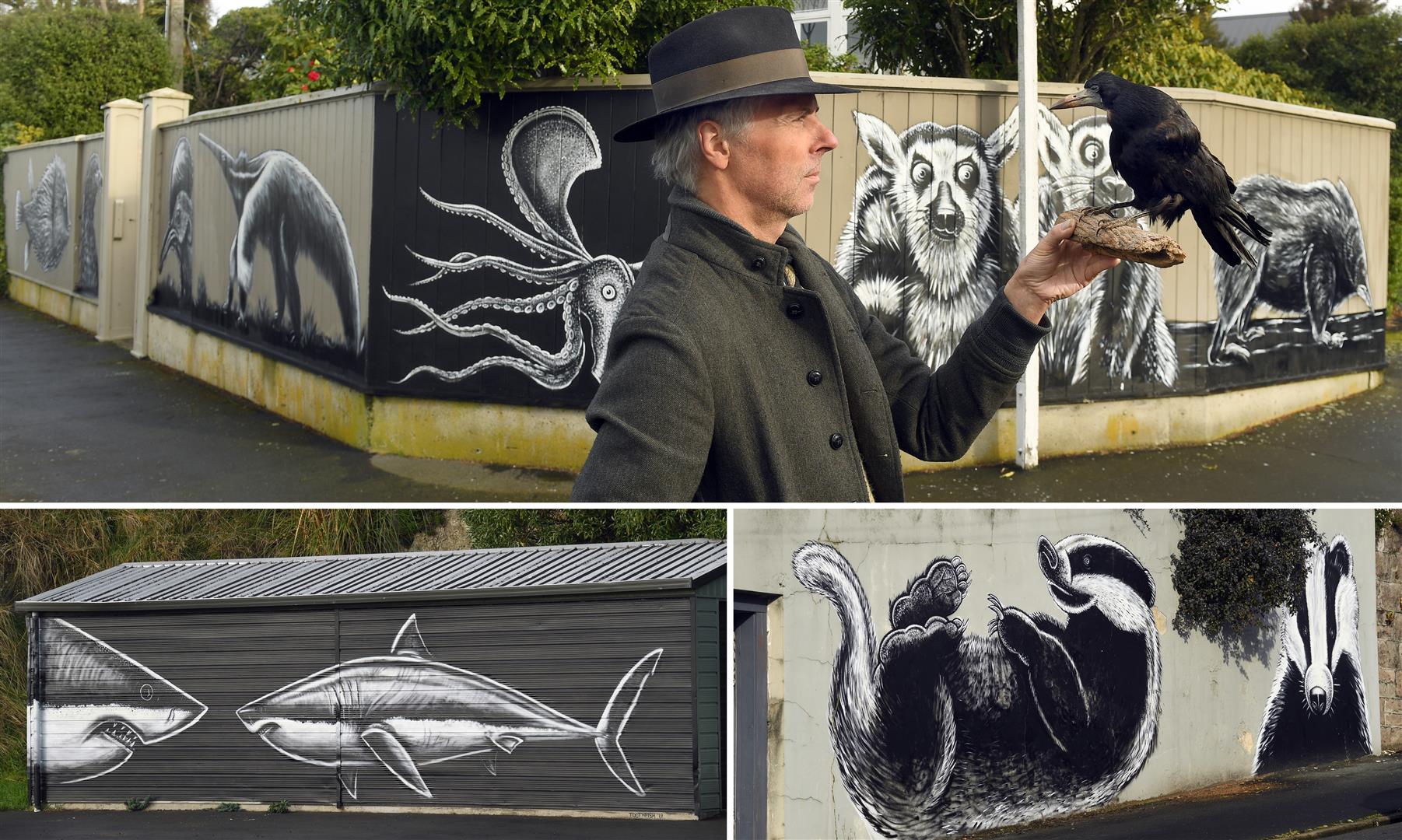
5) Royal Terrace Badgers – Two badgers just down from the Dunedin Museum of Natural Mystery at 61 Royal Terrace. My father really loved badgers. This little mural is for him.

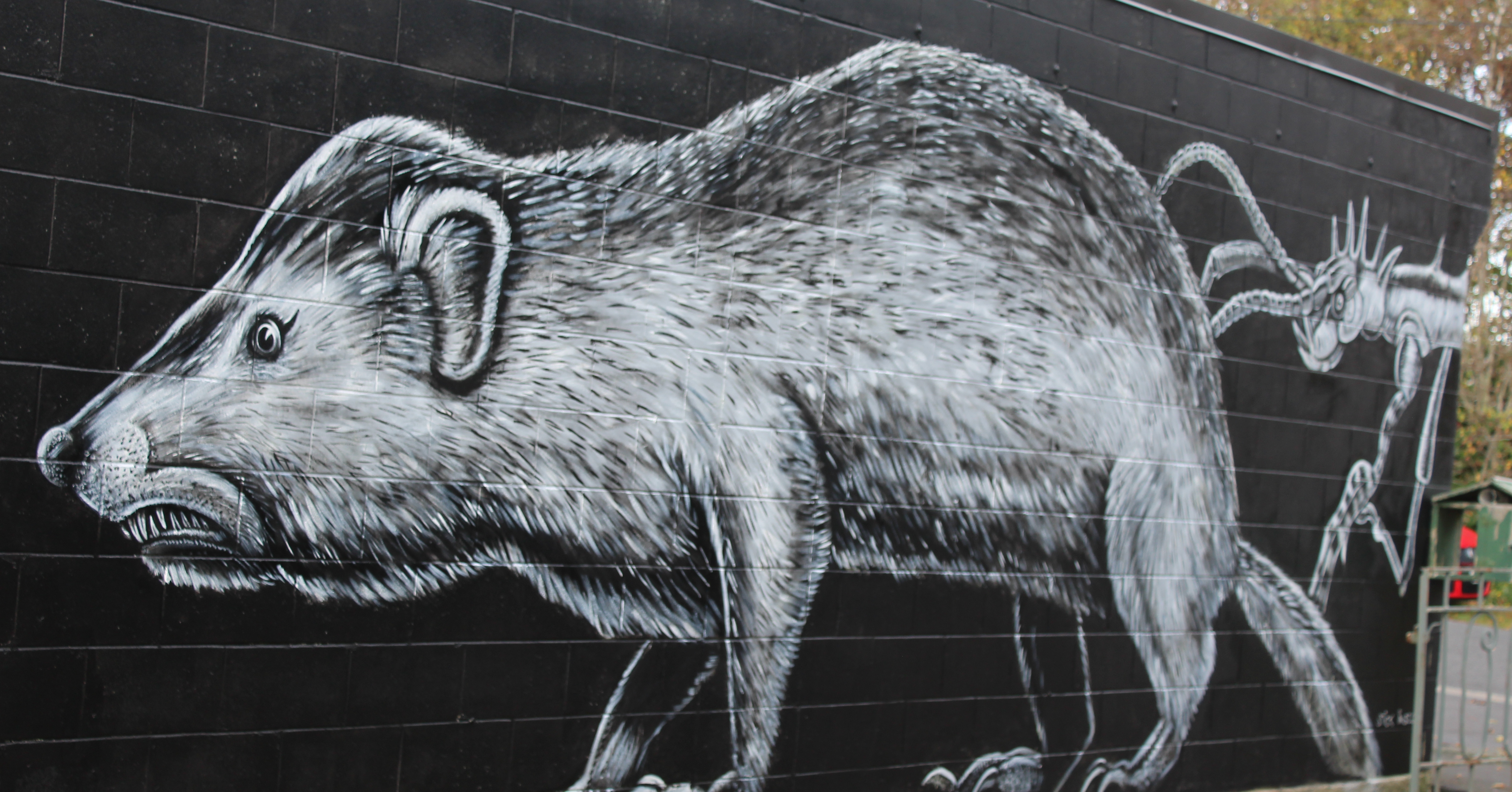
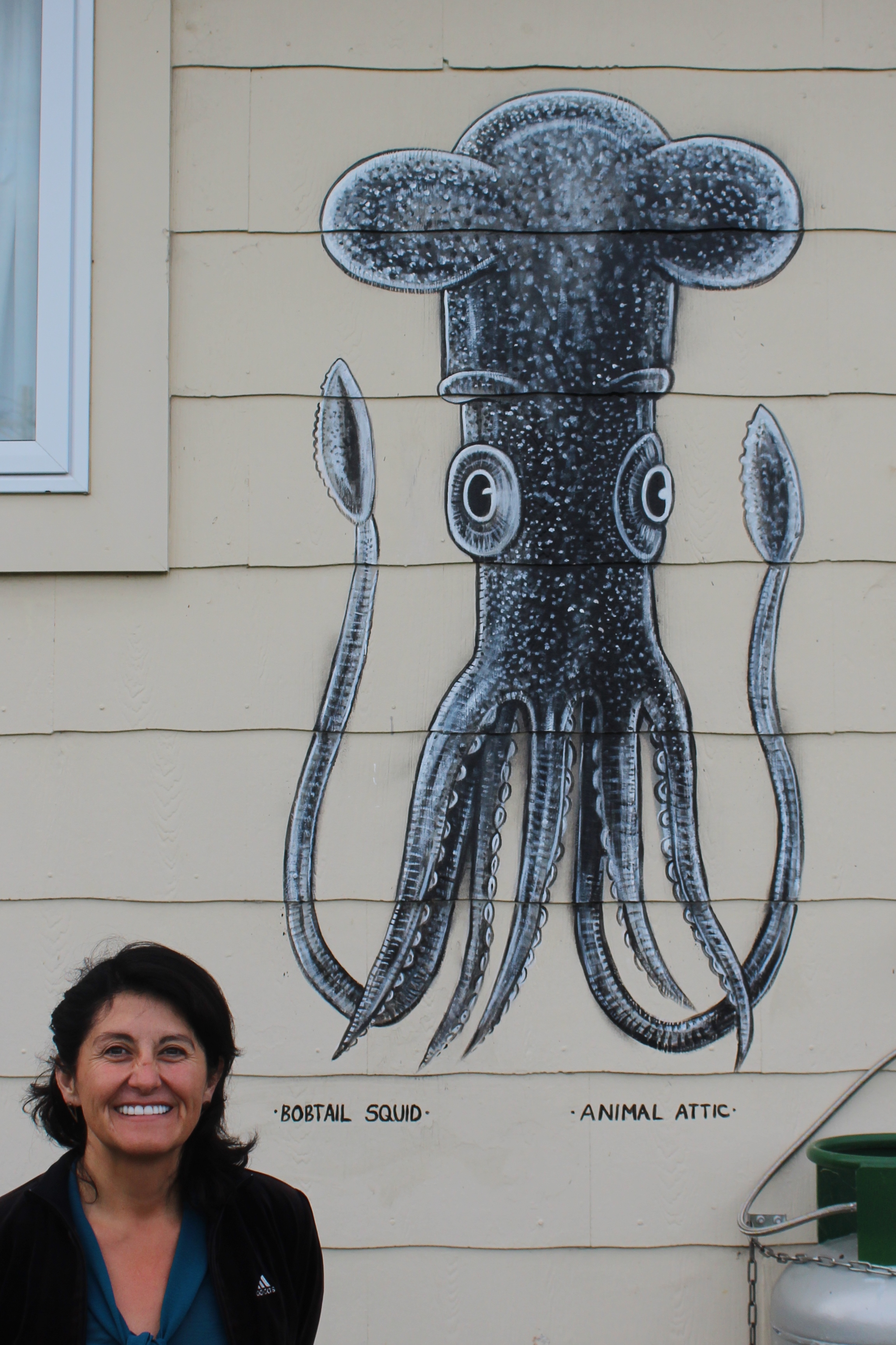
6) This Chinese Ferret Badger was the first painting in my now ongoing series of small wall paintings inspired by the exhibits at the Animal Attic at Otago Museum. This is one of my favorite places in the whole world and my own museum is partly a tribute to it. It’s like stepping back into an old Victorian Museum. With each painting I have to strike a balance between being true to the antique stuffed animal and making it look life-like. There’s also the head of a stick insect because the home owners who commissioned it really like stick insects. Painted in May 2018.

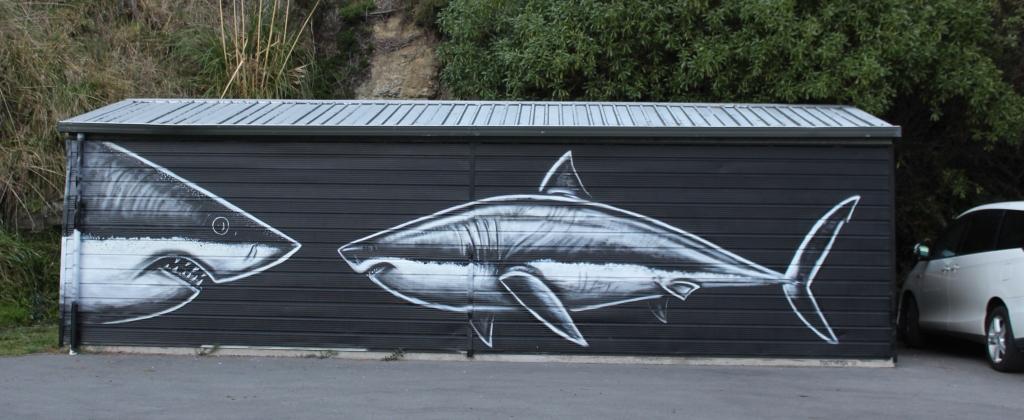
7) White Sharks – another commission by a home owner in May, 2018. I couldn’t really do a lot of brush work on this corrugated garage wall and its one of the only murals I’ve done using almost entirely spray paint (usually a use a mixture of spray paint and brushes or just brushes).

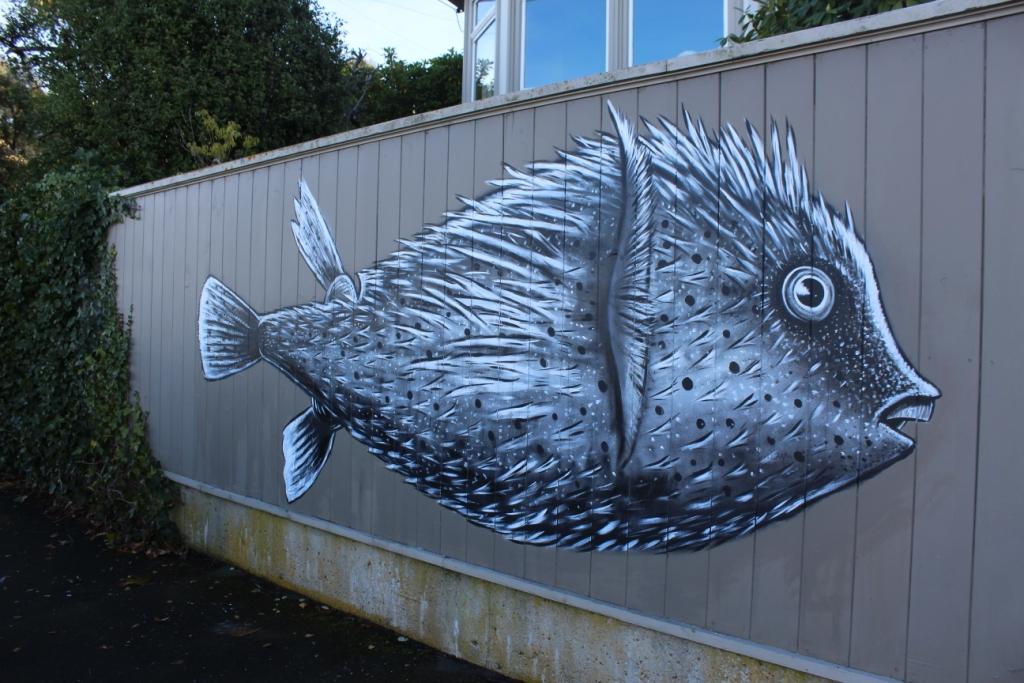
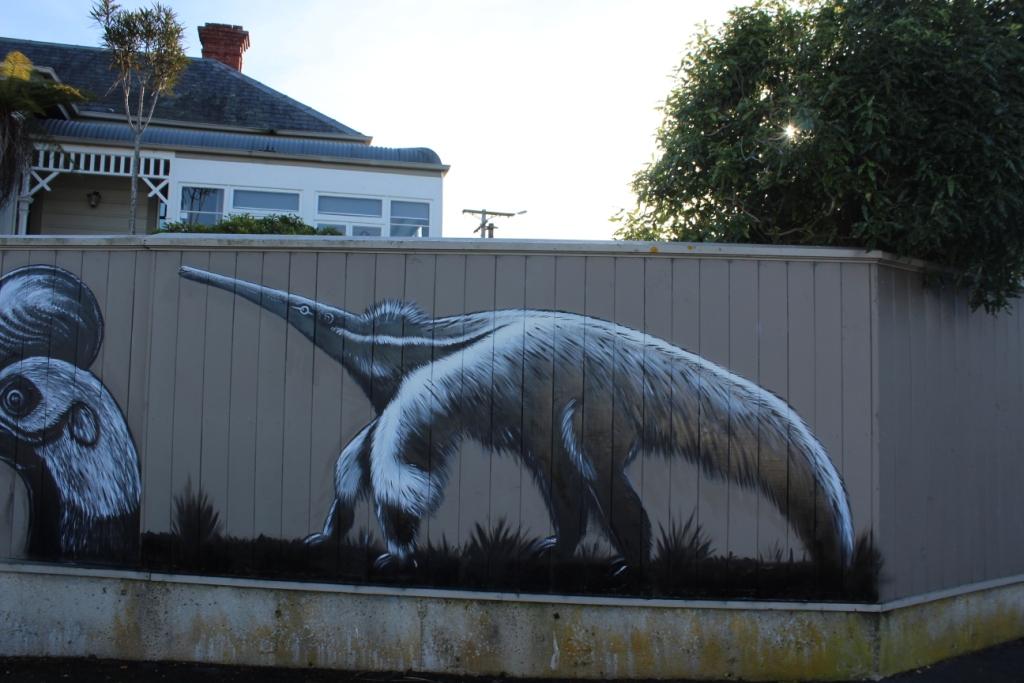
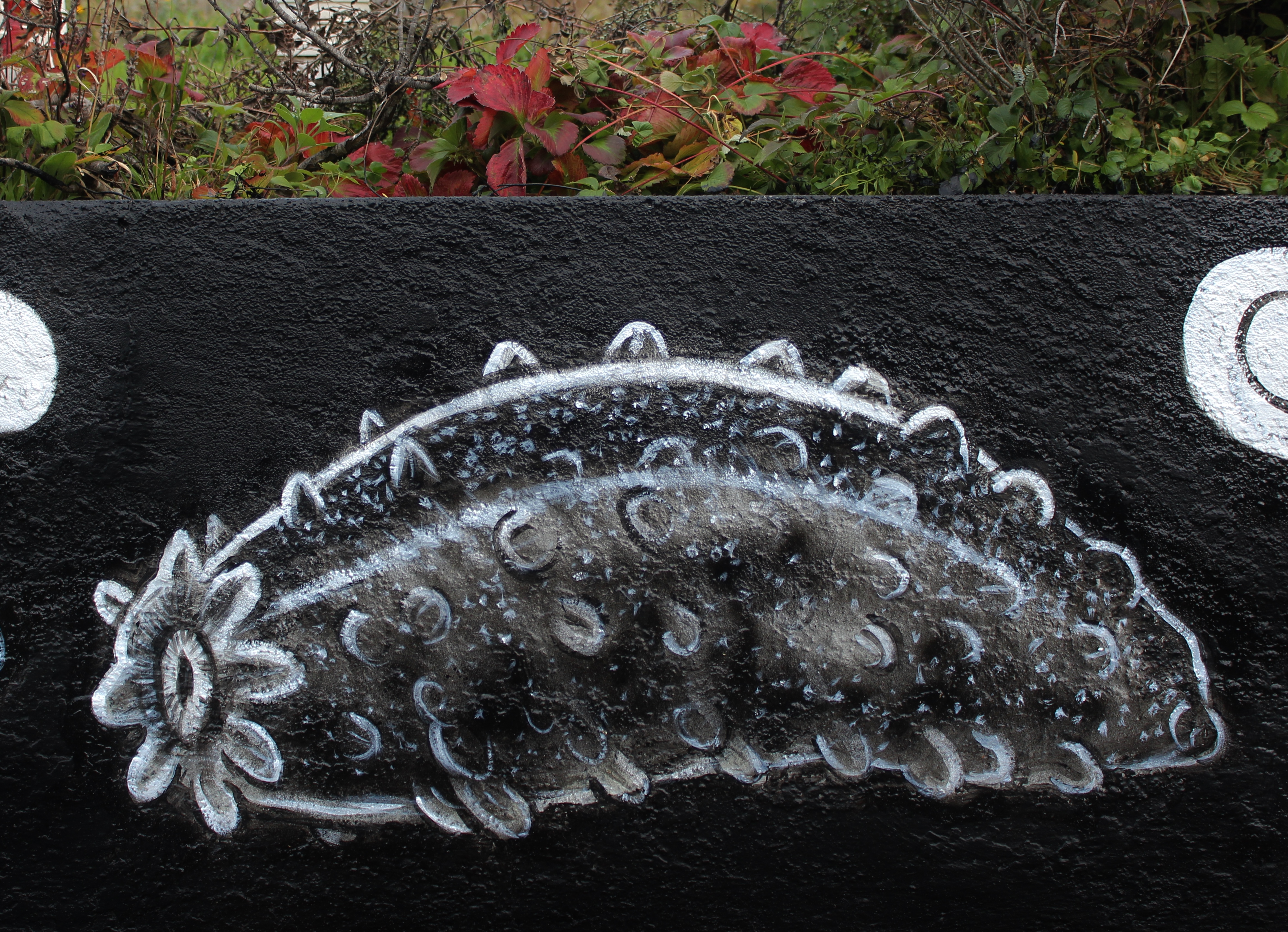
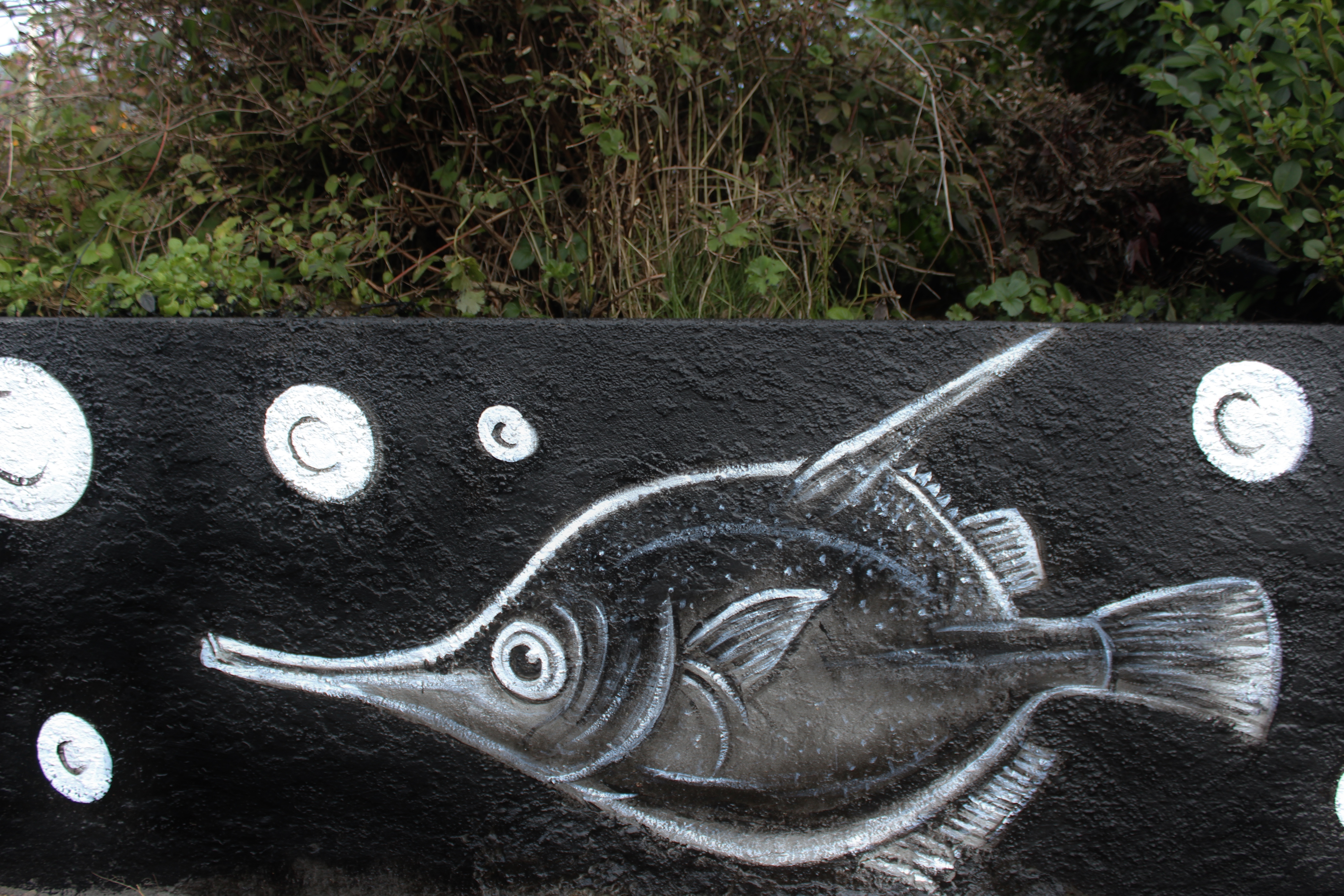
8) A professional couple who were walking by when I was painting the ferret badger asked if I could paint something on their wall in Highgate and this Porcupine Fish from the Animal Attic was the first thing I painted. Apparently its a PokeStop on Pokeman Go (Whatever that is). I went on to paint nine animals from the Attic on this fence during June and July(mid-winter) of 2018. Since then the house has changed hands but the current owners are happy to leave the fence the way it is.

Giant Ant eater
One of their neighbors said the eyes on these lemurs looked ‘too crazy’ and I had to tone them down a bit. Have you ever seen lemur’s eyes? They do look a bit crazy!
Photo from the Otago Daily Times photographer Stephen Jaquiery

9) The stuffed Green Turtle that this painting is based on resides in the Animal Attic. Private commission in Broad Bay – September 2018.

10) Freddie Mercury on the side of Queen Street. Painted in October 2018 for the building owner. You’d think Freddie would be easy but I had quite a bit of trouble getting a likeness from the photo I used. Painting the crown was fun. I like painting crowns.

11) NZ Coastal Fish (as well as a deep sea angler fish) on the side of a private house in North Road in North East Valley. Private Commission January 2019.

Leather jacket and a Mado

12) Hares and other objects belonging to the owner(including the rabbit skull to the left of the hare) on the side of a private garage in Port Chalmers. This is only a detail of the right side of the wall. May 2019.

13) Hoowinker Sunfish – on the side of The Lead Balloon Cafe on the One Way System. It’s based on the cast of the one on display in the foyer at Otago Museum. May 2019.

14) A painting of Hooper’s Inlet and Papanui Inlet looking down from Highcliff Road. Private Commission. June 2020. Like a lot of my murals it looks way better than this photo.

15) Theropod dinosaur on the side of Crusty Corner in North East Valley. Commissioned by Otago Museum to promote a travelling exhibition. September 2020. I’m keen to paint something else on this wall.

16) Bengal Fox – another animal from the Animal Attic. A private commission on the side of a garage in Roseneath. November 2020.

17) Flying Kiwi’s, Crazy Tea pots and other native birds on the side of the Waitati Hall. Commissioned by Mandy Mayhem and the Waitati Community Board. December 2020.

18) Gef the Talking Mongoose – hidden down an alley way off Moray Place. I got caught painting this by the building owner on the morning of Christmas Day, 2020 but she let me off because I think she liked my work. Who is Gef? Google him!

19) A giant wheke (octopus) crawling round the side of the Broad Bay Hall. Organized by Amber and Zoe and the Broad Bay Community. Painted on Boxing Day 2020.

20) A Karaerea (native falcon)painted on a brick wall for The Valley Project in North East Valley. March 2021.

21) Tutara Guardian for Bland Park in Waitati. Commissioned by Mandy Mayhem and the Waitati Community Board. March 2021.

22) Screaming Roosters for the Screaming Rooster Cafe and Bar at 9 Stafford Street. They’re in the alley way beside the entrance to the gallery/bar.

24) Laundromutts in Kaikorai Valley – April 2021

25) Mud Puppy Skeleton – based on the one at the Animal Attic at Otago Museum – Andersons Bay – May 2021

26) The Lawrence Lions – these two lions were painted over the Hoiho/Yellow Eyed Penguins (see Mural #1) after it was tagged over. in August 2021. These two lions were shot when they escaped from a circus in Lawrence in 1978. Their bodies were taxidermized and they are now on display at the Animal Attic at Otago Museum.
27. Three Hoiho /Yellow-Eyed Penguins in Burlington Street just off Moray Place for Team Hoiho – December 2021
28. On Boxing Day 2021 I added a sea anemone to the side of the Broad Bay Community Hall. Thank you Zoe Fox and the team in Broad Bay!
29. This mural depicting nocturnal animals and the night sky on the side of the Victoria Hotel in Dunedin but its not just your usual mural. It’s painted with UV paints and there’s some big UV lights up above it that will come on when it gets dark revealing a whole new look to the mural that you can’t see during the day. As far as I know this is the very first light reactive mural with built in UV lights anywhere in Aotearoa. Thanks to the Dodd-Walls Centre at Otago University, Otago Museum Dunedin Street Art, Laser Electrical Services UV Gear, The Victoria Hotel and Hirepool Ltd. Nighttime photo by Alan Dove. January 2022.
The night time photo really doesn’t do it justice. In real life it really glows.
30. A temporary painting on plywood on Hanover Street opposite the Crown Hotel which was done for a TV shoot in early February, 2022. The bird is a White Fronted Tern and the painting is based on the specimen in the Animal Attic. Photo by Blake Armstrong Photography.
31) An unknown species of jellyfish and a transparent octopus painted on the side of a garage in Wales Street in Maori Hill in February 2022.
32. A colourful private commission in Aotea Street in Andersons Bay – February 2022
33. A tuatara based on the specimen at the Animal Attic at Otago Museum – February 2022 – in Edward Street in Abbotsford

.
34. A Giant Malayan Squirrel based on the taxidermized specimen at the Animal Attic at Otago Museum. Painted in Balmoral Street in Opoho – March 2022
35. The Desert Monitor from the Animal Attic at Otago Museum on a wall in Lock Street in Concord – March 2022
36. A kiwi from Otago Museum on the wall of Bill Brosnan’s bookshop on the one-way system heading north. (March 2022)
37.An ‘Animal Attic’ piece painted in Corstorphine on the side of a house opposite the Middleton Road shopping center. This one is based on a glass model of a Bobtail squid made by genius father and son team of Leopold and Rudolf Blaschka who produced thousands of accurate glass models for museums and universities between around 1850 and the 1930’s
38. In late April I painted almost thirty local marine animals on three long thins walls opposite Wakari School in Shetland Street. This is just one of the three walls.
38. Detail on the Wakari Wall Marine Mural

38. Detail on the Wakari Wall Marine Mural (2)

38. Detail on the Wakari Wall Marine Mural(3)
39. A nautilus shell painted on the back of Otago Girl’s High School for the principal. The nautilus is one of the symbols of the school. It’s based on the nautilus shell on display at the Animal Attic at Otago Museum. (May 2022)

40. A kaka and a kereru having a cup of tea. This private commission is on a wall at 230 High Street and references a detail on painting number 17 – the Waitati Hall Mural (late May 2022)

41. A painting of Hair Raiser Tours, Andrew Smith, down Black Dog Alley on Moray Place. November 2022.

42. A wall for a Salvation Army Hostel in Sutherland Street- December 2022

43. A South Island Giant moa(Dinornis robustus) on the north end of Bill Brosnan’s ‘Galaxy Books – December 2022. Second photo of myself holding a moa bone by Simon Clayton Photography.

44. A dodo on the side on the Bowling Club café and restaurant in Caversham (January 2023)

45. Three animals from the Animal Attic at Otago Museum on a private wall in Easther Crescent above St Clair. They are from left – a Queensland Groper – a Cancer Crab – and a freshwater crayfish(koura).

46. A sea lion head loosely based on a photo by Derek Morrison to celebrate the ‘Wild Dunedin’ festail 2023. It’s on Great King Street opposite F45 gym

47. Atlas Moth -Animal Attic Series – Brockville – September 2023
48. Eagle Owl outside Otago Museum – November 2023
49. Ravensborne School – NZ dinosaurs plus Joan Wiffen(who discovered them) December 2023

Posted in Murals, Uncategorized | Tagged , , , , , , , , | 5 Comments

Environmental Exhibition – Wellington – 2010

Work by Bruce Mahalski, John Badcock, Lex Benson-Cooper and Debra Britten.

July 30th  –  August 15th, 2010.

I started collecting shells, fossils and bones when I was very young. My parents were both scientists who had collections of their own and we travelled quite a bit overseas so there were always opportunities to pick up interesting stuff. Once my mum even tried to send a weaver bird’s nest to New Zealand when we were on holiday in Africa  but customs weren’t too keen on letting it into the country! Most of my collection I found myself on beaches or roadsides.  Some people might consider it ghoulish to collect bits of dead animals but to me it isn’t about death – it’s about life. Like a sympathetic magician I hope that by possessing  an animals bone a little bit of its life force will rub off on  me. It’s also a tribute – a form of recycling – a lot of these things are just too good to leave lying around and I have to take them home.

For a long time I didn’t think about using any part of  my collection as raw materials for my art practice. I put the best of my pieces in display cabinets and keep the rest in boxes. The first time I used some of my bones in making an object was for the show – Full Spectrum Dominance – at the Mary Newton Gallery in Wellington in 2002. A large part of the show was a collection of $2 Shop toy guns which I had tried to strip of their negative associations by  instilling them with new beauty and life.  One of these was  Bone Gun#1 – a toy M16 rifle completely covered in bones. It was such a joy to  that I soon made another – Bone Gun#2 (see below).

Bone Gun #2

20 x 70cm

Bones attached to a toy gun

(Comes in purpose built metal case)

2007/8

Bone Show- Bone Gun cf case (Medium)

‘Environmental’ will be the first time this piece has been exhibited. It comes in a rusted sheet metal case (not shown) especially made for it by local artist and stone man – Carl “Carlucci’ Gifford.

When my Wellington art dealer, Ron Eskamp told me he was planning a a show with an environmental theme I suggested making a series of work that began where the Bone Guns left off. Happily Ron was  quick to approve of the concept. I could have continued to predicate my bone works on military apparatus but I didn’t want to repeat myself any more than necessary.   For some time I could not think what to make out of bones and then I realized that I didn’t need to make anything at all. I could just layer bone on bone to achieve interesting textural effects. I immediately ramped up my bone collecting efforts and put the word out among my friends to grab any interesting specimens they saw.

Bone Show- Bone Gun (Medium)

Lintel #1

(to be hung over the top of a door frame)

13 x 1050cm

Layered bone and shells on Matai plank

2010

Bone Show - Lintel (Medium)

This was the first piece I made specifically for this show. I didn’t originally intend to make a lintel or indeed to make anything symmetrical. I was only planning to layer bone on bone as in the detail pictures below. However  the piece soon took on ‘a life of its own’ and acquired a Viking/Pacific look I had not anticipated.  It contains sixteen skulls including those of a sheep, a hawk, a duck, a hedgehog, a penguin and a Chatham Island Weka and many other bones including those of moa, seal, cat and wallaby.  The bones are attached  to a plank of 150 year old Matai timber (as are many of the other pieces)  which  I picked up from a skip opposite my old studio in Abel Smith Street. An old colonial cottage was having (an illegal) refit and a lot of good stuff had been dumped including two very old mummified cats which I also grabbed for some future use.

Bird Man #1

15 x 1180cm

Bird Bones attached to plank of Ponderosa Pine

2010

Bone Show - Bird Man (Medium)

I had finished nearly all of the work when I found a box of albatross or mollymawk bones I had forgotten about in the attic.  It’s hard to tell an albatross form a mollymawk – particularly when its not in exactly tip-top condition! It was the day I  was going to see Ron at the Exhibitions Gallery show him photos of the work for the show.  I decided it’d be nice to have one more work and quickly laid out some of the  bones on a plank of ponderosa pine and took a photo. Ron decided it  was his favorite  so I decided I’d better actually put it together for real. As well as duplicating parts of bird/human anatomy the piece also references the ‘cult hooks’ of Papua New Guinea and the bird man culture of Easter Island (Te Pito No Te Henua).

Cult Hook #1

30 x 1200cm

Bones,shells and fossils attached to  a framework of Ponderosa Pine

2010

Bone Show- Cult Hook (Medium)

This piece is the largest and most dynamic of the series and contains the bones of many large animals including those of pig, seal, dog, dolphin,human, sheep and albatross (or mollymawk) – as well as local  fossils and sea shells. Attached to a background of Ponderosa pine using glue and rods it evokes the cult hooks found in the men’s houses of Papua New Guinea. A hook at the top connects the sculpture to the house’s rafters and another at the bottom is used to hang equipment and offerings to local spirits’.  These ceremonial hooks influenced the success of war, hunting and garden cultivation, as well as helping to ward off disease.

Whale Rope

24 x 1015cm

Length of rope emerging from a piece of old table –top

2010

06 (Medium)

I have a long association with the Island Bay Marine Education Centre and while I was there one day Marco Zeeman showed me a length of rope which had been brought along by two local conservationists, Haydon & Suzanne Miller. Apparently it was part of a seven metre long length of rope they had recovered from the throat of a dead female blue whale that washed ashore in Golden Bay in 2009. It is speculated that it may even had caused the death of the whale. The piece of rope disappears through a hole into a plank from an old hardwood table top. By ‘turning the rope into art’ I hope to spread the sad message that the ocean is simply drowning in our crap and its  high time we all  cleaned up our acts. If this piece does sell I intend to donate my part of the proceeds to some of the main anti-whaling groups.

 Whales - dead blue whale - DOM 13.6.09


Skull Rack #1

28 x 1000cm

Three sheep skulls attached to Matai Planks using metal rods

2010

Environmental- Skull Rack (2) (Small) Environmental-Skull Rack detail (Small)

Skull Rack #1 is inspired by the skull racks of Papua New Guinea where the skulls of dead foes and relatives are preserved in the  men’s houses in racks or shelves.  Despite my comments about the life affirming nature of bones I do have to admit to also seeing a lot of beauty in decay.  The top skull is an amazing example. Despite the fact that it is from a ‘common’ animal I think it is one of the most amazing skulls I have ever seen. I was lucky enough to be given it  on a recent trip to Waiheke Island by Helen Aldridge who also gave me some other excellent bits  and pieces including a mummified kingfisher. The skulls float out 12 cm from their wooden base on thin metal rods.

Three Heads (Triptych)

Head#1

80 x 80cm

2008 – 2010

Gloss/Acrylic Paint/Sand

Environmental - Head One (Small)

This is one of three heads that make a vertical triptych. I actually started painting these heads a couple of years back when I intended to do a series of works based on drawings that I had done when I was five. My mother had just found the old scrapbook containing the drawings and I thought they were more lively than anything I had done since. I am pretty sure the original drawing was inspired by a carving which I saw on a school trip to Otago Museum. I never completed the series because I had trouble transforming the drawings into paintings and for a while I abandoned the heads when I had trouble resolving the backgrounds.  My recent interest in building up layers of texture enabled me to find a way to contrast the hard gloss of the faces with the softer colors in the background and I decided to finish the triptych in time for the current show.

Chatham Islands Weka

50 x 70cm

Limited edition screen-print by the artist on 350gsm paper(10 prints)

2010

Environmental-Weka Screen-print (Small)

A five colour screen-print on paper based on two photos taken on a trip to the Chatham Islands in 2008. I took the photo of the weka in the foreground but my friend Stephen Robinson took the background picture of the trees.  We were out by the old airport near the bush containing the most famous dendraglyphs (carvings on living trees) and the quality of the light was so intense the scene is forever burned in my brain!  Steve and I  ran around taking photos like crazy but I lost most of mine when I loaded the stick from my new digital camera into the computer instead of routing the pictures through the camera.  No two prints in the edition of ten are exactly the same with slightly different tones and offsets across the edition in keeping with my new ‘more painterly’ screen-printing style.

Environmental – Exhibitions Gallery – Wellington – July 29th – August 15th – 2010

www.exhibitionsgallery.co.nz

www.mahalski.com

Studio Pictures

Enviro-Studio - July 2010 (Small) Enviro-Studio 4 (Small)

Environmental - Birdman(closeup) (Small) Enviro-Studio 3 (Small) (Small) Enviro-Studio 5 (Small)

Posted in Exhibitions | Leave a comment

Interview with Bryce Kowalski – Critic – 1988.

Long time contributor to Critic (Otago University’s student paper) – under this pseudonym (and many others) Bryce has just left Dunedin. Before his departure we – at Critic- thought it might be interesting to talk to the man about his politics , his music and his new cuddly toy. (Editor’s Note – I have made one or two changes from the original interview to make the thing more relevant and readable).

INTRODUCTION

CRITIC – Where are you from originally – they aren’t too many ‘Kowalski’s about?

BRYCE – Here of course – Dunedin. You think I shifted here from Auckland or something?

CRITIC – I know that you went overseas a lot when you were young. Did these travel experiences leave you with any lasting impressions that have continued to impact on your life and work?

BRYCE – Naturally! My parents both worked for the University and they used to travel a lot. Until I reached the age of 16 I was pretty blasé about it all but that year(‘79) I spent a lot of time on my own doing various jobs in different parts of England and also went to Germany for a while. It was quite liberating to be treated as an adult by the people I worked with and I grew up pretty fast that year. I think that seeing other countries only made me appreciate this one more. In some other places I’d probably be one of the first against the wall as an obvious deviant and trouble-maker.

CRITIC – So what do you think are the main issues in the world today?

BRYCE – Getting rid of the cold war would be nice – it’s even starting to look like it may happen. The main reason I oppose war is that it’s just too hard on the planet. Once we’ve got the major powers talking to each other again and the nukes are gone or cut back we can then look at fixing some of the other major problems – starting with the environment.

CRYSTAL ZOOM! (1983 – 85)

CRITIC- You’ve been involved with various bands now for a number of years – starting with the somewhat ‘infamous’ Crystal Zoom! Tell us a bit about that?

BRYCE – A group of us had been talking about putting a band together called Crystal Zoom for a long time but in the years before we actually started playing we out up a ton of Crystal Zoom! graffiti up all over town ( and on the side of barns on State Highway One between Dunedin and Christchurch). We figured if people had heard of us they would think we were ‘BIG’. So we had the name itself long before we actually got the band together. There’s a funny story behind the name but I probably shouldn’t tell it here- I might get in trouble.

To start off the band was a basic four piece with me singing (shouting) Mike (Wilde) Weston on guitar, the incomparable Eric Neuman on bass and Nathan McConnell – later Nick Niell -on drums.. We had grown up with a lot of the so-called ‘Dunedin Sound’ – mostly a group of bands influenced by sixties American guitar music – but their style just wasn’t our cup of tea. Like a lot of new bands we started playing punk and thrash(both of can cover a multitude of musical sins) but gradually we go better and more versatile. We had gone out of our way to set ourselves apart from the prevailing ‘sound’ and for a while it was hard to get gigs so we started setting up our own at Coronation Hall in Maori Hill ( earlier ‘Punk’ bands like ‘The Enemy’ had done the same thing). We had absolutely no scruples and would play with anyone – The Mockers – Motorhead – Gamaunche.

Our ‘difficult’ approach turned off some of the cooler crowd .One well known musician friend said that he would never speak to me again after we played with The Mockers (which we did on several occasions over the years) and he never did again. We were completely brazen about promoting ourselves and would try and get into the Otago Daily Time’s Music Column every week and Rip It Up every month – even if we had to make something up. One time I put out this press release saying that we had all come out as New Zealand’s first all-gay band but the music reporter at the paper said that I was obviously drunk (not true) and wouldn’t use the story but other music papers did.

We were just way too un-hip to get a deal with Flying Nun Records so we put our our own cassette tapes – the first one was ‘ Hooked on Crystal Zoom’ (1984) and the tapes all came in this plush orange purse that Mike whipped up. Later that year we did ‘Live at the Ego Club’ with us and Gamaunche playing live at the Empire Tavern. That one came out in an orange Christmas stocking and we promoted it with a lot of posters of naked guys with just a little bit of orange fluff covering their willies. In 1985 we got a new rhythm section in the form of the amazing human drum machine, Barry Blackler and Dunedin legend, Rob Murphy on bass – both of whom had recently left popular Dunedin band, ‘The Idles’. Playing with these guys really picked up our game but in the middle of 1985 Mike and I moved up to Waiheke Island (in the Hauraki Gulf near Auckland) and set the band up there. Once again we needed a new rhythm section and this time we pulled in old friend, Rob – ‘Dick Libido’ -Brown on bass and Yoh – ‘Dr Rhythm’ on drums.

Yoh’s main claim to fame was that he had been the drummer in the Screaming Mee Mees ( a popular and successful early eighties band from Auckland). We recorded another tape – ‘More Base’(1985) – a mixture of live recordings from Dunedin with Rob and Barry and experimental stuff that we started doing on Waiheke while Mike was learning to use a four track tape recorder.

IDENTITY

CRITIC – I heard that you all started wearing masks up there whenever you played and if somebody asked for a band photo for an article or something you’d give them a picture of a tree or house or a rock.

BRYCE – Yeah – we always found it hard taking the whole thing seriously . We started trying to separate our ‘real’ personalities from our artistic ones (using fake names and masks etc) so that hopefully people would accept our performances on their face value and not just hate us straight-away – for being a bunch of uppity young wankers.

When I’m on stage I turn into a different person – in real life I’m more reserved – I could never have walked down the street ( well maybe I did occasionally) wearing the sort of bizarre stuff we wore on stage. That’s why so many bands disappointed us – just getting up in their street clothes. and playing their instruments. I always thought there should be clear distinction between the performer and the audience ( although of course you do get the odd interesting exceptions).

DUNEDIN SOUND ON 45

CRITIC – But you did eventually get something out on Flying Nun? – a single with a song called ‘Dunedin Sound on 45’ on one side and your own ‘Uptown Sheep’ on the other. It’s become something of a cult item and still gets quite a bit of play on the student stations. What was the story behind that?

BRYCE – Now that is funny story. One night we were playing at the Captain Cook Hotel ( with The Idles I think or maybe it was one of the ‘Battle of the Bands’) when this guy came up and said we were amazing and he would pay for us to record a single of ‘Uptown Sheep’ at the popular radio station (4X0) where he worked as a DJ. So he jacked it all up and we went down to 4X0 and did it – together with a ‘B’ side called “’I can’t get any sex. I can’t get any drugs, I can’t get any BMX’. Mike was pretty into the whole BMX(Bi-cycle Motor Cross) racing thing then and we all took the piss out of him about it. The recordings were OK but Flying Nun still wasn’t touching us with sharply pointed stick so we still didn’t have a record company – although our mates in the Idles had a good relationship with a Record Company called Jayrem in Wellington.

‘Uptown Sheep/Dunedin Sound on 45’ Cover Photo (Miffy Rees Photo)

At this time (1984/5) there were these terrible songs coming – medleys of perennial chestnuts with names like ‘Hooked on Classics” – all set over a permanent background of incredibly repetitive disco hand-claps – seemingly designed to make anyone with one iota of musical appreciation immediately kill themselves to block out the agony! So – being the little stirrer that I am – I suggested we do our own version and call it ‘Dunedin Sound on 45’. Some of our ‘Dunedin Sound’ musical contemporaries could see the humor in it and actually played many of their parts on the finished song – with us doing all the rest. But many of the local ‘hip priests’ just thought it was another one of our scams (which is naturally was) and didn’t want a bar of it.

Anyway we recorded this thing with Mike Chirnside – two songs by ‘The Clean’ songs, two from ‘The Chills’, and one each from ‘The Stones’, ‘The Verlaine’s’ and part of our own ‘Uptown Sheep’ on the end. Each song segued into the next with that infuriating disco hand clap shit in the background. We also did a dub version of it and recorded ‘Uptown Sheep’ in the backyard at Eric’s county retreat se we could have a double ‘A’ side single.

It eventually came out in 1985 on Flying Nun – 500 copies – no promotion – and someone had butchered (excuse the pun) the cover artwork but over the years its become a bit of a cult classic ( mainly because of the ‘famous’ names that appear on it rather than anything to do with our skill). You’d have trouble finding a copy anywhere for less than $30 now(Editor’s Note – now about $100) and I’ve lost my own copy. I remember I did get a royalty payment from FN once – $40 – I bought these trousers (points).

CRITIC- What prompted the move up to Waiheke Island in 1985? You guys seemed to be going pretty well before you left?

BRYCE- A lot of that was Rob and Barry – you couldn’t play badly with those guys behind you. I moved because I was in love with someone up there and Mike moved because I think he was fed up with Dunedin.

CRITIC – Was it productive?

BRYCE- I think it was – especially in terms of songs and new ideas. We got right into the whole hippy thing and started to examine every aspect of our lives. After one ‘experience’ we decided to totally divorce our real personalities from the band. That’s when we started wearing all the masks and making animal noises when people tried to talk to us and giving them pictures of trees or other objects to print instead of a picture of us. We were so tired of all those geeky band pictures and people saying the same rubbish over and over again. So – we did the ‘More Base’ recording – which does have some good stuff on it – but we had trouble gelling as alive act. The big masks made it hard to play and set up a real barrier between the band and the audience. A lot of people just didn’t get it. And our new rhythm section just wasn’t Rob and Barry – no disrespect to Dick and Dr Yoh – and we had trouble playing good consistent live performances. Mike and I started getting involved in other things – like I got job in an advertising agency through this guy I met on the ferry – and then there was a personal tragedy and the whole thing just disintegrated and I moved back to Dunedin.

LET’S GET NAKED (1986-92)

CRITIC – So when you got back to Dunedin in late 1985 you formed ‘Let’s Get Naked with Rob Murphy.

BRYCE- Before the Naked’s started Rob and me formed a covers band (together with John Fleury/Dixie Tunnicliffe/Nick Bucanan and Antony Baldwin) called ‘Good in Bed’ to play over Christmas and New Year. I love that name – should’ve kept it – I always tried to name bands so that they stood out from the rest on the back page of the Otago Daily Times

If you saw the names – ‘Taste Squad, Rocky Lox, The Shorts and Good in Bed which one might you spend a buck or two on? – if it was me I’d pick the one with the saucy name!

We had a lot of debauched fun and decided to form a new band and write some new songs – so Rob and me got together and wrote most of the songs off the first album in about a month – with him programming the drum machine and playing bass and me writing the lyrics. It started off with just the two of us recording at Mike Chirnside’s place in North East Valley and the first song was ‘Funky Dunedin’. Gradually the band started to grow until we had two front-men – myself and Ross McKenzie (ex lots of bands), Antony Baldwin on guitar (ditto) and Nils Olsen on sax. Later we ditched the drum machine in favor of Riki Agnew (drums)who Rob pinched from Cactus Club to play percussion (until we found out he could drum so well). This was the most stable line-up but there were a few other’s who went through the band at different times including Norman Duftie, Nick Bucanan, Darren Watson, and Robert Steele. It was the best when Riki was drumming but then he buggered off overseas and things slowly began to crap out. We were also really pissed off when the video for ‘Funky Dunedin’ didn’t come out – a long story there….

Let’s Get Naked – 1987
Front Row – Bruce Mahalski/Antony Baldwin
Back Row – Ross McKenzie/Rob Murphy/Nils Olsen/Riki Agnew


CRITIC – So do you think you’ll ever play again?

BRYCE- In 1989 Mike Weston and I re-recorded some Naked’s songs and some that hadn’t been recorded and put them out under the name – Bio-Hazard (before the US band made the name popular). I’d still like to play again with some of the guys – I’m still proud of some of the songs. We just never had that moment when opportunity meets preparation. There were a lot of good bands around at the time – it was a very competitive environment.

I love playing live – when you’re up there and the band is tight and you’re anticipating each others every move and you have this massive a mount of volume behind you – you can feel pretty fucking powerful – like a witch doctor in a cave. But when no–one comes, the PA breaks down, the drummer is drunk – you feel like slashing your wrists. Seriously! But when it works – its amazing – I can put on my stupid out-fit and my sunglasses and pretend to be someone else completely. The day- to-day personality can have a rest and I can let the beast roar! Everyone should try being in a band – there would be a lot less work for therapists….

THE CUDDLY BOMB(1989)

CRITIC – Why did you decide to get into soft – toys – particularly soft representations of nuclear missiles?

BRYCE – It probably had a lot to do with my mum who was a lecturer in animal behavior/child psychology (what’s the difference, right?). One day when I was about 5 she took my favorite soft toy off me and hid it – thinking that it was time I put away such childish things I guess. I don’t remember the incident but it obviously affected her. She spent years afterwards doing research on stuff like childhood attachments to soft toys and blankets to try and find out if children who resorted to such things were more developmentally retarded – in short- they weren’t.

Both my parents were also pretty involved in the peace movement so I was always worried about the world ‘blowing up!’

Anyway –one day a friend of mine – Tony Renouf – was playing around and he made himself a large replica bomb out of cardboard, foil and plastic. We got to talking and I decided that it’d be nice if bombs were cuddly. It took about 18 months to find a place in Auckland that could make them but they’re still not perfect. I want them to be soft yet sharp – which is kind of difficult to achieve. It’s definitely about sending a message to the Super Powers – a sort of cuddly ‘fuck you’ – I’ve even got a giant fake missile in my garden ( courtesy of Grant Skinner who did most of the work on it). So I’m prepared now – anyone stuffs we me and I’ll point my bomb at them! Hear that, Bush! (Editor’s Note – Bush Senior).

CRTIC –I hear there are different types?

BRYCE- Yeah- you’ve got your two basic colours – grey and white and then you have the air-force insignia of your choice – at the moment you can get American/ Russian/ Kiwi/ Ozzie/ French/British/Iranian and Libyan bombs (best sellers so far). You also get a certificate of ownership with each bomb which explains a bit about the concept.

CRITIC- So what is the concept?

BRYCE- I am trying to make a strong negative statement about nuclear weapons and particularly, their proliferation, as well as attempting to do something positive by giving some of the money raised from bomb sales to the Peace Movement.

CRITIC- Isn’t there a danger that the whole thing will be misinterpreted by the Peace Movement etc?

BRYCE – Sure – stuff like that happens to me all of the time. The main criticisms so far have been that they are too phallic ( look at a missile !!!) and that they ‘endorse’ violence – which is utter crap. (Editors Note – Later there was a big back-lash which effectively put this project out of business – I will try and reprise the cuddly bombs in another blog – there’s quite a bit more to this story including a twenty minute ‘video’ that Mike Weston and I produced to promote the thing – plus local news spots etc.)

POLITICS

CRITIC- Why do you set out to provoke people the way you do?

BRYCE- I guess I just feel that someone’s got to – I see myself as a moderating influence on the worst excesses of our times– if it weren’t for crazies like me harassing them all of the time the politicians would probably go completely over the top and do what they wanted. A lot of people say that the whole ‘peace and love’ thing that happened in the sixties changed nothing and all the hippies turned into lawyers and corporate types. I think that’s just cynical bullshit. If it hadn’t been for that movement at that time the Vietnam War would still be raging and probably the whole of Indo-China through to the Middle East would be series of large smoking holes ( not to mention the rest of the place).

Personally I am always amazed that World War Two ever stopped – perhaps it didn’t – hence the Cold War. I guess I am just driven to live the way I do. In a few years I’ll probably be living in the country and getting into self-sufficiency and other trendy eco- causes. Yep – I can dig it.

CRITIC- It seems suspiciously like you made up the questions to this interview as well as the answers?

BRYCE – Well – yeah!


All writing, images and products Copyright Bruce Mahalski 2009.

Posted in Interviews | Leave a comment

The Radical Action Faction (AKA War and Space)

The Radical Action Faction

This short story was originally published over nine weekly episodes in Critic (Otago
University Student Newspaper) in 1987 as a work of student satire. I wrote each section a day or two beforehand without having a clear idea how the story would end. I could have kept it going but the university year came to an end so I had to wind it up. I apologize the writing isn’t very good but it’s the first short story I ever wrote.

I’ve tidied up the odd mistake but it’s basically as written. The mayor character is based on the Dunedin mayor of the time – Cliff Skeggs – the Pope really did come to Christchurch that year- and Dunedin residents will recognize the local street names and geography. In 2025 three of my colleagues in the climate/environmental movement used the name to run in the local body election on a radical ‘green’ platform but sadly none were successful.

————————————————————————————————

An irritating noise intruded on the young woman’s sleep.

She was in the midst of an interesting dream and she tried hard to ignore the sound as she concentrated on the compelling image of a baby crocodile crunching down on a squirming crab. Suddenly the image snapped out of her mind and she was wide awake and staring at the alarm clock.

As she leaned over to turn it off, she knocked over a half-drunk cup of tea and drifted off to sleep again as the cold brown liquid seeped into her collection of rare underground comics. She didn’t notice and soon fell back asleep.

In the new dream she was in a firing squad holding a rifle with a line of victims trembling in front of her against a blood-soaked wall. She briefly recognized her dentist’s face as the fascists sank screaming into the sand.

Some time later she awoke again. It was ten o’clock. She’d missed her morning lecture. Still, it was only Psychology and she could always get the notes off Rhonda.

After about another half an hour of dozing she finally mustered enough energy to emerge from the bed. Trembling in front of an old two bar heater she lit her first cigarette of the day. One day she’d get out of this shitty student flat and maybe live somewhere in the country with an intelligent, attractive, liberated, caring member of some sex or other and grow organic vegetables or breed long-haired goats.

 Drake – for this is our hero’s name – pulled on a pair of tight black trousers and a colorful Fairisle jersey and wandered into the bathroom and yelped as a large pool of cold water beside the shower seeped into her stockings. After a brief wash and reapplying her eye-liner – people said she looked anemic without it – she went downstairs to the kitchen for her first cup of tea of the day but of course there was no milk and no money in the kitty.

Castro, her black Persian cat, rubbed himself around her legs and pleaded for food and attention.

“Piss off, cat”, she muttered.

She’d grabbed an empty milk bottle from under the sink and descended the stairs into the real world and walked round the corner to the dairy. A passing truck threw a lettuce out the window. It was going to be one of those days.

The crazy old lady at the dairy freaked out when her cash register went mad and started spewing paper onto the floor. Technology had evidently turned against her Drake had a theory the joint was actually a secret site for trying to feed incurable mental detectives back into the society but they were failing woefully.

After lunch – a cheese roll at the university café – she went to her zoology practical. While she couldn’t actually admit to enjoying university, it was a cushy formulated lifestyle which seemed to earn her parents’ approval. They had no idea she was only using it as a front to cover much more subversive forms of behavior. What would they have said, if they knew she’d already spent the term’s allowance on an unregistered shot gun some boot boy she knew had stolen from a car and she’d had the barrels sawn down?

It was so de-humanizing and patronizing! The way they tried to direct her destiny with their boring middle class values. When she was at primary school, her mother wouldn’t let her have a toy gun, so she made one herself. She had been a very willful child and was an ever more self-determined young adult!

Drake turned up the volume in a Walkman as she passed the men’s student hostel on her way to her class. Some of the pimply fuckwits leered at her gesticulating inanely as they cavorted behind their grimy windows, their mouths opening soundlessly.

“I stand up next to a mountain, I chop it down with the edge of my hand” Drake whispered in time to the tape.

She wanted to change the world, not today, not tomorrow, but today.

She knew she’d never have any impact by signing petitions and writing to MPs and all that crap. Any fool could see that the whole political system had been evolved as a means of feigning fair play and democracy, while effectively maintaining the status quo in favor of the rich. History had proved, time and again, the only way to change society was by decisive acts of violence. Once she’d been a pacifist, but she had no time for that now. She didn’t particularly like people. Who cared if they wiped themselves out?

It was the animals Drake wanted to save and if that wasn’t possible she at least blow away a few of their oppressors.

She almost retched as she entered the zoology department laboratory and saw a large sheep’s uterus in a tray on her desk. Everyone single student had one. The blood was spilling out over the edge of the tray and onto her instruction sheet. This was not a course for a vegetarian, very fiber of her being rebelled against it. Maybe she should change courses but it was too late now!  She got to work trying to look like a keen science student as she thought about what she’d say at tonight’s meeting of The Radical Action Faction.  It was time to stop talking and get their hands bloody (with human blood, not sheep!).

“So? What’s the plan? What are we going to do? We are called the Radical Action Faction! As yet we haven’t done a bloody thing,” said Drake, staring pointedly at Melanie and Shane who both sat slumped on the old sofa opposite her bed.

So far these were the only two members of the group. Drake hoped it would grow but there were advantages to keeping things tight.

Melanie was an old gay friend from school who probably had a crush on Drake. She was into folk music, hard drinking and liked to walk around campus dressed like Dr Who (Tom Baker era) scaring any men stupid enough to even look at her.

Drake had met Shane in the university café. He was also smitten with Drake. Like most other boys trying to do a bachelor of commerce degree he was a bit of a dick but Drake tolerated him because he had a motorbike and some rudimentary mechanical skills which might come in useful when they started making bombs.

Drake took a drag on her cigarette and glared at her comrades.

“I don’t know! Spray some graffiti?” suggested Shane, “Rob a bank?”

 “Now you’re talking. That would be a positive step towards immediate wealth redistribution!” Melanie muttered.  ‘We could go into the local ANZ and blow away anybody between us and the money. We could use it to buy drugs for street kids. Maybe keep a bit for ourselves.”

“Personally, I think we should kill someone,” interrupted Drake, getting up off her bed and wandering over to the window where she watched some drunken students kicking over rubbish bins.

“Who? asked Shane and Mel together at the same time.

 “A man, dummy, or lots of men,” giggled Melanie”. You’re all dicks!”

“I thought you’d say that,” said Drake, turning around. “Who do you think we should kill, Shane? What man in particular?

“Ronald Reagan?’ joked Mel. “Shane could do a suicide attack. Run at him wearing an Uncle Sam suit with ten kilos of gelignite strapped to his back”.

 She had trouble taking these meetings seriously.

“That’s just stupid. How are we going to get the plane fare to America?” snapped Drake impatiently. “Let’s try and be sensible.”

“I think we should form a kick-arse band and make a million dollars,”, screamed Shane, leaping onto his knees and flaying at an imaginary guitar. “Or kidnap a bunch of street kids and set up as slaves on a huge marijuana plantation on my uncle’s farm south of Oamaru. Then we sell the weed and buy a plane and fly to Cuba!”

Drake ignored him.

“I think we should kill someone local, a person who wasn’t expecting it, someone who exploits animals.”

 “I don’t care so long as it’s a man,”giggled Melanie.

“What about Howard Morison?” suggested Shane. “Or maybe Ray Columbus? I hate these old TV fools who think they’re still relevant!”

 “We’re supposed to be cleaning up society and saving animals, not trying to improve the overall quality of television advertising,” fumed Drake, as she pulled her last cigarette out of its crumpled packet.

“How about bumping off the Mayor as an example to the rest?”suggested Mel. “That way we needn’t go out of town, which would save on transport. He’d be a good person to practice on. We don’t want to be too ambitious the first time. He’s made a fortune exploiting our indigenous marine life. Tangaroa would be pleased!”

“Good idea, let’s bump off the mayor,”echoed Shane. “I bet he’s into all sorts of shady shit. I heard he was involved in that business with the senior policeman and the schoolboy. Plus he hates fish and probably whales too!

“So – supposing we do go after the mayor?” said Drake”. How are we going to conduct this little assassination? Sensible suggestions only! Mel?”

 “One-on-one, kick him in the balls, jump on his face, castrate him with an electric bread knife, poke out his eyes with a knitting needle and then stab him in his cold black heart!”

“I did say sensible suggestions. Shane? The floor is yours.”

“I don’t know. I’ve never killed anyone before. Why don’t do a few other small things first till we get the hang of this terrorism thing?”

There isn’t time, you fool! We need world wide revolution now – not sometime in 2025! Why do I always end up organizing everything?”

 “Because you’re so bloody bossy.” muttered Shane, as he picked up Castro and put him on his lap. “Don’t worry, cat. Shane will protect you from evil, Melanie.”

 “Shut up, white man!” growled Melanie. “But Shane does have a point. Are we really ready do something like this? Kill someone?”

“I’ve already given it some thought,” said Drake. “I don’t mind doing the wet work. If I can dissect a fetus I can shoot a mayor. Mel, you’ll be in charge of coordinating events and informing the media. Shane, you’re going to drive the getaway vehicle!”

“Melanie- you’ll make sure he’s in his office. I’ll walk into the town hall disguised as a gimpy nun with my sawn-off shotgun strapped to my leg. I’ll push past the secretary, pull out the shotty. Bang!  There’ll be one less person exploiting our precious wildlife. Then I’ll tear off the outfit, run out of the building wearing a balaclava and jump onto the back of Shane’s bike. He’ll drop the clutch and we’ll go somewhere up north of Warrington and hide the bike in the bush for a bit in case anyone sees us on it and takes the number plate.We’ll camp put overnight until the heat dies down and you can pick us up the next day, Mel,”

“Save the whale. Ban the bomb. Support the arts!” said Shane standing up and making a mock salute.

“Dead men don’t rape,” sniggered Melanie.

“Please, let’s get it together for God’s sake,” muttered Drake, re-lighting the wet butt of her last cigarette.

Drake finished cleaning the old shot gun, loaded it and snapped it together.

The boot boy had charged her a lot of money, even though the weapon had allegedly already been used to blow away a rival gang member in a turf dispute.

Shane had helped her to cut the barrel down but she’d yet to fire it and she only had a few cartridges.  

Carefully she placed the weapon in her satchel on top of the nun suit. That wasn’t easy to find either but Mel was pretty good at sewing and they’d managed to knock something up which looked pretty realistic from some old curtains. She was wearing  an old thermal top and some jeans underneath them for the getaway.

The more advance plan was that Mel was going to come out to where they were hiding the next morning and pick them up in her mum’s car. If the whole town still crawling with the cops they’d stay in the bush for a bit longer. Drake wasn’t looking forward to spending a nights in a tent with Shane. If he laid one hand on her he was dead and she hoped he knew it but god only knew what the freak might do if she let her guard down for a second. Maybe she was gay,afterall?

Castro watched from an upstairs window as she walked down the path and round the corner to Shane’s place in Heriot Row.  The oaf was in the back shed working on his bike.

“I’m having a few hassles getting it started,”he muttered. “It’s been a bit unpredictable lately.”

“Well that’s just great man! Just fix it will you!”

“Couldn’t we just get some bands together and does a charity gig for Greenpeace?” pleaded Shane, after blowing on a spark plug.

 “Now is not the time to form a Splinter group! Stop whining and fix the bike!”

 After about a quarter of an hour of fucking around with it the thing actually started.

“You should hit your parents up for a new bike!” said Drake, over the roar of the engine. “Tell them you got all ‘A’s last term. Have you got all the stuff we need for tonight?”

“Yeah, yeah!”

 He picked up a backpack from the kitchen containing a tent and some sleeping bags and they got on the bike.

Shane yelled back into the flat, even though it looked like no-one was there.

 “I won’t be cooking tonight.

Shane dropped Drake off next to a coffee bar close to the Octagon, nodding subtly to Melanie, who got up from her table, dropping a half-smoked cigarette into the bottom of her cup.

The pair descended into the dank depths of the public toilets in the Octagon.

“Why don’t we plant a bomb in the men’s?”suggested Mel with a grin.

They locked themselves into a cubicle and Drake pulled the home-made habit over her clothes while Mel helped her strap the  sawn-off  to her leg in a custom made  holster she’d put together using her mum’s sewing machine .

Melanie picked up the empty bag and they walked out of the cubicle.

Drake looked like a cripple as she hobbled up the steps, taking one at a time with the gun pressing into her leg.

“Okay” said Drake,” I guess this is it. I’ll wait for you to give me the signal and I’ll go in. If we pull it off, I’ll hopefully see you tomorrow.”

“Yeah, well, good luck. If you don’t make it, can I have your stereo?”

 Melanie went into a nearby phone box outside the town hall and rang the mayor’s office, pretending to be a reporter. He was definitely there because she was put through to his direct number and asked  a few questions about bottom trawling before hanging up and waving to Drake who began to shuffle slowly towards the Town Hall entrance.

“Put your helmet on and start the bike!” she shouted to Shane, who was sitting on his bike in Bath Street, ogling some young women walking down George Street.

Carefully she made her way up two flights of stairs in the town hall and ignoring the secretary, she limped quickly passed the reception desk towards his office. She could hear him on the phone trying to sell some dead fish.

 “Excuse me sister, you’ll need an appointment if you want to speak to the mayor,” called out the secretary, but Drake pretended not to hear her and pushed her way into his office.

The mayor turned towards her, his hand on the phone, his face was grinning like a reptile’s!

Drake fumbled with a gun for a second as it stuck in the folds of her habit but quickly pulling it free, she leveled it squarely in the unfortunate man’s direction. His face froze. Bang, the gun discharged. Bang!  She emptied the other barrel into him as he dropped to the carpet with a satisfying thump. She could see what looked like part of his brain oozing out onto the purple carpet.

Melanie sat watching  in her mum’s car as  Drake ran out of the town hall and jumped on the back of Shane’s bike which roared off down  George Street, swerved past a couple of cars and then shot off down Moray Place to the right.

Calmly, she made her way down to a nearby phone booth/urinal and dialled the Otago Daily Times.

“Hello, who would you like to speak to?”

“Reporters please.”

Someone came onto the line and she began to read from their prepared statement.

“I’m calling to claim responsibility for today’s assassination of the Mayor on behalf of the Radical Action Faction in the interests of peace, freedom, justice and wildlife. We will continue to perpetrate further acts of gratuitous violence unless the following demands are met.

1. We want all of   the world’s nuclear arsenals dismantled immediately!

2. We want an end to all racial or sexual discrimination immediately!

 3. We want human rights for all animals immediately!

 4. Castration of rapists.

5. Legalisation of dope.

6. A substantial increase in the basic student bursary and interest-free home loans for lesbian solo mothers.

Melanie hung up before the reporter could comment.

She’d used a bit of a creative licence and made up the last three demands herself on the spur of the moment, but who was to know?

Early next morning she borrowed her mum’s Honda Civic(without permission as usual) and drove out of the city heading north until she tuned off the road to Warrington and headed  towards Seacliff. Shortly before she got to the tiny settlement she pulled onto a narrow gravel road and went up the hill until she reached a narrow bridge.

She tooted the horn twice and a few minutes later, Drake and Shane emerged bedraggled from the bush and scrambled up the bank towards the car.

“Please try not to get too much dirt on the upholstery,” Melanie asked plaintively, as she opened the doors.“So how’d it go?”

“Apart from the fact it was bloody cold in that shitty little tent last night and Shane kept on trying to grope me it wasn’t too bad! Did you bring some coffee, like I asked?

“I was cold. I wasn’t trying to grope you!” muttered Shane.

Melanie handed over the thermos to Drake, who poured herself a cup.

“I mean how did our first assassination go?”

“I blew that fucker away. I was only a few feet away! His head exploded like a pumpkin. Nobody challenged me on the way out. They were all too busy hiding under their desks.”

“Do I really have to leave my bike in the bush,” muttered Shane.

“You’re lucky I didn’t make you burn it. It’ll be OK underneath that tarpaulin and we might be able to use it for another mission but you can’t ride the bloody thing around town now in case somebody recognises it.  Maybe you can steal some new number plates and re-paint it?”

They drove back into town without seeing a single cop on the road.

They were obviously too busy busting defenceless hippies and dole bludgers to concentrate on any serious crime.

 Melanie dropped Shane off at his flat and then drove Drake round to her place.

She put the kettle on while Mel went down to the crazy dairy to buy a copy of the paper.

Castro was pretending to be asleep on the sofa, but slightly opened one eye and watched Drake as she searched for a cigarette until Melanie suddenly burst in.

“There’s nothing in the paper, not a mention, not a word! But it does say that he launched a new fishing boat on behalf of his company at Port Chalmers wharf yesterday and this was about an hour after you said you blew him away. Are you sure you shot him?”

“Of course I fucking shot him! There’s no way he would have survived.”

“So what happened? I don’t understand it?”

“I saw him drop! I killed him! What the fuck!? Maybe he was some kind of clone or a robot or something? It’s just no possible!”

 “But who would go to all that trouble and how could they even do it? We just don’t have that kind of technology”

“I guess we’ll just have to kill a few more people and find out what happens next!”

————————————————————————————————-

The following day the RAF got together at the downstairs university café for a much needed de-brief.

“The mayor gets completely and utterly killed but then rises from the dead for all to see and it doesn’t even make the local paper. Jesus only appeared for less than a day to a few of his mates and the world’s still talking about it. I just don’t get it!  What are we going to do, Drake? Are we really going to go on killing people? What if the same thing happens again?” whispered  Melanie.

“Yep” agreed, Shane. “I didn’t sign up for this! I’m not really sure I want to stay in this group if we kill people who won’t stay dead, I can’t see the point and it’s just really rude! Also I’m worried about my bike getting rusty out in the bush.  Anyway, I’ve joined this band and we’ve got a few gigs lined up over the next few months, plus exam’s are coming up and I’ve got to do some work if I want to pass this year. Maybe you guys should find someone else?”

“Fuck! You two are spineless,” snarled Drake.

 “One small setback and you both want to pike out? “How are you not able to see the possible implications of what we’ve discovered? The mayor must have be some kind of robot or an android or a simulation and somebody fixed it up super-fast or had a spare one ready. This brings us to the obvious question of how many other people in power are robots or whatever and who put them there and why?”

“Surely they can’t build robots or that kind of high tech shit already? I mean, the Americans have enough trouble getting rockets and space shuttles off the ground as it is and I’m pretty convinced that whole trip to the moon bollocks was filmed on a Hollywood soundstage. I don’t think the Russians are that advanced in robotics either. Maybe the Chinese, but why would they build right-wing robots?” pondered Melanie aloud.

It’s all too much for me, guys,” muttered Shayne.

“I’d rather just forget about the whole thing and become a rock and roll star or a chartered accountant.”

”Typical, sneered Drake. “What are you, a man or a mouse? You’re not leaving this group until we’ve completed our next mission! If I need to blackmail you I will.”

“We’re going to kill the Pope! He’s coming here on tour and for the first time in New Zealand. He’s the perfect target. We’ll finish the job that KGB botched!”

 “Oh wow,” said Shane sardonically. “Could you please explain what importance he has in the global scheme of things?”

“You’re such a dickhead! The man’s a cult figure for confused conservatives. He’s rich. His political leanings are suspect. I just don’t like him,” started Drake.

 “Plus he’s against abortion and he’s white and he’s a man,” added Melanie. “But what if he returns from the dead as well? I would have thought he’d be a much more likely candidate for resurrection than the mayor and the church could even turn it into a big win for them!”

“If he does come back from the dead then we know that many right wing bastards and full-on fascists are robots or something else. If he does die, then we’re one step closer to peace, freedom, self-determination and justice!” snarled Drake.

“I have to think about it for a bit,” said Shane. “Things seem to be getting rather complicated. Sometimes I think you’re only interested in death and destruction. What about me and what I want?”

“Bullshit man,” snapped Drake. “We’re doing this in the interests of all those indigenous plants and animals who don’t have an automatic weapon or explosives to speak for themselves. You’re in this group until I say you’re out!”

 Castro wandered into the kitchen and inspected his empty food dish. A mouse was feeding on the bread crust by the clean sack, but he ignored it. Other things were going on inside his head.

——————————————————————————————————

Drake was watching TV as she waited for it to get dark in the streets. Eventually she decided it was dark enough, stubbed out her last fag on the arm of the sofa, ejected Castro from her lap, grunted goodbye to her stupid flat mates, and rose to her feet. Upstairs in her room she checked out her satchel and satisfied it contained all she would need, she put on her black donkey jacket and a black beret to hide her bleached blonde hair and stepped out into the night.

She tapped on the glass of Shane’s window. The light was on in his room, but she couldn’t bring herself to look inside. Men did such disgusting things when they were by themselves. Maybe Mel was right. Maybe she was turning into a lesbian, or always had been, but there was more pressing business at hand.

She tapped on the window again, louder this time.

“Keep it down!” Shane’s voice came from inside. “Just let me finish feeding my frogs!”

The young man enjoyed the feeling of Drake’s arms tightening about his waist as he let the clutch out and pulled back on the bike’s throttle. This wasn’t his bike which was still hidden in the bush but his brothers more powerful machine which he’d borrowed after much begging and cajoling. Here was a situation where he was in control, the man was the master now! His adolescent preoccupation with male sex roles was snuffed out when Drake suddenly dug a sharp fingernail between his ribs.

“Stop here and let’s hide the bike!”

Shane busied himself camouflaging the bike in the ditch while Drake started to cut through the quarry’s perimeter fence, and then crawled through the hole after her as she ran purposely towards one of the buildings.  A few lights were on attached to one of the roofs of the buildings but apart from that the site seemed deserted.

“What if there’s a watchman?” he whispered to Drake, “or a watchman with a dog?”

 “Shut up and give me a hand with these bolt hunters,” whispered Drake, and together they pulled back on the handles and the chain around the door suddenly snapped and fell to the ground.

 Quickly Drake was inside the hut, flashing her torch around the room until the beam alighted on a box with an explosives sign on it.

“What a pushover,” she thought. “If only stealing money was this easy!”

 Se wrenched the lid open with a crowbar and started to remove the sticks of gelignite, and put them into her satchel.

“Why do we need so much of this stuff?” asked Shane, as a dutifully held the sack open. “If we must go around breaking the law why don’t we rob something interesting like a chemists or a guitar shop?”

“Because we’re going to blow the Pope into a million pieces you idiot. We are going to turn him into such tiny little particles that no one, no matter how clever, will ever be able to put him back together again!”

“What about all the security? There’ll be a million cops there!”

“That’s just too bad!  They deserve it for aligning themselves with the wrong side, Lets go, I’ve got all we need!”

“But what about their wives and families” whispered Shane plaintively?

“Just leave the thinking and the politics to me Shane! Let’s get out of here!”

“I hate travelingby bus,” muttered Melanie. “It’s so incredibly boring. And you know what really pisses me off? It’s the way the bloody things always come to a complete stop at every single railway crossing between here and Christchurch. Why don’t they just drive through if the red lights aren’t flashing? It’ll save about an hour and heaps of petrol! I’m prepared to take the risk of being splattered by a train to get somewhere a bit faster.”

 Drake wasn’t really listening. Her bladder was bursting. Her head hurt. Her pack was full of dynamite. Mel was oblivious.

“We should have hijacked a plane up there and maybe even flagged the Pope idea and forced the pilots to take us to the Middle East and got ourselves from some real  training from the PLO and a shot at some real action!”

Drake squirmed in her seat, watching the suburbs of Ashburton slide by in a grey blur while Melanie rambled on.

. “What amazes me is you’ve got Shane to come up and on his brothers bike too. He looked like piking out for a while. I almost feel sorry for him! He’s made an art form out of incompetence. Talk about naive. Fancies you like crazy! Probably still a virgin!”

 “Please would you shut up, Mel!”

After what seemed like an age they eventually arrived in Christchurch, picked up their packs from under the bus and plunged into the teeming crowd of lemming-like people swarming the featureless streets of Flat City.  They passed a Jesus freak on a box trying to persuade a pack of petrol heads to part with their evil Led Zeppelin records and subscribe to his own particular brand of ideological valium before grabbing a local bus out to one of the inner city suburbs where they planned to crash at a pad popular with local  musicians and drug addicts. One of these freaks had promised to supply a remotely controlled detonating device to set off the dynamite which almost filled Drake’s pack.

“How did you meet this person, Drake? Is he rational?

 “Relatively speaking, we both started a pharmacy degree a few years back but Steve got chucked out when his new-born baby accidentally ingested some PCP he’d made and freaked out. Luckily it survived. The cops busted him for manufacturing hallucinogens and subverting a minor. Later he escaped d from a psychiatric institution and threatened to nerve gas the nation. The cops caught him again and put him back in the bin.. He got out again at the end of last year and he’s been doing some post-grad work at Massey and a bit of demonstrating. I guess he is pretty insane.”

 They arrived at the house. The door was open and they let themselves in.  Steve wasn’t home but a couple of young punks were bleaching their jeans in the kitchen.

Melanie maneuvered around them and made some cups of tea while Drake crashed out on a filthy couch. Shane was staying at his sister’s place on the other side of town and they wouldn’t be seeing him till the next day.
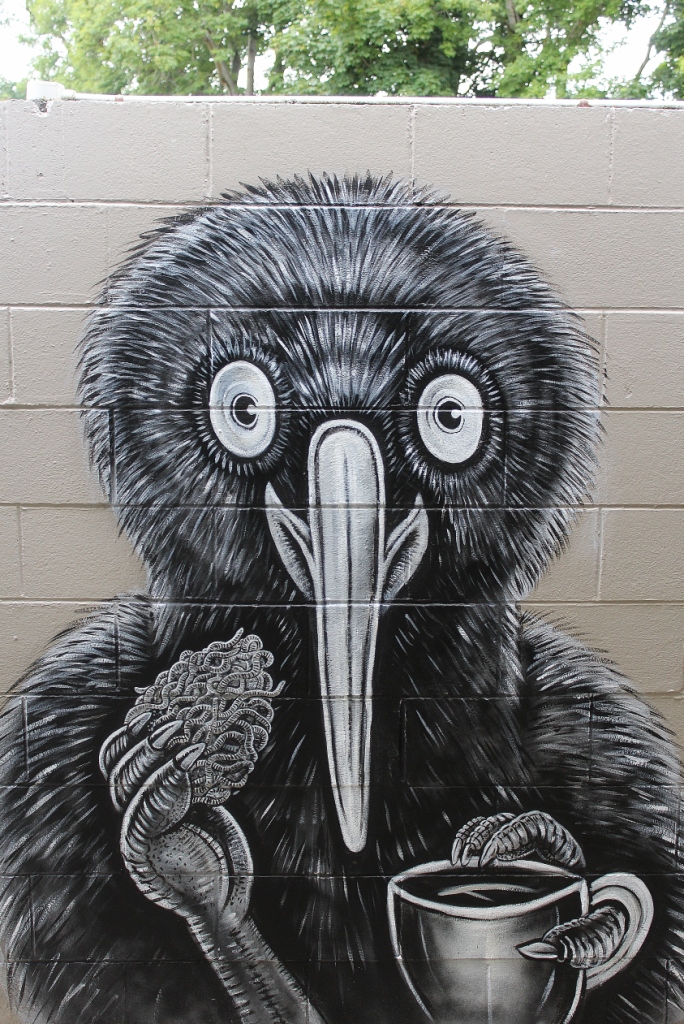
Sometime around seven, Steve got back from varsity. He seemed to be pleased to see them and dragged the woman upstairs to his room.

“Do you want to see it?

His dirty teeth gleamed grey in the half-light.

“I’ve been working on it all week. I lifted the parts from one of the labs”

He reached under the sagging mattress on his bed and pulling out a burger box, which he opened to reveal a seemingly complex mass of wiring attached to a couple of batteries. He groped back under the bed again and came up with something that looked like one of those devices people use for opening their garage doors without getting out of their cars.

“Will it work?” asked Drake, characteristically blunt.

“Watch!”

 He put the burger box of components on the bed and withdrew to the other side of the room and pressed a button on the device in his hand. Nothing happened.

“That’s really impressive, Steve!” snapped Drake. “We’re really going to cause a lot of damage with this device of yours!”

 Melanie began to giggle.

 Clearly disappointed, Steve began to re-examine his creation.

“Must be a loose wire,” he muttered. “I had it working last night.”

“I don’t care what’s wrong with it. Just fix it!” barked Drake and they left him poking around with the device and went back downstairs to try and find something to eat. One of the punks was preening his mohawk in a hand mirror. Melanie giggled and whispered to Drake,

“I think there’s a wire or two loose somewhere in Steve’s head.”

 “Probably, but I have faith in him. You should have seen the car bomb he designed for a chemistry project.”

Later that evening Shane turned up on his bike and they got down to some serious planning.

“I still reckon we should do a rocket attack like the Japanese activists did at that superpower summit the other day. There’d be less chance of getting caught because we’d be so far from the scene,” enthused Shane, half-cut on half a bottle of cheap port.

 “You’re a total moron, Shane! One, we don’t have any rockets. Two, the Japs missed, didn’t they?”

The drink was starting to make Shane maudlin.

 “I don’t feel good about this Drake. Too many innocent civilians are going to get killed, maimed or permanently disfigured.”

“Stop thinking of them as people – they abdicated their human rights when they joined that kooky religion!”

 “What if we upset the IRA? Don’t they back the Pope? Or am I thinking of the Mafia? I don’t want to get my kneecaps shot off. I don’t want to be shot in the stomach with a flare pistol!” whimpered Shane.

 “Shut up Shane! I’m more concerned about whether or not Steve’s detonator is going to work!”

After an hour or two more arguing the trio crashed out on some filthy mattresses on even filthier floor, along with the two punks and a homeless junky who turned up later. It was hard to sleep. It always was before an action. 

The next morning they got up early and packed up their gear and the detonator and its components, which Steve assured them was working now and walked to the venue of the papal exposition which was taking place in a large park in the center of the city.

None of them had ever seen anything like it.

 A hundred thousand religious zealots or more – a  massive stage – bigger than the one for U2 – bigger than the one for Bowie. It towered above them, flanked by two huge towers of speakers, ready  to blast out the word of god’s chosen representative on earth. What a gig this was going to be. How did Jesus do the Sermon on the Mount before the public address system was invented? He must have had a bloody loud voice!

The Pontiff was delayed on his way from the airport and the crowd began to grow restless. Many of them had been there since 8am to get a good seat and they were bored with the support acts provided by local religious bigwigs. They wanted to see their idol in the flesh. If Drake had her way, some of them would soon be splattered with it.

 Mel was standing a little way off from the other two. The detonating device was in her pocket. The bomb was planted in one of the fold back bins in front of the Pope’s podium so that he’d take the full force of the blast.

 An ex-biker roadie Drake had met at Periodic Detention (that’s another story) had hidden it there for them when they turned up about 6am as the crew were putting the final touches to the stage. He wasn’t keen on the idea but Drake managed to convince him by handing him cool twenty thousand in cash, all of the money her parents had given her to fund her university studies over the last three years. She’d also promised him a sexual favor but it was one she had no intention of ever delivering.

Around one o’clock ‘The Popemobile’ (the Pope’s special armored vehicle) arrived and began to weave its way through a throng of delirious devotees. God’s spokesman smiled indulgently at his groupies behind his raised bulletproof glass podium on the back. After a circuit of the park, the vehicle stopped and moments later the man himself emerged and slowly mounted the steps leading to the stage surrounded by a phalanx of local bishops.  The crowd noise rose to a new peak as he reached the platform. What was he going to talk about? What vital moral or social issue would he expound upon today? The atmosphere was electric. Acknowledging all of the other religious bigwigs assembled on the stage with a brief nod, he moved directly towards the podium, draped in its obligatory papal purple. The crowd hushed as he cleared his throat.

Melanie’s finger hovered over the button of the detonator. She was scared but simultaneously felt extremely powerful. She was about to make history by just moving her index finger.

 Suddenly a gun muzzle bit sharply into her back.

“Touch it and you’re dead,” whispered a voice in her ear.

She turned round to face someone all dressed in black wearing a balaclava which covered most of his face. Just as she looked him in the eyes he shot her in the head and the detonator fell onto the grass before he crushed it with his boot.

Several meters away, Drake and Shane witnessed the sudden intervention and stood there, frozen in fear. A space had cleared in the crowd around them and they were quickly surrounded by a phalanx of heavily armed police.

“I’m not armed!” squeaked Shane but to no avail.

One of the cops smiled slightly, squeezed his trigger and Shane spun around, spraying blood, a hole neatly drilled in the side of his head.

 Two nuns fainted at the sight.

Drake dropped the sawn-off shotgun she had hastily pulled from her satchel and put up her hands. This wasn’t quite the scenario she’d planned.

Unresistingly, our heroinewas led to a car and placed in the back seat between a couple of beefy detectives. Her two friends lay dead on the grass in the background. Someone in a white coat was placing a sheet over the carcass which had once been Shane. Life wouldn’t be a problem for him anymore. He’d never get to strut the stage at Wembley.

At the police station she was quickly hustled into a cell without even being booked in or processed. Why weren’t they beating her up? Why weren’t they interrogating her? Suddenly she felt dizzy and everything turned into that yucky white fuzz that always hits you just before you faint. Drake staggered over to the wall to hold herself upright but she was too late and she crumbled onto the floor unconscious.

Sometime later she regained consciousness but the scene was so unexpected and bizarre she assumed she must be still unconscious.

She was strapped to a bed into a white room and a large creature was sitting beside her in some kind of space suit.  It looked like a massive crustacean – something resembling a giant mantis shrimp. It regarded her thoughtfully.

Drake realized she wasn’t in the police cell anymore and the shrimp obviously wasn’t a cop or a part of a cocktail either. She assumed she must be hallucinating. There was no other possible explanation! She wondered if the creature could talk.

“What happened? Where am I?” she asked.

The creature clicked its pincers and replied in a high pitched synthesized voice which sounded a bit like a Theremin.

“You’ve had your molecules removed from your planet and reassembled here in our spaceship above earth”.

Drake paused for a moment. This was big news! What to say?

“Do you do this often? Intervene in our worldly affairs?”

 “Only when someone starts to become too much of a pest, shooting up our robots and such. Those things aren’t easy to build you know?”
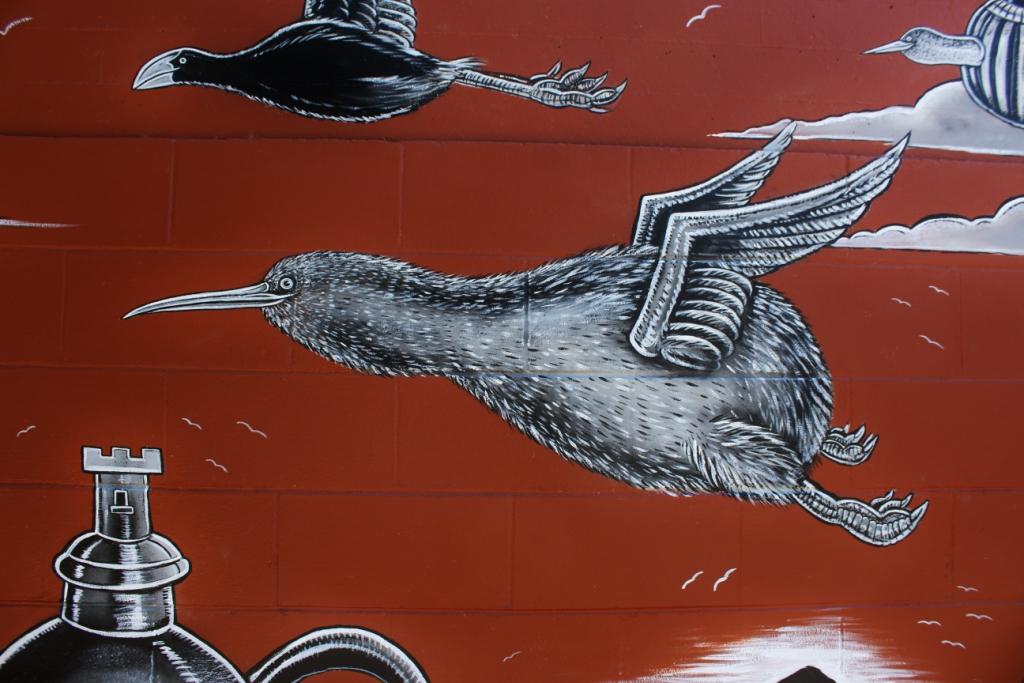
“What are you going to do with me?”

 “I’m sorry to say we’re going to kill you.  We just can’t have people like you ‘fucking with our shit’ but we’re going to do it very nicely and painlessly. We won’t be forcing you to do battle with a Xergon in a public arena or any other such primitive nonsense.”

“Why didn’t you just kill me in the park or at the police station? How come we’re having this little chat? Why got to all this trouble?”

“In most cases we would have done just that but I’ve been taking, shall we say, a personal interest in your case and I decided it’d be nice to have a little talk before we vaped you. You’re free to ask me any questions you want.”

“Are the police all robots?”

“Absolutely, we zap all the human recruits and replace them with our robots.”

“What about politicians?”

 “Nearly all of them but a few are impressionable humans who are so stupid they’re doing our job for us.”

“And what is your job? Why are you here on Earth?”

“Our own planet is grossly overpopulated and we need to expand and colonize undeveloped planets like yours. We prefer an atmosphere with a high level of radioactivity – hence my suit. If you stepped out into the rest of the ship you’d die in seconds. It would be to our advantage if there was to be a nice big nuclear war on your planet but we can’t be seen to do it ourselves. There are other advanced species who might not tolerate our expansionist agenda.  We’ve have working behind the scenes for years now, inserting our robots and tampering with your science and your politics. You should be having a nice big nuclear war any day!”

“How long have you been doing this?”

“When we first discovered your planet, the most complex life form on land was a creature a like today’s chimpanzee.  They were peaceful placid things, without any sort of aggressive nature.  We planted a few of our robots to help speed up your evolution and your science and in no time at all, you (or was it us) had  invented the wheel, gunpowder, coca-cola the atom bomb and all sorts of other cool stuff.”

“But why didn’t you just blow us away directly?”

“As I have already alluded to, there’s a universe wide ‘parliament’ with representatives with all sorts of advanced species on it. It’s a bit like the Federation on Start Trek but a bit more complicated. Developed species are not allowed to make contact with undeveloped ones – such as your own – and if we just blew away your planet there could be a nasty diplomatic incident – hence the covert action with the robots.”

 “So when is earth going to have a nuclear war? Do you know?”

“Any day now as long as we have anything to do with it!”

 “How long have you known about me and the Radical Action Faction?”

 “You came to our attention when you were about eight years old. Do you remember? You sent a letter to our Richard Nixon robot.  All it said were the words ‘fuck off!” in bold red brushstrokes. This marked you down as a potential troublemaker and we planted a robot cat to keep tabs on you.”

 “Castro! My own cat was a nark!?  I always thought he was weird! But if you’ve known about me for that long why didn’t you pick me up earlier?”

“We don’t like tampering with things on the planet too much but when people like you start blowing up our robots it gets to be a problem.  They’re very expensive in terms of raw materials  to replace.”

“Did you kill Martin Luther King, Patrice Lumamba, JFK, Che Guevara?”

“Yes, we make sure most progressive humans are killed. We need this planet as soon as possible and we can’t have people like you slowing things down. It must be the remnant of the placid primate in you. Ordinary criminals we just leave alone as they help to de-stablize society”

. The whole scene was just too weird and Drake was running out of questions. It was time to pull out the biggie!

“What’s the meaning of life?

 ‘Nobody’s worked that out. I can tell you there isn’t any god or gods or at least nobody has met one yet.”

 The alien clicked its pincers again and rose up on its hind legs.

“I think that wraps it up. As is customary for the condemned on our planet we’re going to allow you to have one last meal.  What will it be??”

“No drugs?”

No drugs!

“Oh well, fuck it! I’ll have a dozen oysters a coke and a steak burger!”

(Bruce Mahalski 1987)

————————————————————————————————————————

(A poster by BM advertising ‘The Radical Action Faction’s” run at the local body elections in Dunedin in 2025)

Posted in Local Politics, Writing | Tagged , , , , , , , , , , , , | Leave a comment

My personal history of Portobello Marine Laboratory

The Original Fish hatchery with the Biologist’s Cottage at top left and Quarantine Island opposite.

Many Dunedin residents will be familiar with the small village of Portobello which sits about twenty kilometres from the city centre on the inland side of the Otago Peninsula, as well as the marine laboratory at the end of the Portobello Point which also used to house a public aquarium.

The fish hatchery was in an excellent central location in the middle of the harbour for carrying out marine research, but until a road was built out to the end of the point in 1956, the only access was by boat. In 1960 the university replaced the old hatchery with a new building, complete with a public aquarium and there have been a number of significant additions to the laboratory over the last 70 years.

In 1951 Dr Betty Batham, was appointed the lab’s first director but the appointment of a female academic to a leadership role at a university laboratory was a controversial move in those days and not everyone approved.  This talented scientist was born in Dunedin in 1917 and was one of the earliest women to graduate from the University of Otago with a top notch science degree. Later she completed her doctoral studies at the University of Cambridge, where she did some pioneering work into the anatomy of sea anemones, as well as working as an assistant to Carl Pantin,  Professor of Zoology from 1959 to 1966.

I remember Betty well because she was a good friend of my mother, Dr Pauline Mahalski.

When they met, Pauline was still a science teacher at Queens High School but she had some solid academic credentials of her own and being a secondary school teacher wasn’t enough. After a meeting with another local marine scientist, Bob Weir, she began to conduct her own long term study into the habits of the  mud crabs which live on the peninsula.

Local mud crab (Helice crassa) Photo by Pauline Mahalski

There are two main species, the tunnelling mud crab (Helice crassa) and the stalk-eyed mud crab (Macrophthalmus hirtipes), but hairy-handed crabs (Hemigrapsus crenulatus) are also present in the intertidal zone. These crabs are both   scavengers and predators who like to hide in their burrows at low tide and only come out to feed and socialise when the tide is high. All three species are also  important  prey  for fish, sharks, octopuses, birds  and seals.

Whenever she got a day off from teaching, mum would drive the family’s old blue Beetle out along the peninsula to her favourite spot at Papanui Inlet and sit there for hours watching crabs and taking notes. I got dragged along on many of these expeditions and I had no choice but to find my own ways of entertaining myself while she ‘worked’ because in my little family you just weren’t allowed to say you were bored. There wasn’t any internet back then so I used to wander around the area and watch the local birds and I think this is also around the time when I first started to get really serious about collecting bones.  

Pauline Mahalski (1960) Photo by Dr Ted Nye

Mum also used to like watching crabs when we went overseas and one time I made quite a lot of money in Fiji when I devised a way of trapping fiddler crabs for her at $5 each. The females of the species look like normal crabs but the males have one pincer which is much bigger than the other which they wave around a bit like someone playing the fiddle.  These bad boys like to wave their giant super-sized pincers around to both threaten other males but also to entice the local ladies to check out the etchings in their burrows.
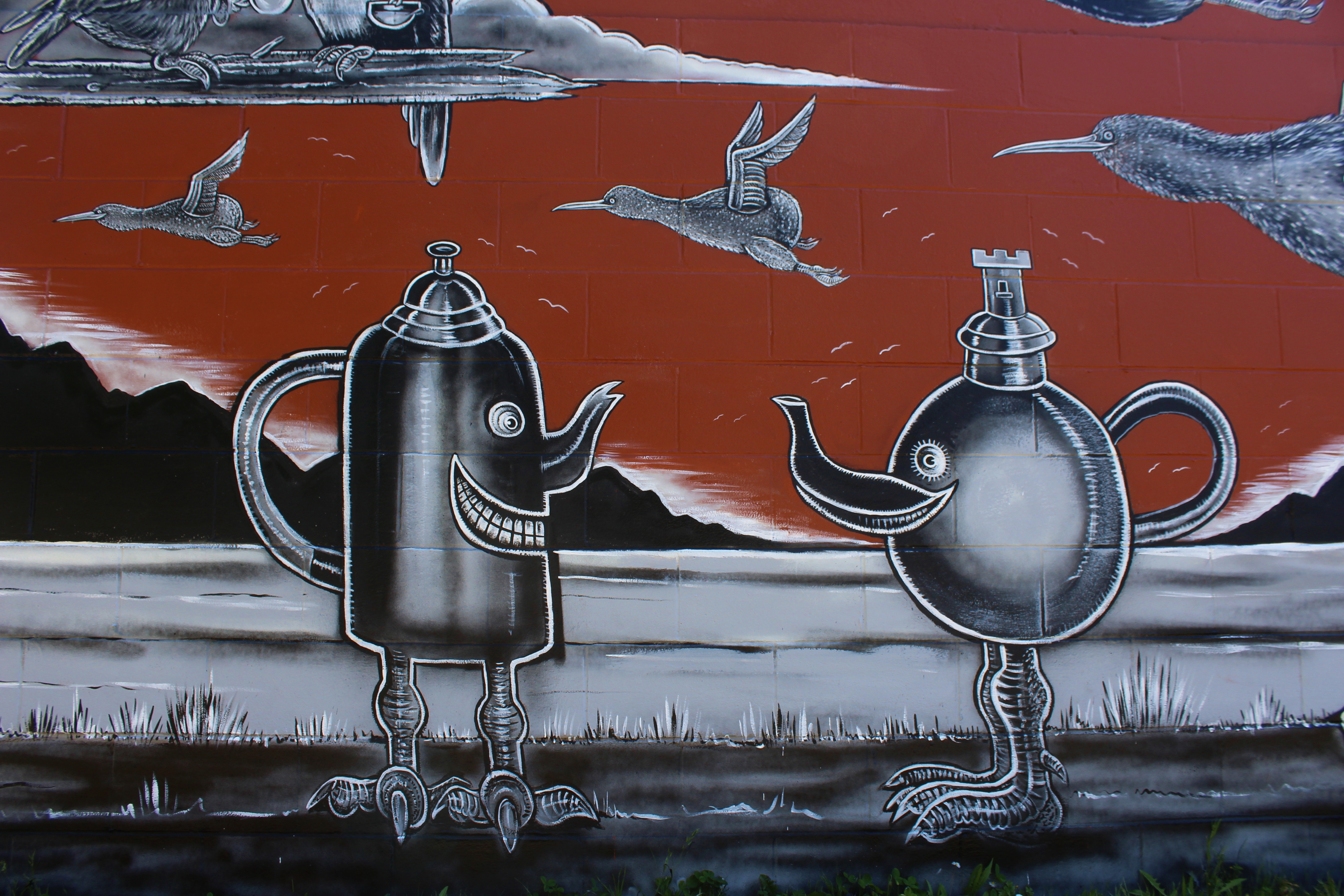
Despite her extra curricular research, Pauline took her day job seriously, and, with the help of Betty, she used to organise regular field trips for her Year 11-12 students out to the lab to study coastal marine life.  Occasionally   some of the students would even stay the night at the Biologist’s Cottage up the hill from the lab and my mother would organise for a powerful light to be hung off the wharf to attract some of the light-sensitive denizens of the harbour. It wouldn’t take long before they’d be a huge swarm of tiny animals swimming around in tight circles underneath the light and trying to eat each other before they were snaffled up by a student with a dip net. To me the most fascinating creatures were the mantis shrimps, the tigers of the local crustacean community, who, like the mud crabs, prefer to hide in their burrows during low tide and only come out to feed when it’s high. The students were encouraged to bring the most interesting specimens into the lab to look at under a microscope and then try to draw and describe them while they were still alive.
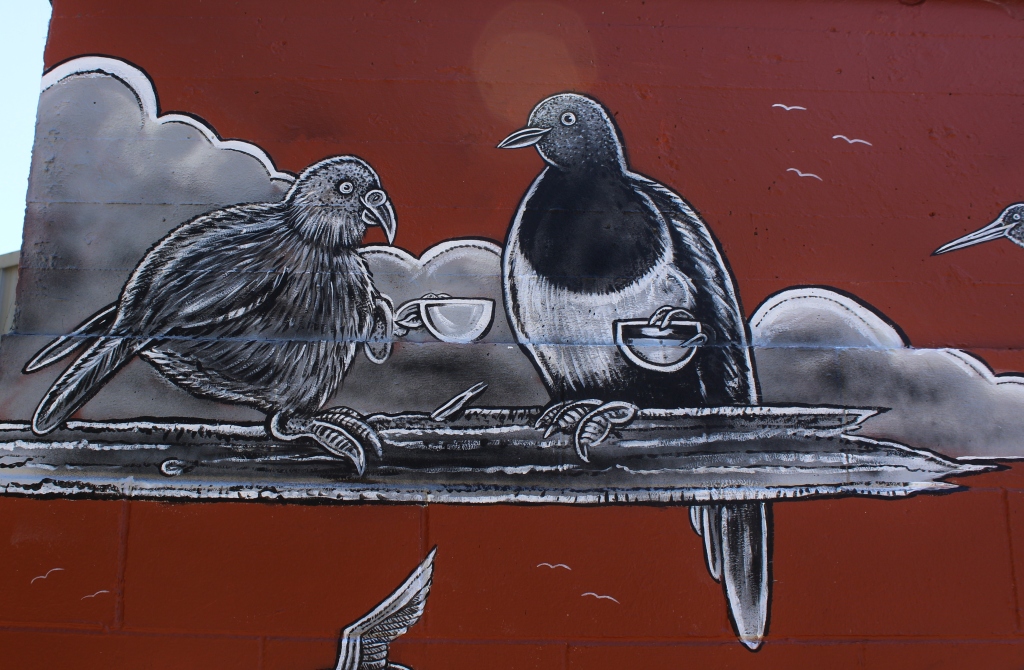
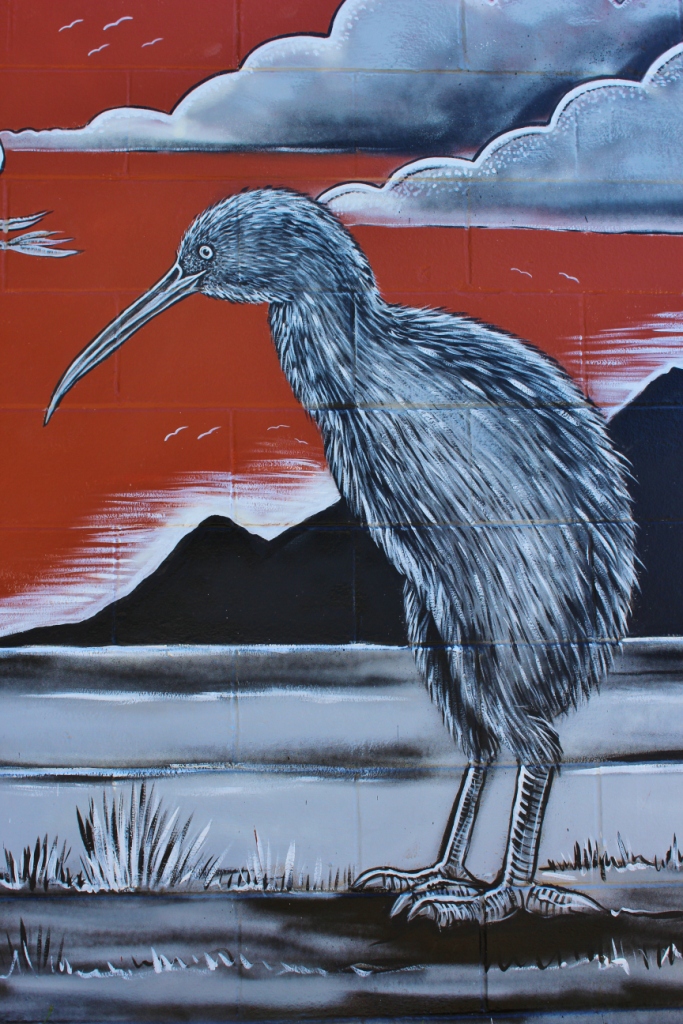
Betty didn’t always feel appreciated in the patriarchal world of the university. After a number of internal battles with the university she began to succumb to depression and in 1974 this remarkable woman disappeared near Seatoun in Wellington harbour in what was either a diving accident or intentional suicide. The coroner left the verdict open and one of Betty’s protégés, Dr John Jillett, was appointed the new director of the lab.

It was around this time I first started to compete in the regional science fairs which were held at Otago Museum every year and thanks to Dr Jillett, I was lucky enough to be able to use some free space at the lab to run some of my little experiments. At this time there was only a tiny number of full time staff and an equal number of graduate students and it’s some of these people I really want to talk about today.

In 1976 I was inspired by the movie, ‘Jaws’ and decided to ‘study’ the Otago harbour’s dogfish population. These small sharks come into the harbour every year to birth their pups in spring and summer. There are two main species – the spotted dogfish and the spiny dogfish and I was interested to see what these young sharks were eating. To be frank  our family also used to like eating them too so I  arranged to borrow a set net from the lab which I moved around the harbour during  the summer months catching lots of young sharks and opening them up to find out what they’d been feeding on.  The net also caught a number of other species including kahawai, barracuda and one time, a very nice sea run trout.

I found the baby sharks were mainly  feeding on crabs, small fish and marine worms. The person who arranged for me to borrow the net was the marine station caretaker, Jack Jenkins, and even through I was only thirteen, we soon became good friends.

I always think of Jack as some kind of maritime version of Barry Crump and in many ways he had a very similar background. Born in 1927, this good keen man was born in Romahapa (near Balclutha) but was raised at both Broad Bay and Warrington, so he was about as local as they come. Later he moved to the West coast, where he worked variously as a rabbitter, a cattle musterer, and a tramping guide. In the fifties and sixties he started fishing for whitebait in the Big Bay area and he maintained a couple of huts in the area for years. In 1968 he was appointed the marine lab’s first fulltime caretaker/technician and moved into the caretaker’s cottage up above the lab with his young family. His main duties were to assist the staff and students with their research and to look after the public aquarium.

Jack Jenkins opposite the marine laboratory in 1986 – Photo courtesy Otago Daily Times

As a teenager, I  was very grateful to be able to hang round the lab and to try and ‘pay my way’ I used to try and help  the scientists and the students with their work by recording data, sorting samples and assisting on the boats when people were out collecting water or specimens for their various projects.  I used to go out to the lab every chance I got and I’d generally follow Jack around until he took the marine stations little motorboat out on some exciting mission or other. In summer he used to set a couple of nets close to the mole at the harbour entrance to catch dogfish specimens for the university’s first year biology students to dissect, as well as specimens for the public aquarium and food for its occupants but I think perhaps the most important reason was to secure an ongoing supply of delicious fish for his family and the staff.

Future All-Black Greg Burgess with the first white shark jack caught at Pilot’s Beach in 1974 – Photo courtesy of Kim Westerskov

Sometimes Jack would let me drive the boat as we zoomed up the harbor and back to the nets. It was always super exciting to pull them in and see what they’d caught and occasionally the catch exceeded all expectations. In 1974 he caught a huge white shark and the following year he caught an even bigger one! The latter was over four metres long and had a massive girth, the reason for which became apparent when it was dissected by John Darby, the assistant director of  Otago Museum, who found a whole metal crayfish pot in its hugely distended stomach, along with a ray and some crabs. If Jack hadn’t caught the shark the pot would have killed it as it was much too big to regurgitate.  You can still see its huge jaws on display at Otago Museum today.

The second giant white shark on the beach next to the aquarium. Note Jack’s bandaged hand which he injured on the shark’s teeth when he was pulling it in. John Darby(assistant director of Otago Museum) is at left. Photo courtesy of Keith Probert.

In 1976 yet another giant shark ended up the nets. This time it was a basking shark, the second biggest shark species in the world and a very rare visitor to this part of the world. Basking sharks are harmless plankton feeders but white sharks feed on seals and sometimes they seem to mistake a human for their favourite prey.

The harbour entrance is a breeding site for local fur seals so I’m always a little bit surprised that many people do their dive training in an area when white sharks are occasionally known to be present. I suspect there might have been more sharks back then because a local fish processing plant was dumping fish offal directly off Taiaroa Head.

 It’s extremely rare for a diver to be attacked by a white shark but in 1968 spear fisherman. Graeme Hitt, was attacked by a large shark and sadly he didn’t survive. Between 1964 and 1971 there were five shark attacks around Dunedin. The last one occurred on March 30, 1971, when surfer Barry Watkins (16) was bitten by a large white shark off St Clair beach but luckily the shark seemed to be more intent on chewing on his board, the remains of which can also be found in the Otago Museum collection. Mr Watkins was fortunate not to lose any limbs but he did need 90 stitches from knee to thigh in one of his legs and apparently it still aches sometimes when it is cold. The ocean temperatures close to the coast became briefly colder around this time and this could have been the reason for the high number of white sharks in the area because they prefer colder water.  Fifty years ago the Southland current came much closer to the coast than was normal. Now, due to climate change, this cold water current is being pushed ever further from the coast by the warm waters of the Tasman current, which means less white sharks, but also less food for some of our favourite coastal species including the hoiho, who are having to swim further and further out to sea to get to the cold water zone where they feed.

Basking shark on the beach next to the marine lab (Photo courtesy of Kay Clausen)

One time Jack and I pulled up a giant conger eel with a head the size of a Rottweiler just around the corner from the lab and I remember it thrashing around in the bottom of the boat while we both stood on the sides and tried to avoid being bitten by this extremely intimidating animal. After it had calmed down a bit from lack of oxygen, I kept a spray of water over its gills and we took it back to the aquarium and released it into the biggest tank to join another big conger that was already in residence. I’d be amazed if any visitors to the aquarium  ever saw either of them apart from maybe their heads because the only time these giant eels would come out from behind the rocks and  swim around was at night time when the aquarium was closed.

Shark attacks  and giant eels aside, life at the lab was great and according to Jack’s  daughter, Kay, their  family had  great life, swimming, fishing, collecting kai moana, exploring nearby Quarantine island, and many other adventures.  On a couple of occasions I joined the family for dinner and I vividly remember a gigantic pig called Arnold which Jack had picked up as a baby in the wild. This terrifying animal would rear up out of its pen behind the cottage and snap its massive jaws at you like a scene from a horror movie.

In 1981 Jack was given the opportunity to take some live blue cod down to McMurdo base in Antarctica as part of a study being conducted in the anti -freeze properties of cod blood in a study comparing the composition of blue cods’ blood with that of the Antarctic cod, nowadays better known as the Antarctic Toothfish. Some fifteen years later toothfish went on to become a highly sought after commercial species and now every year a host of countries rush down to the Ross Sea in summer to target this increasingly rare high value fish.
Drawing of an Antarctic Toothfish by the author

In 1977 I conducted my second series of experiments using the lab’s facilities and equipment. The year before I’d won the local statistics prize with my dogfish study but it wasn’t enough for me and for this second series of experiments I set up some tanks at the lab which I filled with local camouflage crabs representing the two most common species.

These sneaky crustaceans like to adorn themselves with seaweeds, sponges and even anemones to try and make themselves invisible and they’re very good at it.

Over a few months I ran a series of experiments in which I placed one species and then the other in a tank covered all the way around with red or green cardboard. The crabs were supplied with food and both red or green seaweed with the aim of seeing if they would choose the correct seaweed colour to match the overall background colour of their tanks. I also ran the same experiments with male crabs and female crabs to see if that made any difference.

My experiments seemed to indicate that both species of crabs either couldn’t or wouldn’t use the correct colour seaweed to match the exterior colour of the tanks but I noticed the female crabs were much better at cutting up their seaweed into nice little pieces and neatly applying it to their bodies than the boy’s who’d just tend to jam it on in big uncut pieces a bit like the way I dress myself.  My theory was this could be because female crabs have smaller and more delicate pincers than the males but  we all know that women are much more interested in looking good than men. At the end of the experiments I came to conclusion that another year or two’s research would be needed to come to any firm conclusions but I entered my research into the science fair none-the-less  and got  first in the local and fifth in the national competition that year. The following year my family  went overseas but when we got back I continued to go out to the lab with the pretence of making myself useful, but really so I could hang out with all of these interesting adults and go out on boats.

My science fair exhibit 1977

I also started working part time for Jack, helping him to make metal crayfish pots in a small building he had in Portobello. I always wondered if it was one of Jack’s crayfish pots which had ended up in that shark as he was one of the main people making crayfish pots in the area. Truth be told I was absolutely terrible at metal work but I think Jack tolerated me because we enjoyed each others company.  In 1986 my hero retired at age 59 but sadly he didn’t live long enough to enjoy it and I was very sad when he suddenly died from cancer shortly afterwards.

If Jack had a counterpart at the marine lab it was definitely Bill Tubman, the skipper of the lab’s research vessel, the Munida, which was named after a species of squat lobster which came into the harbour in huge numbers every summer.

 This fifteen metre purpose built research boat was funded by a grant from The Golden Kiwi Lottery (the big national lottery before Lotto) and it was built in Nelson by Nalder and Biddle and fitted out in Lyttelton in 1966 before beginning its service for the lab. The boat was kitted out for oceanographic research and marine sampling and was used for many years by a succession of scientists and graduate students to sample both local water conditions and marine life.

‘The Munida’ shortly after launching in 1966.

Bill crewed on a mate’s boat, the Arabella, before working on the Ranger which he later owned. He sold the boat in 1957/8 and opened a fish shop in Green Island. He didn’t retire, worked at Cadburys, the Roslyn Mill and Holsum bakery from where he got the job as skipper of the Munida. The position was full time and was paid through a Golden Kiwi grant same as the boat.

Bill originally came from Warrington where he’d worked at the local grocery store and in the late forties he crewed on a local fishing boat, the ‘Arabella’ before crewing on the ‘Ranger’ which he later owned, before opening a fish shop in Green Island. At some point he moved to Auckland, where he became the skipper on the police launch before moving down to Fiordland to fish for lobster.  In 1966 he became the skipper of The Munida, a full time position, which was also paid for by a Golden Kiwi grant.

 Bill also tolerated my company and sometimes he’d let me come out on the Munida as an honorary deckhand.  On one memorable two day trip we went down to the Nuggets to sample storm clams for a graduate student. Every hour or so the dredge would go down to the bottom before coming back up to the surface every  twenty minutes or so  filled with all sorts of interesting things, including baby octopuses, strange fish  and all sorts of other bizarre bottom dwellers. My job was to help sort out the clams and shovel the rest off the side with a big metal shovel.  The dredging went on into the night and the next day with barely a let up and I was starting to get very tired when suddenly – Whammo! I had some kind of a spasm like a big electric shock, but at first I thought I’d had some kind of brain fart, so, after recovering myself I jammed my shovel into the pile again. Big mistake! The same thing happened! Whammo! I could see Bill laughing until he was kind enough to alert me to the fact that I was poking an angry electric torpedo ray! After donning some rubber gloves he assisted it back into the deep and I got some new respect for an animal which can actually electrocute you!

Bill Tubman on his retirement (Photo courtesy Otago Daily Times)

Marine lab director, John Jillett, was right when he described Bill as like “an uncle to many of the students” and I know that he was proud of the prominent positions many of the students who came out on the boat gained later in other parts of the world. He remembers one in particular for her suggestion that the ship’s toilet (if you could call it that) needed a seatbelt and it was certainly was very difficult sometimes to stand up in the back of boat, let alone have a sleep or a private toilet break. Bill worked as the Munida’s skipper for twenty years before retiring in 1985.

John Jillett wasn’t just the director; he was also a scientist in his own right and an expert on Munida, along with his colleague Barbara Williams. This species, Munida gregaria, are more commonly know as the gregarious squat lobster and they’re found along the eastern seaboard of the south coast of New Zealand, around the southern coast of Tasmania and in a few other locations around the southern part of South America. They’re also sometimes referred to as lobster krill, because they look a bit like baby lobsters but unlike lobsters they’re found in swarms close to the surface like krill. When I was young, massive schools of Munida would come into the harbour every summer and sometimes they’d blow ashore by the thousands and stain the beaches red, providing a huge  source of food for other marine  animals coming into the harbour to feed and breed.

John Jillett in the late 1960’s(photo courtesy of Kim Westerskov)

Another person studying Munida was the American graduate student, John Zeldis and many years later I ended up working for him in Wellington at the National Institute for Water and Atmospheric Research at Greta point in Wellington. He was running a long-term study trying to correlate the recruitment of young snapper into the adult population by analyzing the number of eggs in the water every year and the amount of food available for the young fish to try and predict the number of catchable snapper in the near future.

Charlie Boyden was an English scientist who was renowned for his work on cockle’s and other shellfish. He had developed a method of monitoring feeding in limpets, those triangular shaped shellfish you often find on the rocky shore.  Right next to the wharf at the lab was a large limpet which had a microphone glued onto its shell and one of my occasional jobs was to sit on the wharf and listen to it feeding at high tide. Limpets are basically just a shell, a gut, a large foot and something a bit like a tongue covered in teeth called a radula which they use to scrape off algae from the rock. Charlie would bribe me with chocolate chippie biscuits to sit on the wharf for hours with a pair of headphones and a stop watch to count how many times a minute Mr Limpet ran his radula over the surface of his rock in an attempt to calculate how much biomass was required to sustain and keep the animal alive. Limpets may seem like a fairly innocuous shellfish, but they’ve saved many a shipwreck survivor from starvation and some 50 species are found around our coastline, including both marine and freshwater species.

Charlie Boyden around 1977.

Kim Westerskov was another character at the lab and he was already well known in Dunedin as the son of well known ornithologist, Kaj Westerskov. Kim spent many years at Portobello working on his doctorate studying the Foveaux Strait or Bluff oyster. These super yummy bivalves are also found in Otago Harbour and a number of other places. I remember there were some vicious rumours floating around at the time that, like the walrus in Lewis Carroll’s famous poem, Kim had eaten nearly all of the oysters in the harbour by the time he’d finished his doctorate. In actual fact Skeggs Fisheries, paid for much of Kim’s PhD and for many years they delivered big sacks of oysters to the lab so he could ‘study’ them! He was a very popular man!    While he was working at the lab Kim and his colleague  Keith Probert)  also wrote “The Seas Around New Zealand”(1981) a comprehensive account of New Zealand’s seas and marine  life and over the years he’s written and/or been the  photographer for almost 20 books, many of them for children.  He’s also completed photographic assignments for the BBC, TVNZ, New Zealand Herald and the New Zealand Geographic magazine among many others. 

Chris Lalas was studying both local seals and shags and he was responsible for a lot of pioneering work on both species in the local area. This was at a time sea lions were rare visitors to the peninsula and the main seals you saw were fur seals basking on the rocks. It wasn’t until the mid-nineties that you started to see sea lions hauling themselves out onto local beaches and starting to breed. These days’ sea lions seem to be moving towards becoming the dominant seal species on the peninsula and anecdotally there is evidence of adult male sea lions actually targeting and eating young fur seals.

In those days the Portobello marine lab wasn’t just an academic institution. It was also the home of a very popular public aquarium but sadly this was forced to close in 2012 when the building it occupied was identified as a potential earthquake risk. While the public aquarium is now closed, the NZ Marine Studies Centre, which is part of the lab, remains open for pre-booked educational programmes and tours.

I used to love hanging out in the aquarium which was a very popular local attraction back then and I spent many happy hours watching all the animals. There was one big tank which ran the length of the entire wall and it contained some of the larger local fish including a big school of trumpeter. There were many smaller tanks filled with sea anemones, sea squirts, sea horses, bellows fish, and a whole range of small coastal marine life and another large tank which was always home to an octopus. One of my favourite, but admittedly rather ghoulish things to do, was to feed this giant super-intelligent mollusc. It could tell the second a crab entered the tank and its knobbly skin would run through a rapid kaleidoscope of colours and textures as it became increasingly excited. It was hard not to enjoy watching this consummate predator track down the poor animal  before pouncing on it and enveloping it with its tentacles and breaking into the its shell with it’s parrot-like beak before sucking out the contents with a gleeful expression in its eyes. The following day all that would be left was the skeleton of the crab on the bottom of the tank. Octopuses are excellent escape artists and there were a number of times when the animal was found wandering around the lab, possibly looking for a mate or its next crab. As a budding naturalist anything that died in the aquarium was grist for my mill and at my own small museum I still have a number of specimens which I acquired from aquarium in those days including a dried billows fish and a giant spider crab. These are New Zealand’s biggest crab with a span of up to a metre. There was also a tank called the “touch tank” where visitors could put their hands into the tank and touch living specimens such as starfish, sea cucumbers, and other more sedentary marine life

I’m against zoos with cages full of imported animals but I do believe that marine education centres have an important place to play in the community because they’re often people’s first introduction to the marine world. I think many people see the ocean and its inhabitants as somehow not quite animal and they often don’t have the same level of empathy for marine species as they do for those on land. Fishes, sharks and octopuses all have brains, central nervous systems and consciousnesses just like us and they definitely feel pain. Marine education centres can help people to understand the complexity of both the animals themselves and the ecosystem they inhabit and learn to appreciate it.   Many of our marine species are now under threat from the effects of over-fishing, pollution and climate change and the harbour is not the thriving pool of life it once was.  While  local marine life has suffered a decline  the lab  itself has turned from a tiny local research institute  into a powerhouse of marine science and in 2017 a new five million dollar laboratory was opened on site.

——————————————————————————————-

Munida (Photo courtesy of Peter Bateson)

Posted in Uncategorized, Writing | Tagged , , , , , , , , , , , , , , , , , | 3 Comments

A CHANGE IN THE WEATHER-COLLECTION #2

More cartoon strips about climate and conservation issues by Bryce Mahalski (Copyright Bruce Mahalski) . All of these strips have been published in the Otago Daily Times. You can buy a full book of them via the Otago University Book Shop in Dunedin. for just $20.

Posted in Art Teaching, Cartoons, Climate Action, Illustration | Tagged , , , , , , , , , , , , , , | Leave a comment

Aramoana to Dunedin Railway Station – forty plus years of the protest movement in Aotearoa

We used to have a successful protest movement in New Zealand. Why don’t we have one anymore?

In 1980 I was 17 years old and the No Smelter campaign was one of the first political protests with which I became involved.

As with many issues the community was split down the middle with about half thinking it was a great idea and the other half dead-set against it.

Around the same time there were big protests against the Springbok tour and nuclear ships.

In his cell in prison on Robben Island Nelson Mandela heard the news that the Springbok/All Blacks game in Hamilton had been cancelled and has been quoted as saying – ‘It was as ‘if the sun had come out’.

This country stood up against racism – and we called it out as the evil bullshit it is.

Despite our small size our loud voice was heard all around the world.

We did our bit to end apartheid in South Africa and we should all be proud.

We also stood up against the doctrine of MAD – mutually assured destruction –that is if everyone had nuclear weapons no-one would dare use them. This was supposed to make the world safe from war. It didn’t.

In the 70’s and 80’s we tried to stop nuclear ship entering our harbours and when they did we tried to make sure they knew they weren’t welcome.

Between 1978 and 1983 opposition to nuclear-armed ship visits rose from 32% to 72%.This didn’t happen by itself. It happened because of an active vital protest movement and in 1987 our government listened to this movement and banned them completely.

These were proud moments in our history when enough people stood up for what was right and demanded change.

Now – over 40 years later- why aren’t we asking for change again?

This time it’s not just one issue or the other – we’re playing for everything – the whole shebang! The whole nine yards.

We are playing for the very survival of our ecosystem and our future as a species.

Where are the big protest movements when runaway carbon emissions are killing people everyday?

Why are we taking this massive risk with our future? What the fuck?

The climate catastrophe isn’t a matter that’s up for debate!

Anyone who says that any tweaks to the ‘business as usual’ model is going to haul our arses out of the fire during this terrible climate emergency is insulting every single reputable climate scientist on the planet – Not to mention all those people who’ve already died from heat-stoke, fires and floods, cyclones and storms.

In this country alone – last year the floods in the far north killed four people and Cyclone Gabrielle killed another eleven making 15 people who died last year from climate related events – which – even our drop-kick government admits were driven by runaway climate change.

The Government’s Treasury puts the damage from just these two events at around 9-14 billion dollars. How much did tourism bring into the country last year? Estimates are around 13 billion dollars. So we made a loss – in money as well as lives and livelihoods.

Business as usual is killing us – economically, emotionally and for real.

We all need to wake up and smell the coffee.

The climate crisis isn’t in the future – our own government declared one in 2020.

It’s freaking NOW! It’s already a runaway freight train!

Last year – 12,000 people lost their lives in climate disasters around the world – not to mention the millions of people who lost their houses and their business in the now ongoing floods and the fires and storms. Things are only just getting started but already animal species are becoming extinct by the day.

We are about to lose the hoiho – the bird of the year- as a direct result of the billions of tonnes of emissions of greenhouse gases we are pouring into the atmosphere every year.

But we have a government which is stuck in the past.

And people who think they can become an expert in a subject from watching a few videos on You Tube.

It’s no wonder so many people are confused.

I don’t claim to have all the answers.

But I am 100% convinced we are on the brink of a global catastrophe which will make ‘Mad Max Fury Road – look like a fucking tea party!

If I am wrong that would be fantastic! I really hope I am!

But right now we are driving full speed towards the cliff of our own extinction with our foot pushing hard on the gas pedal.

Where’s our insurance policy? There isn’t one, is there?

And we can’t fix this situation by ourselves.

We all stop thinking of ourselves as individuals and start fighting for our very survival as a species.

No one is immune and if we think we are safe in our little bolt hole down here wait till we become inundated with refugees whose islands are now under water. Whose land is too dry to grow food. Where wars for the remaining resources have forced them to move or die.

No one is safe!

The best way to try and turn things round is always to join a group of like minded people.

Together we are powerful!

I know it’s hard and scary to meet new people and do new things but our very survival is at stake.

But I want to be able to look my children in the face and have them know I did as much as I could to try and make sure they had a future.

If you want a sustainable future for yourself, your business, your family and your future the best time to step up was yesterday.

The second best time us now!

We need to look to those successes of the past and draw on them as a road map to the future.

Aramoana – we won!

Racism – we said no.

Nuclear ships and weapons and power – we told it to fuck off.

The climate apocalypse? ???????????

Yeah. Nah!

(NB – Yesterday I was convicted of trespass for blocking a trainload of coal at Dunedin Railway Station destined for Fonterra to burn to turn milk into milk powder for export –https://www.stuff.co.nz/nz-news/350425202/climate-protesters-may-face-60k-reparation-bill-over-train-blockade

Posted in Climate Action | Tagged , , , , , , , , , , , , , , , , , , | Leave a comment

Information about Cruise Ships

This is the third mini-comic I have produced about climate and pollution issues. This follows on and expands on the cartoons about the cruise ship industry I have written and drawn for the Otago Daily Times . My friend and colleague, Abe Hunter, inks them and adds the text.

The plan is to produce a book next year featuring all the best strips from ‘A Change in the Weather’  – the weekly cartoon strip we produce for the Otago Daily Times and some of the mini-comics like this one.

This four page mini-comic was drawn, written and inked by myself and my friend, Helene Hall, kindly added the text and formatted it for me.

If you would like a PDF or a printed copy please let me know by writing to – bruce@mahalski.com.

Posted in Climate Action, Cruise Ships | Tagged , , , , , , , , , , , | Leave a comment

Field Trip to Urf!

This is the second mini-comic I have produced about climate issues and there will soon be a third one focusing on the damage done by the cruise ship industry.

The first one, ‘The Coal Train News’ (2022) is about how government owned, KiwiRail, carry thousands of tonnes of coal around the country for Fonterra to burn to turn liquid milk into powder for export. The plan is to produce a book next year featuring all the best strips from ‘A Change in the Weather’ ( the weekly cartoon strip in the Otago Daily Times by Abe Hunter and myself) and some of the mini-comics. Huge thanks to Diane for her help scanning my drawings and inserting the text.

‘A Field Trip to Urf – is about a bunch of alien children preparing to go on a field trip to a ravaged planet once called Earth. ‘

Posted in Cartoons, Climate Action, Illustration, Politics Art | Tagged , , , , , , , , , , | Leave a comment